
Related videos:
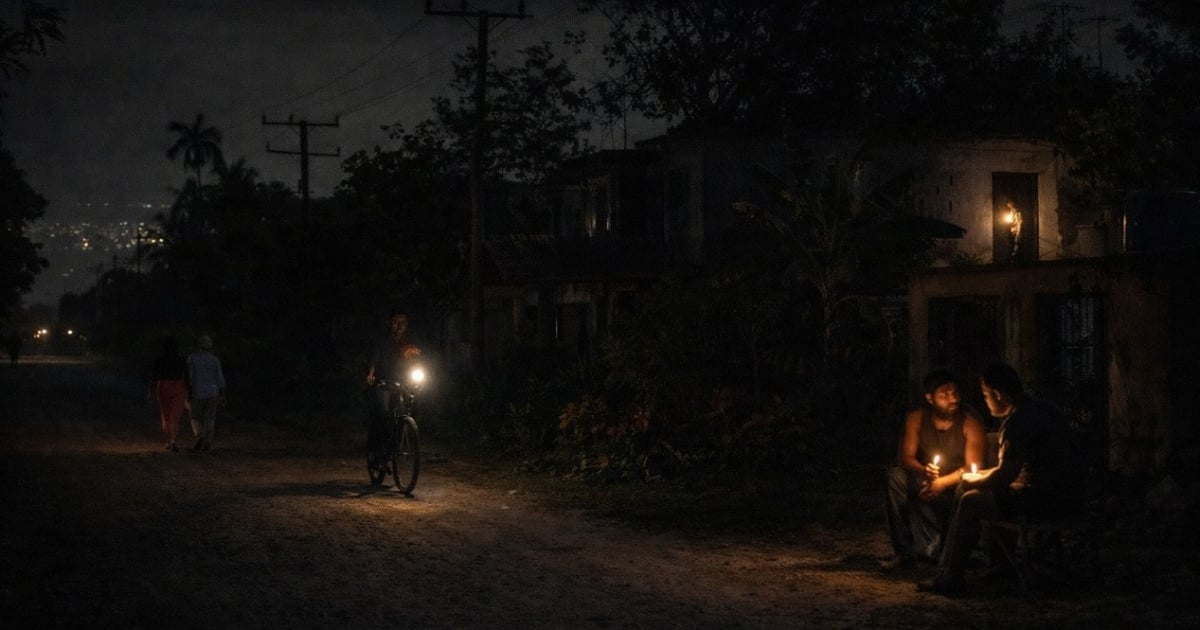
The Cuban electrical system faces its worst day of the week this Friday: according to the Electric Union (UNE), a shortfall of 2,075 MW during peak night hours is projected, with only 1,015 MW available against a demand of 3,050 MW, meaning that more than two-thirds of the country could be without electricity during the highest consumption hours.
The collapse on Wednesday exacerbates a system that was already showing no signs of recovery. That day, a pipe break in the boiler of the Antonio Guiteras Thermoelectric Power Plant —the largest generating plant in the country, located in Matanzas— caused a massive disconnection of the National Electric System (SEN) from Camagüey to Pinar del Río at 12:41 p.m., leaving about 6 million people, including Havana, without electricity. Partial restoration began on Thursday at 5:01 a.m., but the recovery has been slow and fragmented.
This Friday, the availability of the SEN dropped to 970 MW, a figure even lower than the 1,150-1,185 MW recorded in the days leading up to the collapse, confirming that the system has not yet recovered. By noon, the UNE projected an impact of 1,450 MW. The current impact at the time of the official report's publication was already 1,170 MW.
The crisis today is not an isolated event. Throughout the week, the deficits remained close to 2,000 MW: 2,025 MW on Monday, 1,990 MW on Tuesday, and 1,950 MW on Wednesday before the collapse. Electricity generation in Cuba fell by 13.7% in 2025, and the government itself acknowledged that 2026 would be a "difficult" year in terms of energy.
In Havana, as of Thursday, only 35.8% of customers —approximately 308,568 subscribers— had their electricity service restored. Classes were suspended that same day in the capital due to the crisis. In areas in the east of the country, outages are accumulating without pause: a citizen identified as Miguel Quiala Calunga reported this Friday on the official UNE publication on Facebook that he has gone 51 consecutive hours without electricity in Mayarí.
The root of the problem is structural. The Cuban thermoelectric plants, built between the 1960s and 1970s, operate without proper maintenance and face chronic fuel shortages, worsened by the halt of oil shipments from Venezuela. The 51 installed photovoltaic solar parks contribute a maximum of about 800 MW during sunny hours — on Wednesday, they generated 4,332 MWh with a maximum output of 741 MW — but are insufficient to compensate for the nighttime deficit. Rehabilitating the infrastructure would require between 8,000 and 10,000 million dollars, an amount that is unattainable for the Cuban economy.
The despair of the population is reflected on social media. "The situation is too much, there are blocks that are bursting from the number of hours without power, abusive, frustrating, the solution is in your hands selling everything to any country but end this suffering of the people once and for all," wrote Mercy Mary Rodríguez in UNE's Facebook post this Friday. This is the fifth partial collapse of the SEN in six months.
Filed under: