
Related videos:
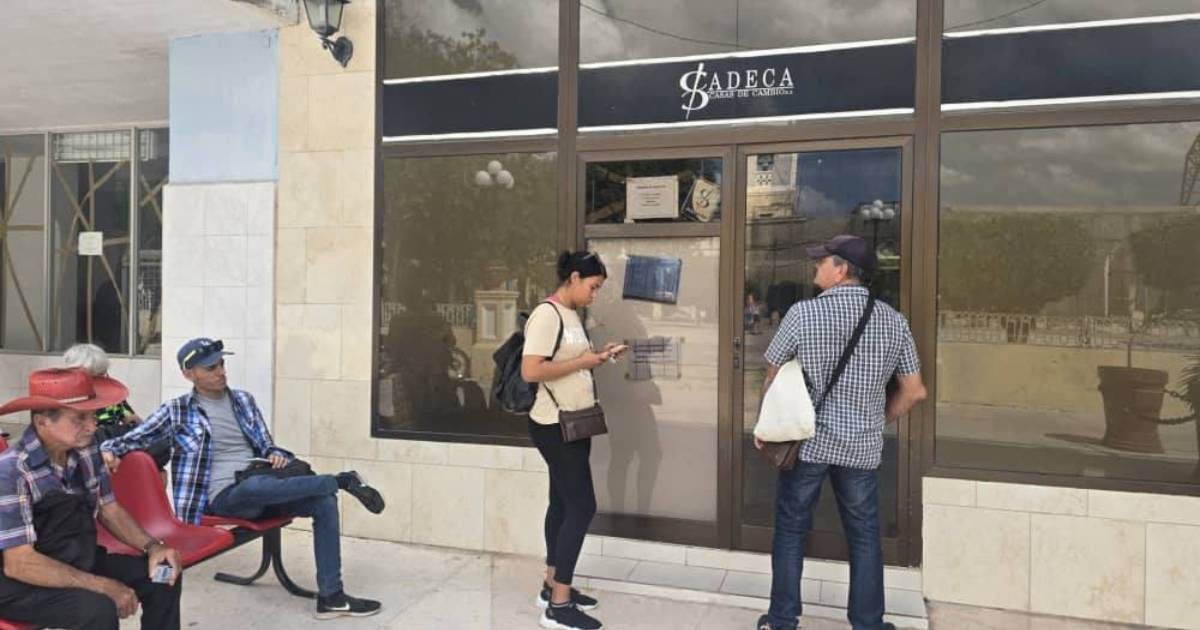
Fincimex announced this Tuesday that remittances sent from abroad can be received in cash in dollars directly at Cadeca offices in Cuba, a measure that the regime presents as an ease for Cuban families, but which in reality consolidates the control of the military conglomerate GAESA over every dollar that the diaspora sacrifices to send to their loved ones.
The announcement comes after more than a year of collapse in formal remittance channels. Western Union indefinitely suspended its operations from the United States to Cuba on February 8, 2025, and Cubamax did the same in April of that year, both for reasons related to Orbit S.A., the company that the regime created as a front to process remittances following the sanctions against Fincimex in 2020.
Orbit S.A. was included in the Cuba Restricted List of the Department of State in March 2025 after investigations revealed that it shared servers, offices, and oversight with CIMEX, the very military structure it was supposedly meant to replace. Cubamax acknowledged in its suspension operational adjustments linked to Orbit S.A., controlled by GAESA.
The result of this cycle of deception is devastating for Cuban families. The formal remittances have decreased by 70% compared to 2019, dropping from 3.716 billion dollars to just 1.113 billion in 2024, while 93% of the money now circulates through informal channels, with all the risks and costs that this entails.
Now, the same regime that indirectly blocked those private channels is presenting itself as the solution. Fincimex stated that "the measure is part of the strategy to expand options for managing remittances, with the aim of facilitating access to foreign currency and promoting savings through the Clásica card." What it does not mention is that both Cadeca and the Clásica card are under its direct control, which is the same as saying GAESA.
That military conglomerate controls between 40% and 70% of the Cuban economy, processes 95% of the country's foreign currency financial transactions, and accumulates more than 18 billion dollars in liquid assets according to leaked documents from 2024. It also operates with its own tax office, the OATFAR, which exempts it from the national tax system. Every dollar that passes through Cadeca or is deposited onto the Clásica card directly feeds those military coffers.
The Classic card, presented as a benefit, has limitations that the diaspora should be aware of: it does not allow for online purchases, is not refundable when leaving the country, and only permits withdrawals in Cuban pesos. The discounts it offers—10% at Gaviota establishments and between 5% and 6% at CIMEX stores—only apply in state-run establishments where prices are already up to four times higher than those at a supermarket in the United States.
This trap is compounded by an additional burden for those sending money from Miami. Starting January 1, 2026, the "One Big Beautiful Bill" law from the Trump administration imposes a federal tax of 1% on remittances sent abroad in cash or other physical instruments. Those who already sacrifice part of their salary to support their families in Cuba will now also pay this tax before the money reaches the hands of the regime.
Meanwhile, 89% of Cuban families live in extreme poverty, and 70% are deprived of at least one meal a day. For them, there is no real alternative: they either go through state offices or depend on increasingly costly and risky informal networks. The regime that destroyed private channels now takes a toll for being the only path left.
Filed under: