
Related videos:
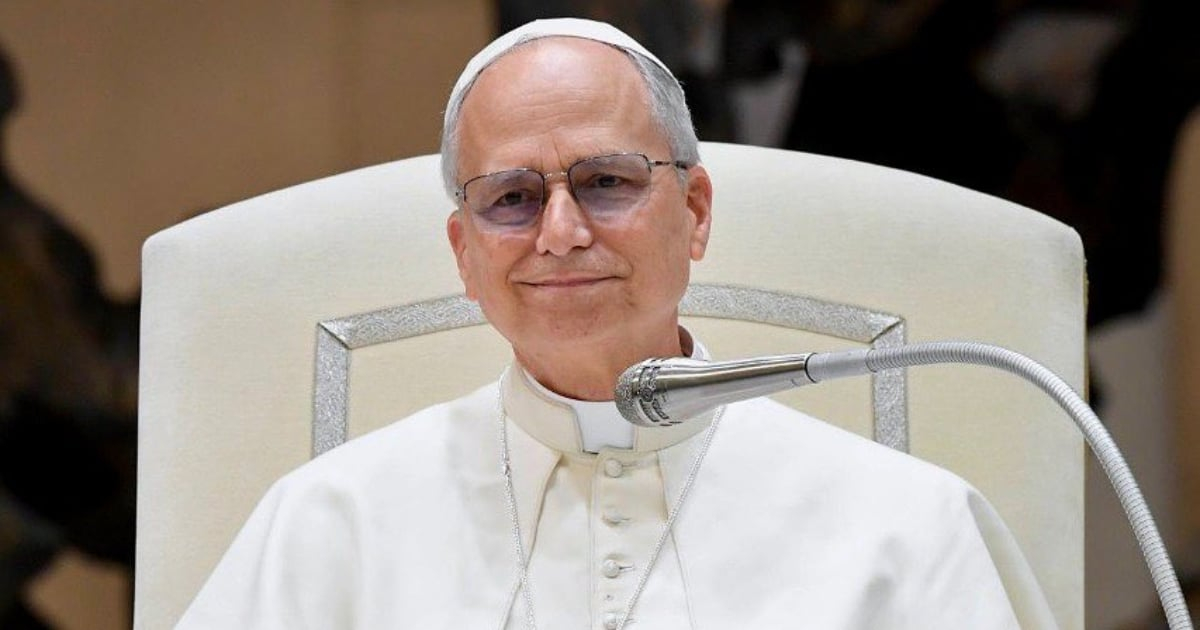
Pope Leo XIV welcomed the announcement of an immediate two-week ceasefire in the Middle East this Wednesday, calling it a "sign of living hope" after hours of extreme tension between the United States, Israel, and Iran.
The pontiff shared his reaction on the official account @Pontifex_es on X: "After these last hours of great tension in the Middle East and around the world, I welcome with satisfaction and as a sign of lively hope the announcement of an immediate two-week truce. Only by returning to negotiations can the war be brought to an end."
In a subsequent public statement, León XIV expanded his message and called on the faithful to join the diplomatic process through prayer: "I urge you to accompany the dedicated diplomatic work during this time with prayer, hoping that willingness and dialogue may be instruments to resolve these conflicts in the world."
The Pope also renewed the invitation to participate in the prayer vigil for peace that will be held at the St. Peter's Basilica next Saturday, April 11, as previously announced in his Easter message.
The Pope's reaction contrasts with his stance from the previous day: on Tuesday, from Castelgandolfo, Leo XIV had described as unacceptable the threat against the entire Iranian people, referring to the ultimatum issued by President Trump.
The truce was announced on Tuesday night, just an hour and a half before that presidential ultimatum was set to expire.
The agreement includes a two-week ceasefire and the opening of the Strait of Hormuz, blocked by Iran since March 4, along with definitive peace negotiations scheduled to take place in Islamabad starting Friday, April 10.
Pakistan acted as a key mediator in the negotiations, with Prime Minister Shehbaz Sharif and Chief of the General Staff Asim Munir urging Trump to halt the scheduled attack.
However, the Supreme National Security Council of Iran warned that the cessation of hostilities does not mean the end of the war and conditioned lasting peace on its ten-point proposal.
Israel supported the ceasefire with Iran, although Prime Minister Netanyahu stated that the agreement does not affect the fighting against Hezbollah in Lebanon.
The conflict began on February 28, 2026 with Operation Epic Fury, a joint air offensive by the United States and Israel that destroyed Iranian nuclear facilities in Natanz, Isfahan, and Fordow. Since then, the blockade of the Strait of Hormuz has impacted 20% of the world's oil and left nearly 2,000 ships stranded.
Episcopal conferences from around the world have already joined the vigil on April 11 called by León XIV, in what the Pope described as a moment for "availability and dialogue to be instruments for resolving these situations of conflict in the world."
Filed under: