
Related videos:
The Lebanese Shiite group Hezbollah announced early Thursday morning that it had launched new rocket attacks against northern Israel, accusing Tel Aviv of violating the ceasefire agreement reached between Iran and the United States.
The attack was described as the first since the announcement of the truce, which President Donald Trump proclaimed on Wednesday on his social media platform Truth Social following talks mediated by Pakistan.
Alert sirens sounded in northern Israeli towns, including Kiryat Shmona, although a piece of intercepted rocket fell in an open area without causing injuries or property damage.
Hezbollah justified the action by arguing that the massive Israeli bombings over Lebanon constitute a violation of the ceasefire, and it reaffirmed its "right to respond" to Israel's attacks against Lebanese territory.
The dispute originates from a deliberate ambiguity in the agreement: both Israel and Washington explicitly excluded the Lebanese front from the pact from the very beginning.
Trump declared in an interview with PBS that the attacks by Israel against Hezbollah are "a separate skirmish" and do not fall under the agreement with Iran. "Regarding Hezbollah. They were not included in the agreement. That will be resolved too. No problem."
The office of the Israeli Prime Minister had made it clear from the beginning that the ceasefire with Iran does not include Lebanon, a position that Netanyahu's government publicly supported.
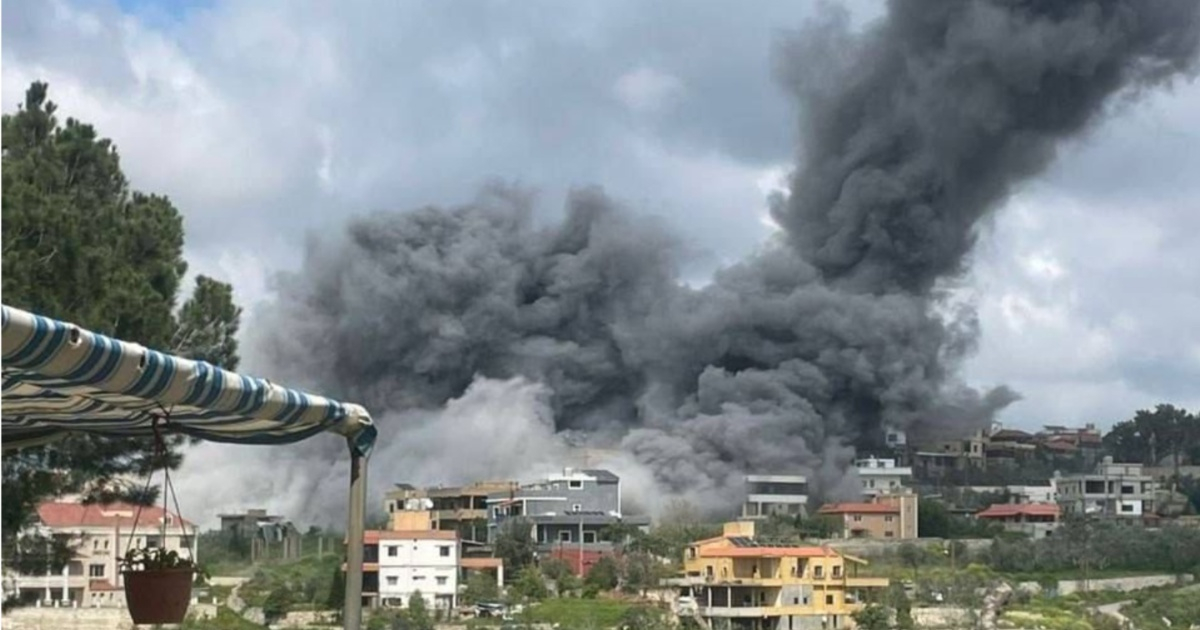
Israeli attacks were focused on Beirut, the Bekaa Valley, and the south of the country. The Israel Defense Forces issued evacuation orders in Al-Abassiya, in the Tyre district, and alerts for citizens in southern Beirut.
Tehran's response was immediate: Iran suspended the transit of oil tankers through the Strait of Hormuz once again, just hours after the first ships began to cross following Tuesday's truce.
The Fars agency, linked to the Iranian Revolutionary Guard, was the first to report on the new closure, indicating that the measure was a direct response to the Israeli bombings in Lebanon.
Iranian Foreign Minister Seyed Abbas Araghchi went further and deemed any ceasefire that does not include Israel as unreasonable, warning that the United States must choose between a truce or war through its ally, EFE reported.
Iran also conditioned its participation in the negotiations on Friday in Islamabad on the extension of the ceasefire to Lebanon, according to the Wall Street Journal.
The Norwegian Refugee Council warned that excluding Lebanon from the ceasefire "threatens to fuel further escalation and undermine stability."
Formal negotiations between the United States and Iran are scheduled for next Friday, April 10, in Islamabad, with Vice President JD Vance and Iranian representative Mohammad Bagher Ghalibaf as the main interlocutors, and Pakistan, Egypt, and Turkey serving as mediators, EFE emphasized.
Filed under: