
Related videos:
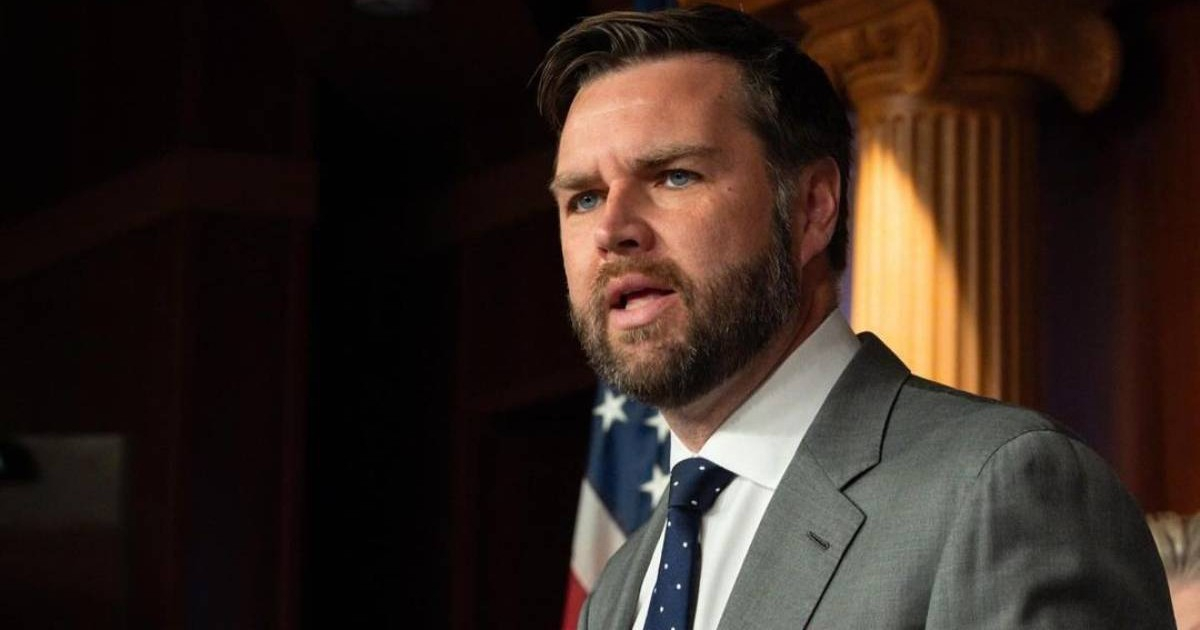
The White House confirmed this Wednesday that the U.S. Vice President, JD Vance, will lead the Washington delegation in the talks with Iran scheduled for Saturday in Islamabad, Pakistan, according to an EFE report.
The spokesperson Karoline Leavitt made the announcement at a press conference, just hours after President Donald Trump questioned Vance's presence in a brief phone interview with the newspaper New York Post.
"I can announce that President Donald Trump is sending his negotiating team, headed by the Vice President of the United States, JD Vance; special envoy Witkoff, and Jared Kushner to Islamabad for talks this weekend," stated Leavitt.
Alongside Vance will be the special envoy for the Middle East, Steve Witkoff, and Jared Kushner, son-in-law of the president, who have been engaged in several rounds of dialogue with Tehran since April 2025.
It will be the first time Vance is directly involved in these negotiations. At the time of the announcement, the vice president was visiting Budapest, Hungary.
Leavitt specified that "the first round of these talks will take place on Saturday morning, local time," and that Washington looks "forward to those in-person meetings."
On the Iranian side, the delegation will be led by the Speaker of Parliament, Mohammad Bagher Ghalibaf, and the Foreign Minister, Abbas Araghchi.
The conversations are set against the two-week ceasefire agreed on Tuesday between the U.S. and Iran, mediated by Pakistan, which includes the reopening of the Strait of Hormuz and the commencement of diplomatic negotiations in Islamabad.
The agreement comes after 38 days of Operation Epic Fury, the joint military offensive launched by the U.S. and Israel on February 28, 2026, against Iran.
The basis of the negotiations is under dispute. Leavitt stated that the initial ten-point plan presented by Iran was "literally thrown in the trash" by Trump for being "fundamentally unserious and unacceptable," and that Tehran subsequently presented a "condensed" proposal that was deemed viable.
The situation is fragile: the President of the Iranian Parliament, Ghalibaf, declared this Wednesday that the ceasefire and negotiations are unreasonable due to three alleged violations of the agreed framework, including Israeli attacks in Lebanon, the entry of a drone into Iranian airspace, and the denial of Iran's right to uranium enrichment.
Washington, however, does not yield on its conditions. "The president's red lines, namely, the end of uranium enrichment by Iran within its own territory, have not changed," emphasized Leavitt, who described the idea that Trump could accept a list of Iranian demands as a basis for an agreement as "completely ridiculous."
Vance's participation in Islamabad marks the highest level of direct interaction between the U.S. and Iran since the Islamic Revolution of 1979.
Filed under: