
Related videos:
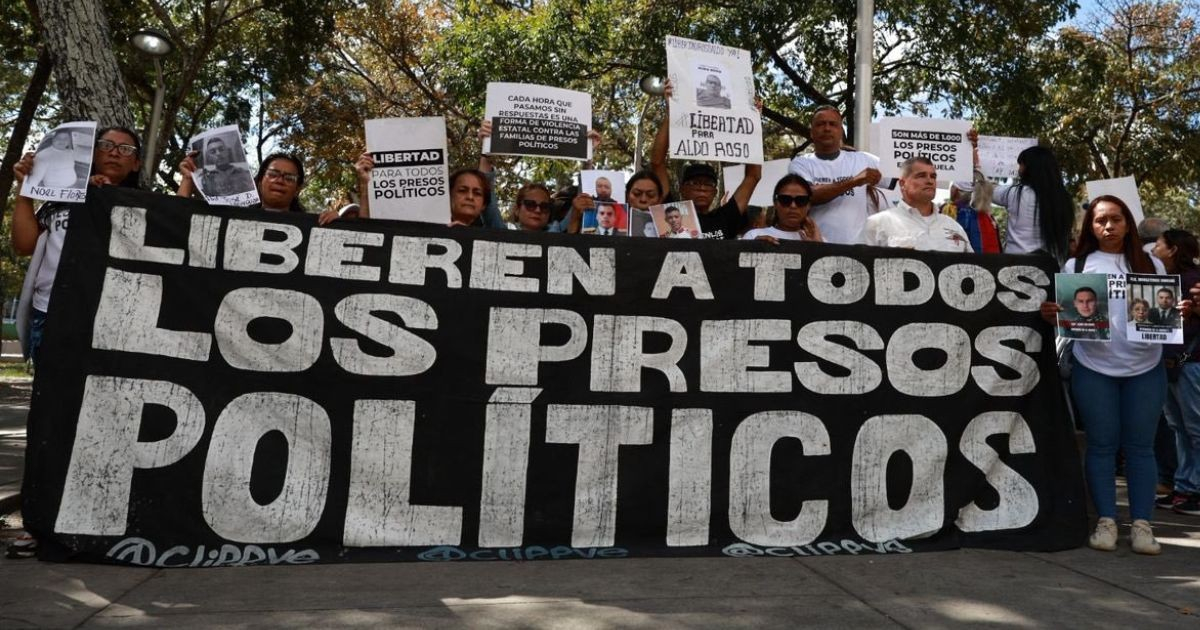
Over 500 political prisoners remain detained in Venezuela more than a month after interim president Delcy Rodríguez enacted the Amnesty Law for Democratic Coexistence, and the process of releases has entered a phase of slowdown that raises serious doubts about the government's true willingness to end political persecution.
Gonzalo Himiob, vice president director of the NGO Foro Penal, warned this Sunday, in statements to EFE, that for about two weeks now the number of individuals released under the amnesty has significantly decreased.
Himiob was emphatic in highlighting the implications of this slowdown: "If the more than 500 political prisoners still detained, including 187 military personnel, are not fully released, it would seem evident that the interim Government lacks the true political will to put an end to imprisonment and political persecution."
The representative of Foro Penal also pointed to the integrity of the repressive apparatus as a sign that the changes are more symbolic than real: "The very fact that the repressive apparatus has not begun to be dismantled —the police, prosecutors, and judges remain the same— would be evidence that with the amnesty, despite having some positive aspects, the aim was more for a symbolic and media effect than for real change."
The regulation was enacted on February 19 and emerged in the wake of contacts with the United States following the capture of Nicolás Maduro, an operation carried out by U.S. special forces on January 3, 2026 at Fort Tiuna in Caracas.
Human rights organizations have noted that the process has been mired in bureaucracy, with discretionary attitudes and responses, which has hindered a uniform and transparent application of the law. In that same vein, the UN High Commissioner’s Office could only confirm 950 releases, a figure significantly lower than that reported by the government.
The figures illustrate the gap between the official discourse and the independently verified reality. According to corroborated data, only 743 individuals were released and granted freedom, of which only 187 were granted amnesty directly, while the chavista deputy Jorge Arreaza, president of the monitoring commission of the law, reported that as of March 26, a total of 8,146 people had received "full freedom."
The opposition leader María Corina Machado has denounced that selectively denying amnesty is repression, emphasizing that the discretionary application of the law perpetuates the political use of arbitrary detention. Meanwhile, the families of political prisoners held a procession in front of El Rodeo prison to demand the release of their loved ones and to call for the effective enforcement of the law.
Filed under: