
Related videos:
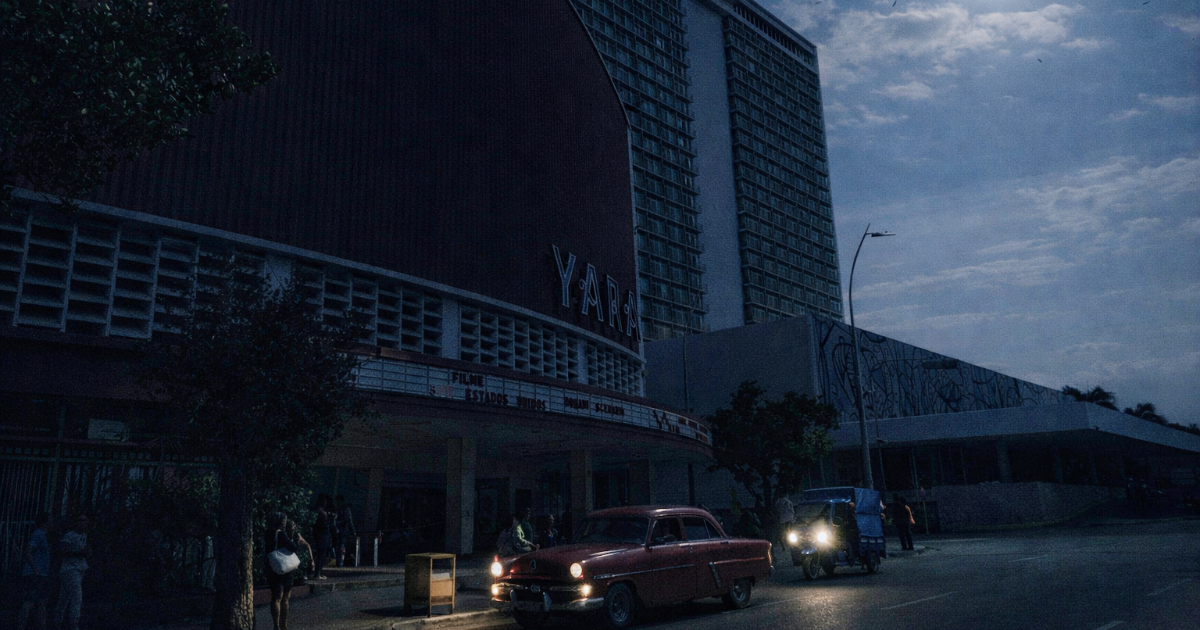
The Electric Company of Havana reported this Friday that an Automatic Frequency Discharge (DAF) left several municipalities in the Cuban capital without electricity, adding a new episode to the series of outages affecting the city in 2026.
The announcement was posted on the Telegram channel of the entity: "We want to inform the customers of the Capital that the electrical service of several municipalities is affected due to Automatic Frequency Disparity (DAF)". The note did not specify which municipalities were affected nor the exact time of the incident."
The DAF is an automatic protection mechanism of the National Electric System (SEN) that disconnects circuits in a staggered manner when the network frequency falls below the nominal 60 Hz, with the aim of preventing a total collapse.
Although it technically protects the network, its activation results in sudden and unforeseen outages for citizens.
This is –at least– the fourth episode of DAF documented in Havana so far this year.
The first incident occurred on February 20, following a accident at the Habana 220 kV Substation that injured a 54-year-old worker with burns and affected municipalities such as Boyeros, Playa, Marianao, Plaza de la Revolución, and Centro Habana.
The second incident was recorded on March 19 due to a
The new ruling comes just two days after the maximum deficit of the SEN reached 1,871 MW on Wednesday, with an availability of only 1,927 MW against a demand of 3,500 MW.
That same night, the Unit 1 of the Ernesto Guevara Thermal Power Plant experienced a failure at 8:12 PM due to turbine regulation issues, further exacerbating the situation.
The accumulated desperation from the blackouts has led to spontaneous protests in various neighborhoods of Havana. On Wednesday, people took to the streets with pots and pans in Querejeta, in the Playa municipality, after more than ten hours without electricity, and in Santos Suárez, in Diez de Octubre, where power outages exceeded 15 hours.
During that day, Havana accumulated 1,676 reports of power outages with an average duration of 24 hours, according to aggregated data. The most affected municipalities were Playa with 192 reports, Regla with 182, Cerro with 181, and Centro Habana with 169.
In March, there were three total collapses of the SEN, on the 4th, 16th, and 22nd of that month. The one on March 16 was the longest: it lasted 29 hours and 29 minutes.
After the protests that month, the organization Cubalex documented at least 14 arrests.
The energy crisis that Cuba is experiencing in 2026 is the most severe in its recent history, resulting from decades of neglect in the thermoelectric plants and three consecutive months without regular supplies of diesel, fuel oil, and liquefied gas, a direct consequence of 67 years of dictatorial management that have led the country to the collapse of its basic infrastructure.
Filed under: