
Related videos:
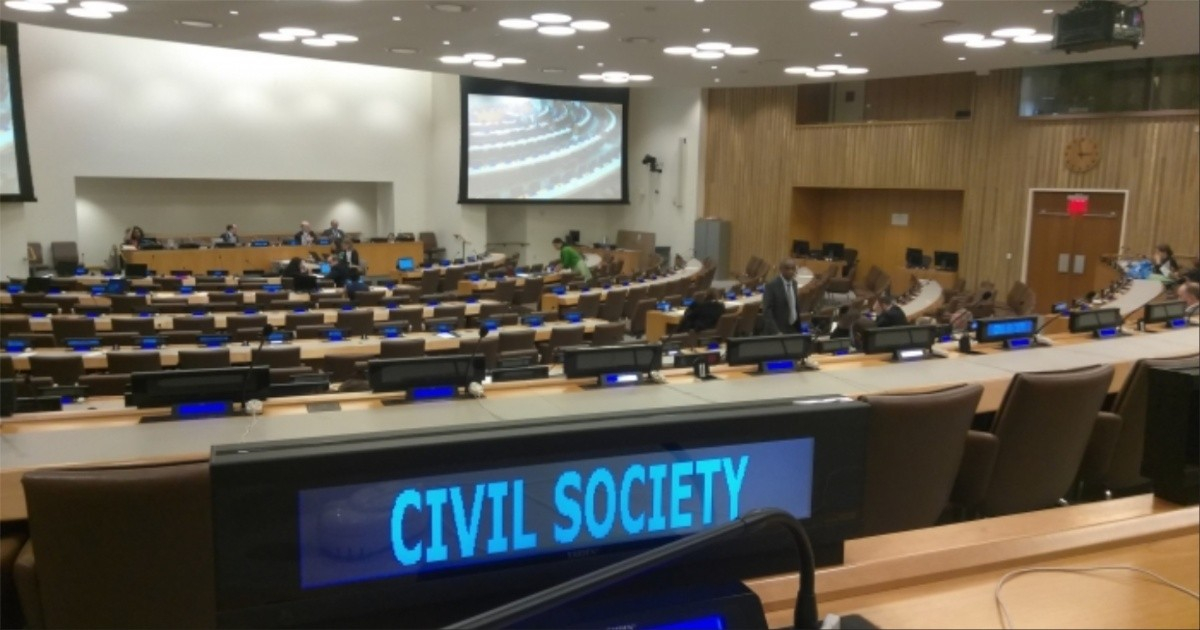
Cuba was elected this Friday by acclamation as a member of the Committee on Non-Governmental Organizations (NGOs) of the United Nations Economic and Social Council (ECOSOC) for the period 2027-2030, despite being one of the countries in the world where independent civil society is de facto prohibited.
The chancellor Bruno Rodríguez Parrilla celebrated the news on the social network X: "This result acknowledges Cuba's efforts in promoting the participation of genuine non-governmental organizations from all regions in the work of the United Nations."
The paradox is hard to ignore: the Cuban regime does not allow the existence of independent NGOs in its own territory.
The Law of Associations (Law 54/1985) requires mandatory registration with the Ministry of Justice, which systematically denies legal personality to any organization not aligned with the Communist Party of Cuba (PCC). Operating without this registration constitutes the criminal offense of "illegal association."
The only organizations that operate in Cuba are the so-called "mass organizations" directly controlled by the PCC: the Committees for the Defense of the Revolution (CDR), the Cuban Federation of Women (FMC), the Central Workers' Union of Cuba (CTC), and the Union of Young Communists (UJC).
Receiving external funds without state authorization can be punished as an "act against State Security," which turns any attempt to finance an independent civil organization into a criminal risk.
The CIVICUS Monitor classifies Cuba in the most restrictive category possible: "closed".
Far from promoting the participation of civil society, Cuba has been pointed out alongside Nicaragua, China, Pakistan, and Turkey for using their position in the NGO Committee of ECOSOC to block and delay accreditation requests from organizations that criticize their governments.
A specific example is Cubalex, an independent legal organization in Cuba that was raided in 2016 and declared illegal by the Ministry of Justice for lacking the registration that the State denied.
As of December 2025, Prisoners Defenders documented 1,197 political prisoners in Cuba, including 130 activists, 22 artists, and 10 journalists. In April 2026, the same organization reported hundreds of new arrests that occurred in March, contradicting official announcements of pardons and clemency.
It is not the first time that the regime has taken a contradictory position at the UN: in October 2023, it was reelected to the Human Rights Council, which drew criticism from Human Rights Watch, Amnesty International, and the Council for Democratic Transition in Cuba.
The NGO Committee of the ECOSOC, established in 1946 and comprised of 19 members elected by geographical representation, is responsible for accrediting and recommending which civil society organizations receive consultative status before the UN, a role that Cuba will assume starting in 2027 while systematically repressing its own civil society.
Filed under: