
Related videos:
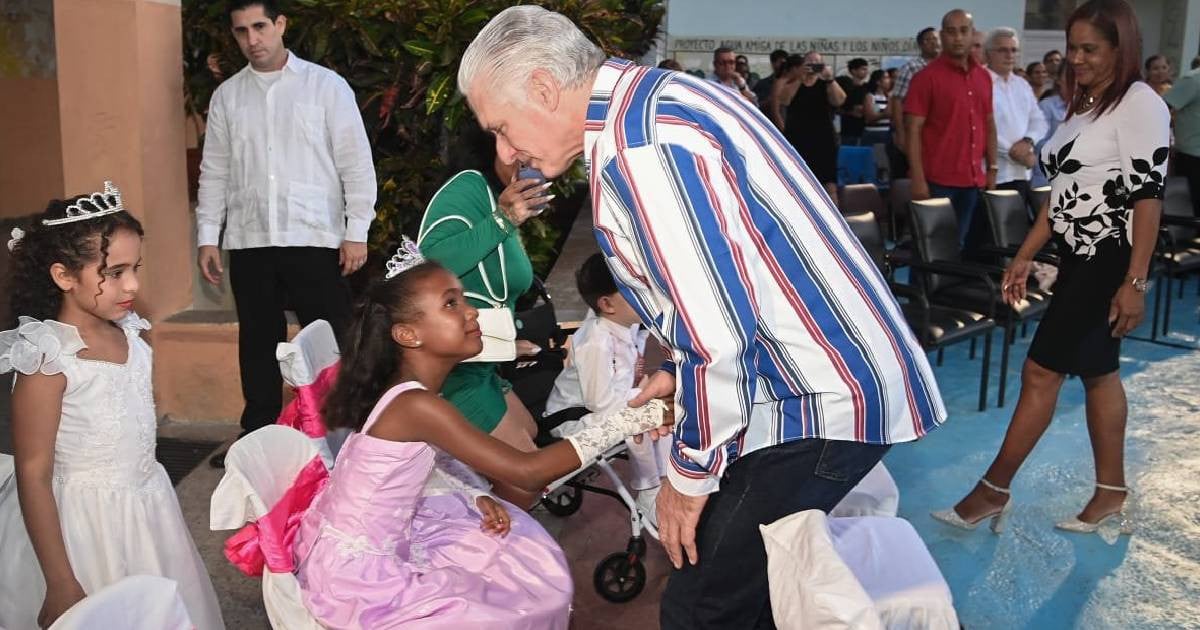
The leader Miguel Díaz-Canel reappeared this Friday at a 15th anniversary celebration at the Escuela Especial Solidaridad con Panamá, located in the southern part of Havana, publicized by the Cuban regime as a political propaganda event at a time when criticisms are growing following his interview with the American television network NBC.
The digital site of the Presidency and the official newspaper Granma, the official organ of the PCC, covered the event with the usual sentimental and overly sweet tone of state-run media, emphasizing the regime's "resistance" to the embargo and the "love" that Cuba always gives, which constitutes yet another piece of the regime's propaganda machinery.
The celebration, which was also attended by Prime Minister Manuel Marrero Cruz, brought together 19 adolescents with physical-motor disabilities who were turning 15, including two who are receiving treatment at the nearby Julito Díaz hospital.
The tradition has been celebrated every April since 1999, with the exception of 2020, when the school served as an intake area for children with COVID-19.
One of the birthday celebrants, Yelena Sans Duarte, invited Díaz-Canel through a letter in which she wrote that if the party did not take place, "Mr. Trump would say that he blocked us, but he will never be able to block Solidarity with Panama, and even less the smiles of our children."
The phrase openly turned the celebration into a political message from the regime.
The founder of the school, Esther María La O Ochoa (Teté), paid tribute to the dictator Fidel Castro (1926-2016) and his brother and former president Raúl as promoters of the tradition and stated that we are in a blocked Cuba, but never denied the ability to give love.
Unlike in previous years, Raúl Castro was not present at the celebration, so students and teachers sent him greetings as "leader of the Revolution."
The event takes place at a time of intense political pressure for Díaz-Canel, who days earlier in another act of public image, while the Cuban GDP has fallen by 23% since 2019.
On Thursday, the leader gave an interview to journalist Kristen Welker from NBC News, the first by a Cuban head of state on U.S. television since Fidel Castro appeared on the same program in 1959.
In response to the question of whether he would resign to save Cuba, Díaz-Canel replied that resignation is not part of our vocabulary. At another point in the interview, the leader challenged the journalist, asking is this your question or a question from the State Department?
The reactions from Cubans came quickly. On social media, thousands of users responded to Díaz-Canel that he should stop hiding and finally resign, in a wave of criticism that contrasted with the official narrative of the regime.
This Thursday, the PCC also launched a youth expedition Con Luz Propia to travel through communities, yet another propaganda action amid the crisis.
Filed under: