
Related videos:
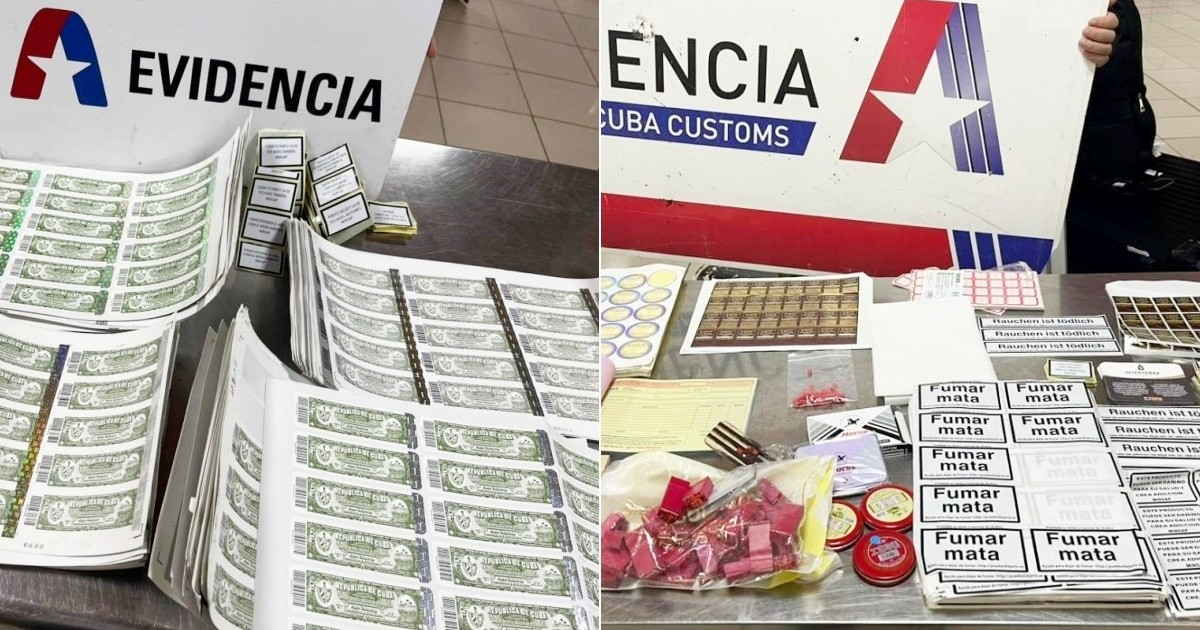
The General Customs of the Republic of Cuba detected an attempt to illegally introduce a large quantity of permits, sales invoices, and other counterfeit stickers intended for the forgery of Cuban cigars through the "José Martí" International Airport in Havana, according to official sources.
The discovery was announced by the first deputy head of Customs, Wiliam Pérez González, who specified on the social network X that it was “an attempt to illegally introduce a large quantity of certifications, sales invoices, and other counterfeit stickers through Havana Airport.”
The official added that the passenger involved was handed over to the police authorities.
In a later post, Customs detailed that these materials were intended for illicit trade and the counterfeiting of products associated with one of the most strategic sectors of the Cuban economy.
The institution emphasized that such operations "directly affect an exportable item and harm Cuban brands that have an outstanding reputation worldwide."
Materials intended for counterfeiting for international markets
Among the confiscated items were golden circular adhesive labels that would serve as warranty seals, sheets resembling holograms or fiscal stamps, red plastic pieces similar to seals for tobacco boxes, small yellow cans, and customs forms.
One element that particularly stood out was the diversity of languages present on the labels.
Some included health warnings in Spanish such as "Smoking kills" and "This product may be harmful to your health and is addictive," while others were in German, with messages like "Rauchen ist tödlich" ("Smoking is deadly").
This detail suggests that the materials were intended for the counterfeiting of Cuban cigars for sale in European markets, both Spanish-speaking and German-speaking.
Additionally, several labels in Spanish included references to Spanish organizations and website addresses of institutions from that country, which reinforces the hypothesis that the final destination could have been the Spanish market.
Spain has been using adhesive holographic stamps with unique codes since October 2003 to authenticate the Cuban cigars sold in its territory, making these elements a frequent target for networks dedicated to counterfeiting.
A pattern of smuggling attempts
The case arises amidst a series of recent detections at Cuban airports related to the smuggling and counterfeiting of tobacco.
In March, Customs reported on an attempt to illegally extract more than 370 boxes of counterfeit cigars from various brands, also through the Havana airport.
In that case, two passengers intended to take out of the country products from different brands without complying with the current regulations, and they were also handed over to the authorities.
Additionally, at the beginning of that month, the entry of more than 4,400 counterfeit stamps from the Cohiba brand originating from the United States was detected.
Pérez González emphasized that "tackling counterfeiting and protecting our registered trademarks is a priority."
Tobacco is one of Cuba's emblematic export products and a key source of foreign currency income, in the context of a deep economic crisis. Brands like Cohiba, Montecristo, and Partagás enjoy high international recognition, making them targets for counterfeiting networks.
Authorities have emphasized that these attempts to introduce or export counterfeit products not only violate current regulations but also impact the international image of Cuban tobacco and its positioning in key markets.
So far, no additional details have been provided regarding the identity of the passenger involved in the most recent incident or any possible connections to international illicit trade networks.
Filed under: