
Related videos:
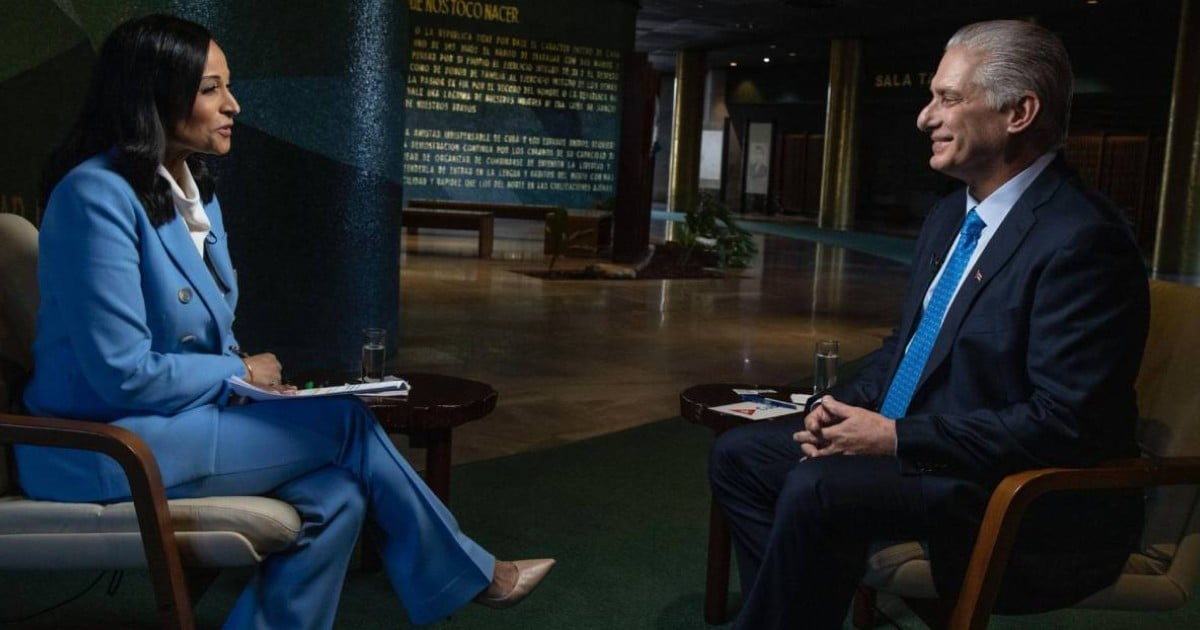
The journalist Kristen Welker, moderator of Meet the Press on NBC News, traveled to Havana and recorded an exclusive interview with Miguel Díaz-Canel in which the Cuban leader stated: "I am not afraid. I am willing to give my life for the revolution" and that Cuba "is preparing for defense" against a possible military attack from the United States, according to the communicator this Sunday on X.
The interview, lasting 53 minutes, was broadcast this Sunday on Meet the Press and marks the first appearance of a Cuban leader on American television since Fidel Castro gave a similar interview in 1959.
Welker recorded the interview last Thursday at the José Martí Memorial in Havana, surrounded by patriotic quotes on the walls, and a nearly five-minute preview was aired on Friday.
In light of the possibility of an armed conflict with Washington, Díaz-Canel referenced the Cuban national anthem —"To die for the homeland is to live"— and warned: "If the moment comes, there will be a fight, we will defend ourselves and if necessary, we will die."
When Welker asked him if he would be willing to step down to "save Cuba," the leader reacted with irritation: "Do they ask that question to Trump?" suggesting that the question "came from the State Department," and he closed the topic by stating that resigning is not part of our vocabulary.
Díaz-Canel also rejected all of Washington's demands — the release of political prisoners, multiparty elections, free trade unions, and a free press — stating that "respect for our political system and constitutional order is not up for negotiation."
Regarding the more than 1,214 cases of political prisoners documented by Prisoners Defenders, the ruling leader described them as a "big lie" and "slander", attributing the arrests to "vandalism and crimes" funded by the United States.
Díaz-Canel also admitted to never having spoken with Secretary of State Marco Rubio or knowing him personally.
The interview takes place at a time of the highest tension between Cuba and the United States in decades, exacerbated by the capture of Nicolás Maduro by U.S. forces on January 3, which deprived the Island of between 26,000 and 35,000 daily barrels of Venezuelan crude oil and deepened an already devastating energy crisis.
In response, the regime approved the January 18 plans and measures for the transition to a State of War and declared 2026 as the "Year of Preparation for Defense," while the Trump administration signed an executive order declaring the Cuban regime an "extraordinary threat" to national security and imposed over 240 new sanctions since January.
Regarding the state of bilateral negotiations, Cuban Deputy Foreign Minister Josefina Vidal described the contacts as "very preliminary and initial, without a structured formal negotiation", in contrast to the White House's assertion that discussions are progressing "at the highest level."
Filed under: