
Related videos:
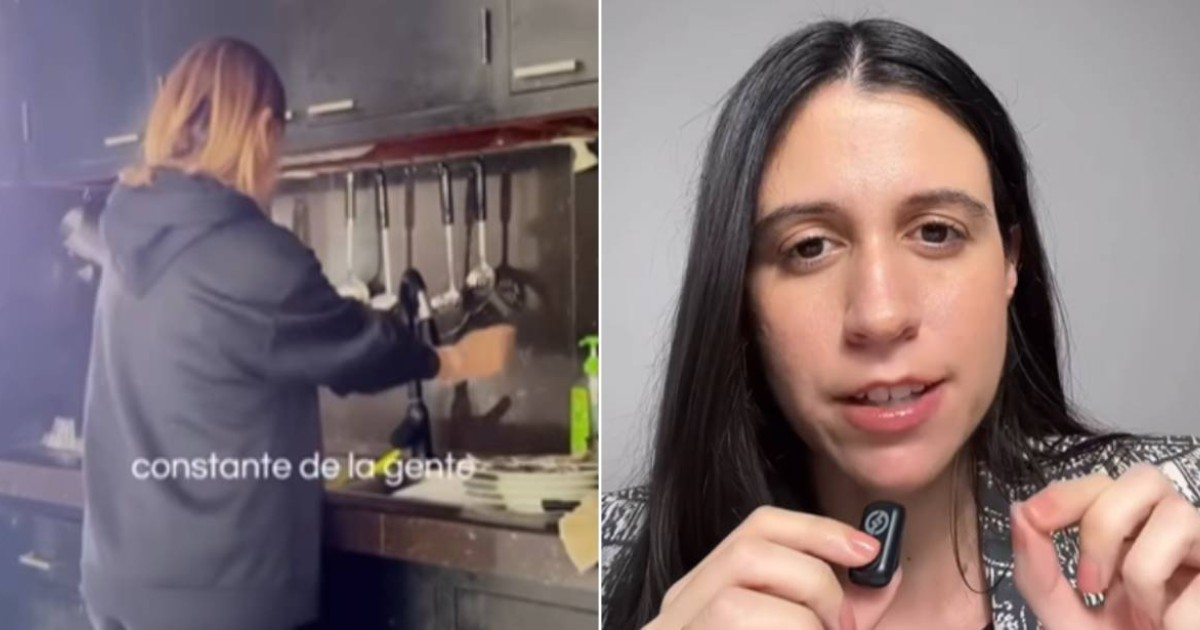
The Cuban psychologist Gise Ponce, known on Instagram for her profile "Guapas por Dentro", sparked an intense debate on social media by responding to the statements of the influencer Jess Pilar, who claims that the responsibility for personal stagnation lies solely with the individual, ignoring the poverty conditions imposed by the dictatorship in Cuba.
In a reel published a few weeks ago, Jess defends herself against criticisms on social media for living a luxurious lifestyle in Cuba. She accuses her haters of practicing "constant victimization" by attributing the lack of progress in Cuba to the government or the limited freedom in the country. Her conclusion is straightforward: "The blame for not moving forward, for staying where you are, lies with no one but yourself".
That video went viral and sparked harsh comments against the influencer. Among the messages, Ponce's response stood out, as it was structured with calmness, reflection, and a psychological analysis of Jess's profile on social media.
"Why do you start the video by saying I live in Cuba? Why do you refer to monarchy instead of dictatorship? If you whitewash the reality of a people that is suffering, it is because you are complicit in that misery," the psychologist remarked.
He recalled that "most of the people on the island will not be able to watch Jess's video because they spend long hours without electricity and dealing with basic needs." This suggests that the influencer's possible interest is in reaching an audience that idealizes life in Cuba, while the reality for most of the country's population is quite different, closer to extreme poverty.
"Leaving Cuba is a great privilege that not everyone has access to, and this is seldom discussed," Ponce said, describing his own experience of leaving behind family and friends, and seeing his university degrees lose validity in the destination country.
The emigrant accused Jess of exploiting the suffering of others.
"You are denying reality, erasing the context, and using others to uphold your position of superiority," affirmed the psychologist and added: "This type of content is not just an offense to those who had to emigrate; it is especially an offense to those who are inside."
The debate arises at a time when Cuba is experiencing a severe mental health crisis exacerbated by extended blackouts, described as psychological torture, and a chronic shortage of psychiatric medications such as amitriptyline, risperidone, and quetiapine, which have been virtually unavailable since 2020.
The budget allocated for social assistance in Cuba for 2026 was just 5,981 million Cuban pesos, equivalent to around 14,600 dollars, an insignificant amount considering the scale of the crisis.
This type of controversy is not new on the social media of the Cuban diaspora. Debates intensify whenever someone tries to reduce decades of repression and scarcity to a matter of individual attitude.
"Reducing thousands of very painful stories and instrumentalizing them. For what? To sustain your own narrative," Ponce concluded in a statement that encapsulates the core of the debate.
Filed under: