
Related videos:
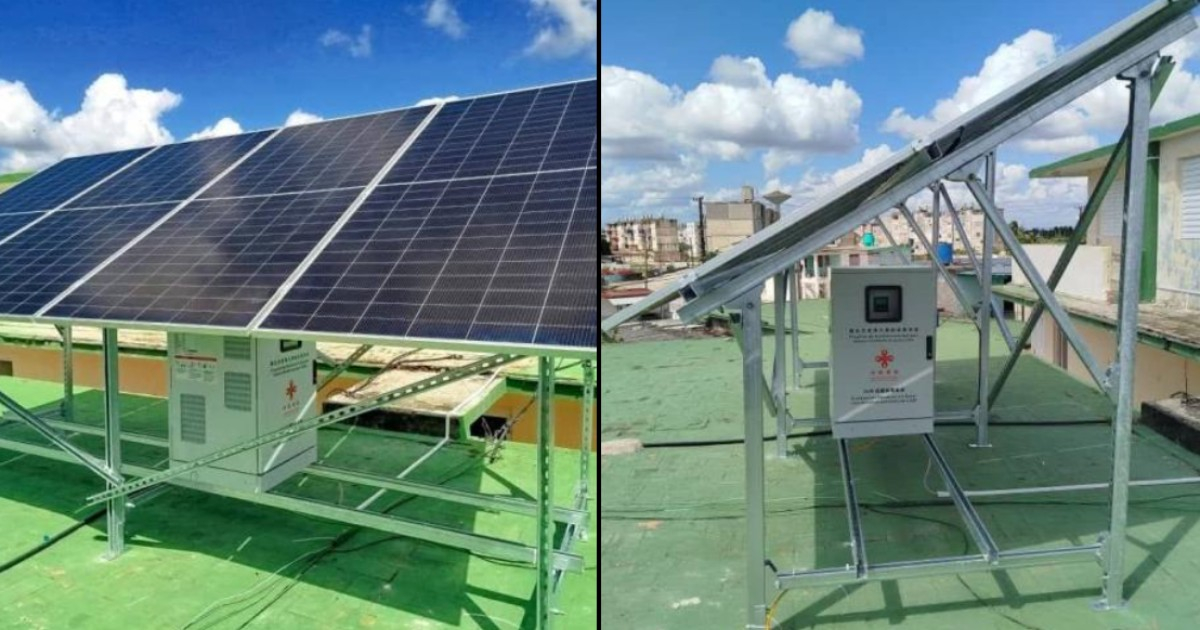
The Chinese ambassador in Cuba, Hua Xin, published images of photovoltaic systems donated by China that have already been installed in polyclinics and other vital centers across various Cuban provinces, as part of a program providing 5,000 units delivered to the island amid the worst energy crisis in its recent history.
The diplomat accompanied the photographs with a message stating that the systems seek to protect the life and health of the people amidst the energy blockade by the U.S. against Cuba, framing the Chinese assistance as a direct response to U.S. sanctions.
On the same day, the newspaper Granma reported that in Pinar del Río, the installation of 68 photovoltaic systems in the 20 polyclinics of the province, along with its 23 extended emergency services, in addition to 11 maternal homes, the psychiatric hospital, and several nursing homes, was completed.
The installation in Pinar del Río was carried out for free by self-employed workers, with support from specialists from Copextel, Cedai, and the Electronic Components Company. Some systems, donated by cooperatives and agricultural producers, reach up to six kW of power, surpassing the original standard of two kW.
In total, China donated 5,000 photovoltaic systems to Cuba, officially delivered at the Mariel Container Terminal in November 2025 and managed by the China International Development Cooperation Agency. Of this total, 2,671 are allocated to vital centers distributed across the 168 municipalities of the country, while the remaining approximately 2,329 will go to isolated rural homes without stable access to electricity.
Among the vital centers that benefited, 556 systems correspond to polyclinics, 461 to nursing homes, 349 to offices of the Electric Union, 336 to bank branches, 301 to funeral homes, 240 to ETECSA facilities, and 161 to maternal homes. Each system includes solar panels, inverters, and storage batteries, and serves as an additional guarantee to the existing generators.
Elena Maidelín Ortiz Fernández, head of the project at the Electric Union, specified that the goal is to ensure the minimum energy survival of essential services, not total self-sufficiency.
The program is being implemented amid the most severe energy crisis Cuba has faced in its recent history. The maximum electrical generation deficit reached 1,945 MW on April 1, affecting 55% of the national territory without electricity simultaneously. The National Electric System completely collapsed on March 22, when more than 90% of Havana was left without electricity, and the island has been without regular supplies of diesel, fuel oil, and liquefied gas for over three consecutive months.
The crisis has roots in decades of neglect in the thermal power plants, worsened by the disruption of Venezuelan oil shipments and the fire at the Nico López refinery in Havana on February 13. Cuba only produces 40% of the oil it consumes.
China is the main energy ally of the Cuban regime in this context. In addition to the 5,000 photovoltaic systems, it has connected 49 solar parks to the national electrical system with a total capacity of 120 MW, and in January 2026, it approved an additional emergency aid of 80 million dollars for electrical equipment and urgent needs. Meanwhile, the UN launched a plan to assist two million people in 63 municipalities across eight Cuban provinces, although it faces a dollars.
Filed under: