
Related videos:
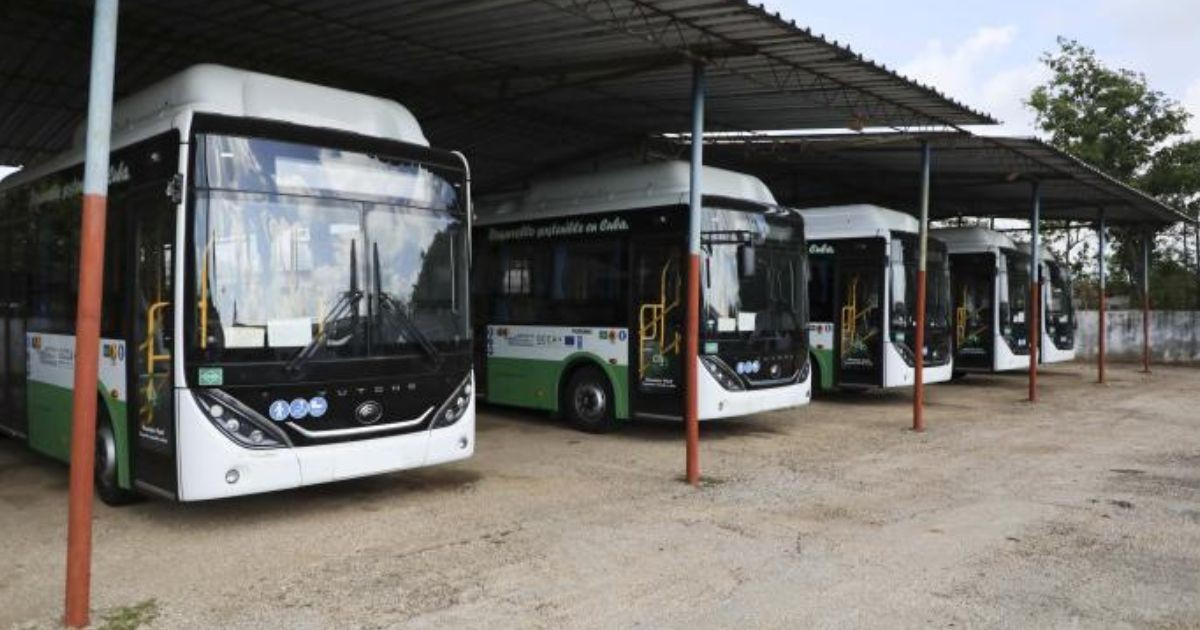
The municipality of Martí, in Matanzas, houses the first biogas plant in Cuba, a project funded by the European Union through the United Nations Development Programme (UNDP) with an investment exceeding 3.6 million dollars. It aims to launch five buses from the Chinese brand Yutong powered by this fuel to benefit over 22,000 residents, reported the government newspaper Granma.
The plant, located in the popular council Esteban Hernández, is already assembled and awaiting final technical tests and approval from the suppliers, as explained by Sobeida Reyes Martínez, the municipal Development Director and project coordinator: "The biogas plant and the filling station are ready and just waiting for some technical tests and approval from the suppliers."
The system processes waste from pig facilities in biodigesters and transports the biogas through a 11-kilometer underground pipeline to the refining plant, where it is purified to achieve a methane concentration close to 90%.
The five buses would cover internal routes within the municipality and connections to Cárdenas and the city of Matanzas, in an area where the access road from Cárdenas appears "literally empty" and a ride in an almendrón to Cárdenas costs 1,500 pesos.
The need is real: the public transportation in Cuba only meets 42% of planned goals, as acknowledged by the regime itself in January 2026, and the production of buses has plummeted from 473 units in 2019 to just 12 projected for 2026.
However, the project faces a structural contradiction that calls its viability into question: the pigpen that serves as the main source of raw material has barely 1,000 pigs out of an installed capacity of 15,000.
The technical person in charge, Wilber Oliva Rodríguez, admitted it outright: "Our main problem right now is managing enough raw material to sustain production."
This scarcity is not coincidental. The Cuban pork production plummeted from over 200,000 tons in 2018 to just 9,300 tons in 2024, a decline of over 95% caused by decades of failed state management.
To compensate, the project relies on vaccine excreta, other organic waste, and even plans to process sargassum, which illustrates the precariousness of the foundations upon which the initiative rests.
The popular reaction on social media was skeptical: $5 million investment to fuel 5 buses?
Filed under: