
Related videos:
A project in the municipality of Martí, in Matanzas, aims to transform pig waste into biogas to fuel public transportation, amidst the energy crisis affecting Cuba, which severely limits mobility and electricity generation.
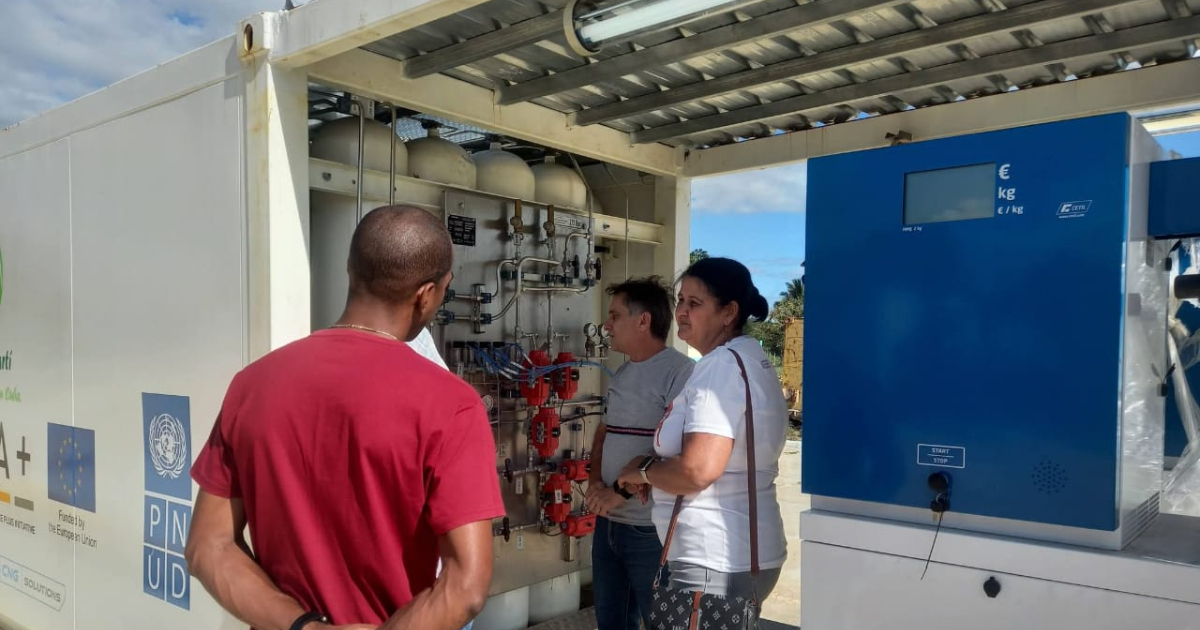
The initiative is taking place in pig facilities in the area, where organic waste is processed in biodigesters to produce biogas. According to the newspaper Girón, the gas obtained has already been refined and is ready to fuel urban buses.
The first secretary of the Communist Party in Matanzas, Mario Sabines Lorenzo, recently visited the plant and highlighted the progress of the project, which aims to put into operation vehicles powered by this fuel connected to the provincial capital, as seen in .
"A renewable source of energy that is rapidly growing," stated Sabines Lorenzo on his Facebook profile.
The system includes an infrastructure made up of seven containers designated for processing and a 14-kilometer gas pipeline that will transport biogas from the pig farming centers to the processing plant.
Authorities assure that the fuel will allow the operation of at least five buses from the Chinese brand Yutong, which will cover internal routes in the municipality and connections to Cárdenas and the city of Matanzas, benefiting over 22,000 residents.
The process involves the removal of impurities such as carbon dioxide and moisture to obtain a gas with characteristics similar to natural gas. At full capacity, the plant could generate enough energy to supply the equivalent of about 80 homes.
The project has funding exceeding 60 million pesos and is part of international cooperation programs focused on sustainable development, with support from the United Nations Development Programme (UNDP) and financing from the European Union.
In the municipality, it had already been announced that five buses powered by biomethane would cover routes between popular councils and connections to hospitals in Colón, Cárdenas, and Matanzas. However, during that process, the refining plant was not yet operational, and key technical elements for its startup were still pending, as was explained when it was reported that the buses depended on still incomplete infrastructure.
The development of this project takes place in a context of severe energy crisis in the country, characterized by fuel shortages and generation deficits that have led to prolonged blackouts throughout the national territory.
In that context, the government has advocated for alternatives such as the use of biomass and waste to generate energy. During a recent public address, Miguel Díaz-Canel defended this approach by stating: “Biogas, transforming waste into energy,” as part of a strategy that includes producing electricity from waste, in a scenario where the use of garbage has been proposed as an energy source.
The proposal to expand this type of solutions coexists with structural problems such as the accumulation of trash in numerous cities and the deterioration of communal services, which has raised doubts about the actual capacity to implement these alternatives on a large scale in the short term.
Although the project in Matanzas is presented as a commitment to renewable energy and a circular economy, its immediate impact remains limited in light of the magnitude of the energy crisis and public transportation issues in Cuba.
Filed under: