
Related videos:
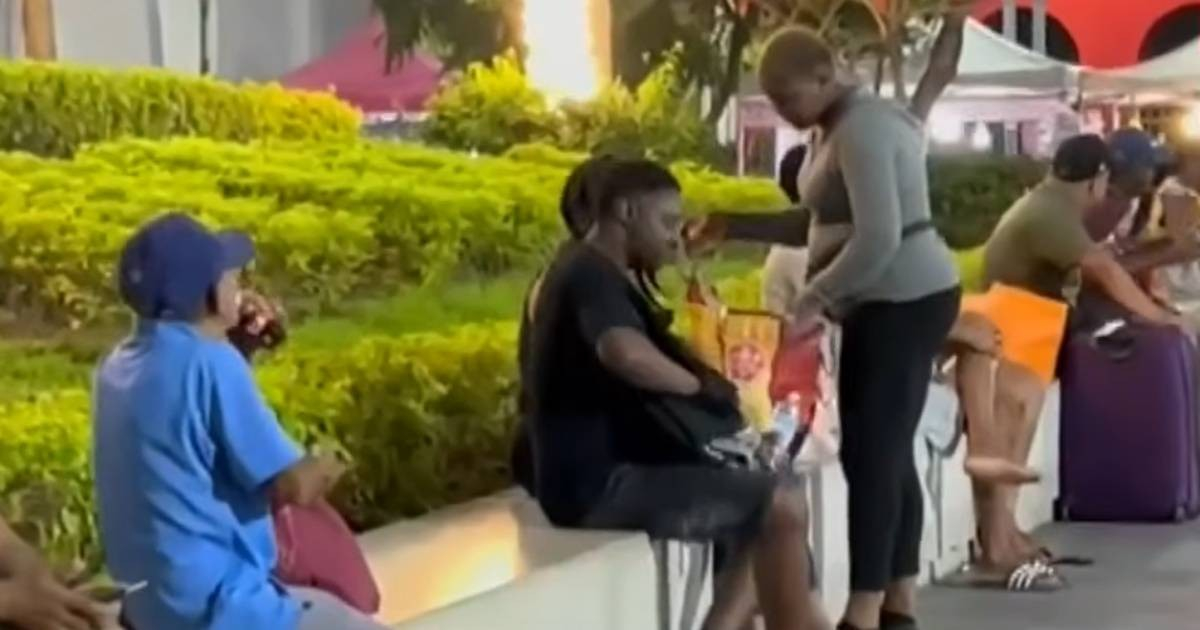
Hundreds of Cubans deported from the United States have been stranded in southern Mexico since February 2026, without money, documents, or the possibility of returning to either Cuba or the United States, trapped in a legal limbo in Tapachula, Chiapas, and Villahermosa, Tabasco.
The Trump administration informed a federal court on March 25 that it has deported nearly 6,000 Cubans to Mexico under an unwritten agreement with the Mexican government, which is effectively acting as a safe third country to receive these migrants.
The situation of the deportees is particularly dramatic because they face a triple impossibility: they cannot return to Cuba because they were exiled by the regime or chose self-exile; they cannot go back to the United States; and in Mexico, they lack legal status to reside or work.
"Right now, I am neither Cuban, nor American, nor Mexican, because they won't give me the papers here," summarized one of the affected individuals harshly in statements collected by Milenio Noticias.
Another deportee explained the origin of his situation: "We left Cuba because we had political problems, and the United States did not accept us. We had a problem over there, they deported us, but they weren't sending us to Cuba because there was no extradition agreement. So now, with the Trump administration, they have sent us back here."
Many of these Cubans were construction workers —masons, electricians, welders— who had been living in the United States for years andwere detained upon leaving their jobs, according to the report from Milenio, "only because of their racial profile."
For the past two months, they have been living on the street or in precarious spaces for which they pay 2,000 Mexican pesos per person.
A 60-year-old man, living on the streets, directly asked the authorities for help: "I wanted to tell the authorities if they could help us get out of here, from Tapachula, at least, because we have family. I want to be in Ciudad Juárez to make my life, because I have relatives there. I'm already 60 years old, and now I'm homeless. I have never been in this situation in my life."
Many have started refuge applications with the Mexican Commission for Refugee Assistance (COMAR), but the response can take months, and in the meantime, they do not have permission to move to other states.
To that, corruption adds to the problem: "You have to pay a hefty sum under the table to get it [the paperwork], otherwise you can't go anywhere," reported another affected individual.
Activists estimate that there are approximately 800 Cubans stranded in Tapachula and 3,000 in Villahermosa, while Luis Rey García Villagrán, director of the Center for Human Dignification, believes that about 60,000 migrants in total remain stranded in the Tapachula area.
The federal judge William Young, from the Boston court, questioned the legality of the agreement on March 26, asking whether there was a "secret or implicit agreement" and demanding documentary evidence from the Department of Homeland Security.
The authorities in Tapachula have acknowledged that the mass arrival of deported Cubans is a completely new situation for which no one was prepared, while those affected continue to remain without answers and without a clear outlook.
Filed under: