
Related videos:
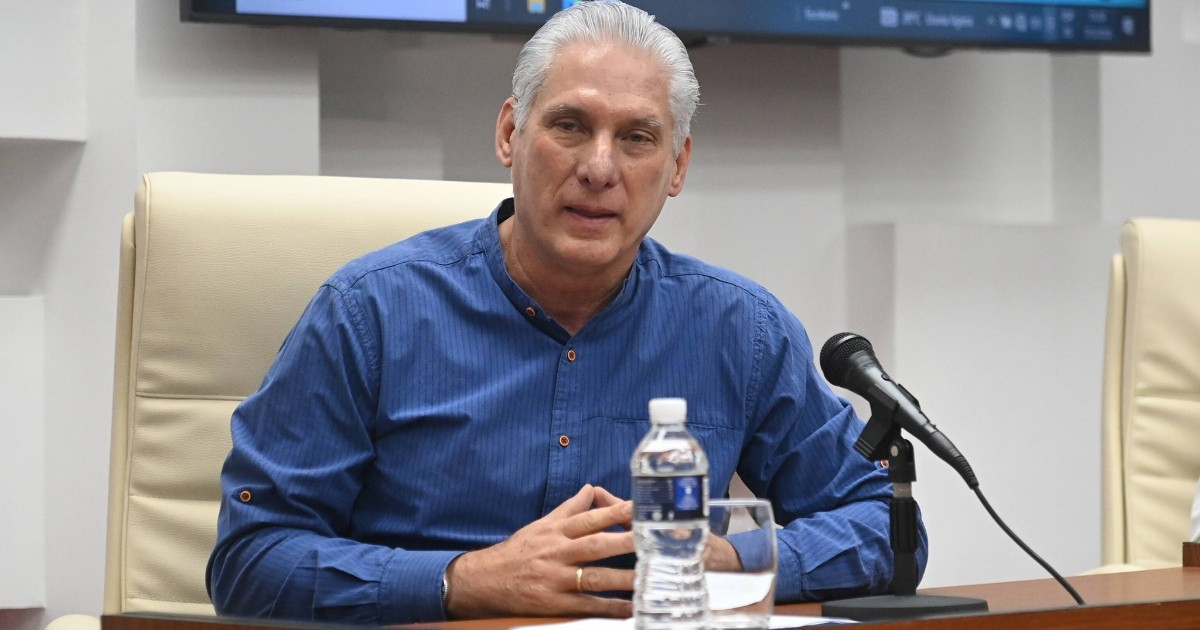
Miguel Díaz-Canel remembered the call this Thursday for a political event in Havana to commemorate the 65th anniversary of the proclamation of the socialist character of the Cuban Revolution and once again referenced the verse from the national anthem: “To die for the homeland is to live,” amidst the profound economic and energy crisis that the country is experiencing.
In a message posted on X, the leader reiterated the call to “sing once again the glorious verse” of the national anthem.
The event commemorates the speech that Fidel Castro delivered at the same location on April 16, 1961, during the funeral of air raid victims, one day before the invasion of Playa Girón, when he proclaimed the socialist nature of the Revolution.
For the event, the Provincial Road Safety Commission of Havana ordered the total closure of several streets in the Plaza de la Revolución municipality starting from 05:00 hours.
The call this Thursday is not an isolated event, but the latest installment of a discursive pattern that Díaz-Canel has repeated before national and international audiences in recent months.
Last Sunday, in a 53-minute interview with NBC News' "Meet the Press" —the first by a Cuban leader in that space since Fidel Castro in 1959—, Díaz-Canel stated: "I am not afraid. I am willing to give my life for the revolution" and "If it is necessary to die, we will die, because as our national anthem says: to die for the homeland is to live."
In that same interview, he refused to release over 1,200 political prisoners, hold multiparty elections, and recognize free labor unions and press, conditions that Washington demands to normalize relations. When asked if he would resign to save Cuba, he responded with irritation: “Do you ask that question to Trump? Does that question come from the State Department?”
On April 7, in an interview with Newsweek, he had threatened with a "guerrilla warfare" in response to any military aggression from the United States and cited the same line from the anthem. Secretary of State Marco Rubio responded with a single statement: "I don't think much about what he has to say."
In March, in front of the former leader of Podemos Pablo Iglesias, Díaz-Canel was even more explicit: "I tell you this with the deep conviction I hold, which I have shared with my family, that we would give our lives for the revolution".
This discourse of sacrifice and resilience is reiterated as Cuba faces its worst crisis in decades: blackouts affecting more than 60% of the national territory, widespread shortages of food, fuel, and medicines, and a historic record of 953 protests registered just in January 2026, according to the Cuban Conflict Observatory.
The Russian tanker Anatoly Kolodkin arrived in Matanzas on March 31 with approximately 700,000 barrels of crude oil, enough to cover just one third of the country's monthly requirements.
The official slogan for May 1st, 2026, "The Homeland is Defended" also invokes the same line from the anthem, reinforcing an official narrative that appeals to collective sacrifice while the regime avoids taking any responsibility for the collapse experienced by the Cuban people.
Filed under: