
Related videos:
The Russian embassy in Cuba published on Facebook recent statements from Foreign Minister Serguéi Lavrov in which he reaffirmed Moscow's support for Havana but avoided any commitment to a military response in the event of a potential intervention by the United States.
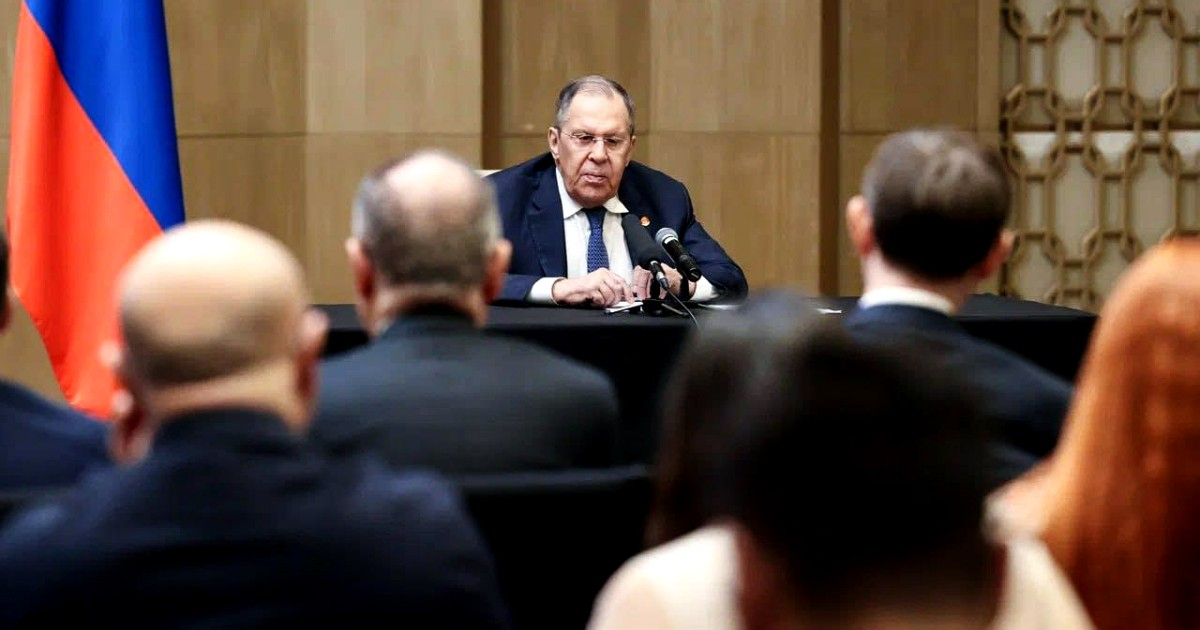
In the midst of a sustained escalation of tensions between Washington and the Cuban regime, Lavrov spoke on April 15 at the end of his official visit to China, and responded to a question about the threats from President Donald Trump, who claimed that the US could "go through Cuba" after settling its matters with Iran.
"I'm not going to speculate on the possible consequences of this step. We have heard various statements from Washington, and not all of them have translated into practical actions," said the veteran diplomat and right-hand man of Vladimir Putin, as reported by the Russian Foreign Ministry.
Lavrov reaffirmed Moscow's "political, economic, and humanitarian support", but made it clear that the defense of the island falls on the Cuban government itself: "The statements from the Cuban leadership, including President Miguel Díaz-Canel, confirm their determination to defend freedom until the end, using all possible means."
The chancellor also reported that Russia sent "the first ship with one hundred thousand tons of oil to Cuba," enough, he acknowledged, "for a couple of months."
The post generated thousands of reactions on social media. Numerous users interpreted that Moscow was sending a message of distancing regarding a possible armed conflict with the U.S., leaving the Cuban regime to fend for itself on the military front.
This pattern is not new. At the end of January, while Cuba was facing a severe fuel crisis due to the cutoff of Venezuelan supplies, the Russian ambassador Viktor Koronelli indicated that the solution depended on the Cuban government itself, although he reached out a hand from Moscow, according to the agency TASS.
The apparent distancing contrasts with the formal deepening of the bilateral alliance in defense matters. In March 2025, Russia and Cuba signed an intergovernmental military cooperation agreement that Putin ratified as law in October of the same year.
Parallelly, the U.S. Department of State estimated that between 1,000 and 5,000 Cubans are currently involved in military operations alongside Russia in Ukraine, while Ukrainian military intelligence raised that number to at least 20,000 recruits since the conflict began.
Tensions with Washington have intensified since January 2026, when Trump signed Executive Order 14380 declaring the Cuban government an "extraordinary threat to national security" and imposing tariffs on countries that sell oil to the island.
In mid-March, Trump stated from the White House: "I believe I will have the honor of taking Cuba." On March 27, in Miami Beach, he added: "Cuba is next, but pretend I didn't say that."
For its part, the Pentagon has discreetly accelerated the planning for military operations on the island, according to recent revelations published by USA Today. Díaz-Canel responded last Wednesday
Lavrov, for his part, advised Washington to return to the path of dialogue: "Agreements were reached with Cuba during the Obama administration. Havana accepted them. They were agreements based on mutual respect and beneficial for both parties."
And he concluded with a veiled warning: "It is said that with courtesy and good manners, one can achieve much more than with the opposite traits of human character."
Filed under: