
Related videos:
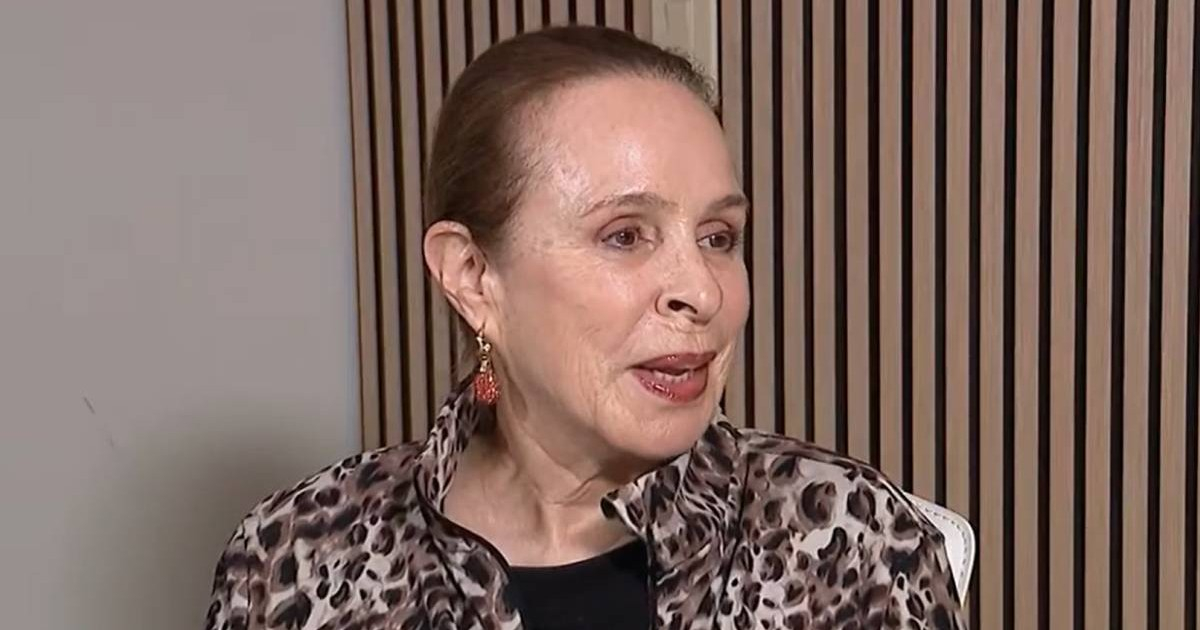
Alina Fernández, daughter of Fidel Castro, granted an in-depth interview to the Spanish newspaper El País, published this Sunday from Miami by journalist Carla Gloria Colomé, in which she bluntly denounces the harm her father caused to Cuba and describes the current situation on the island as a "point of no return."
At the age of 70, from a modest home in Miami where she maintains what she herself calls a "low profile," Fernández reflects on decades of lies, absences, and frustrations, and issues a warning about the current situation in Cuba: "What is needed is a change. In any way possible. People in Cuba need to breathe, enter the 21st century, provide a life for their children, and they need hope and freedom for all of this."
In his opinion, the truth about the Caribbean nation "is becoming less and less easy to hide. Cubans have been the subjects of a completely absurd social experiment that is a revolution lasting almost 70 years."
The interview coincides with the premiere of the documentary The Daughter of the Revolution, directed by Thaddeus D. Matula, at the Miami Film Festival, in which Fernández participated as a producer and aims to be a collective portrait of recent Cuban history from exile.
About Fidel Castro as a father, Fernández is relentless. She discovered he was her father at the age of ten, when her mother Natalia Revuelta revealed the truth: "The first thing I remember is a feeling of betrayal, because almost everyone around me knew, even my best friend, and that hurt me much more than anything else." She describes the dictator as someone with a typical narcissistic personality who didn’t know "how to deal with a child" and who had "occasional paternal outbursts." When Castro offered to give her his last name at the age of 12, Alina declined: "It seemed to me an unnecessary, sordid procedure. It even felt humiliating."
The interviewee also reveals how the shortages, starting very early after the revolution, even affected parts of the Castro family. Her mother, Natalia Revuelta, refused to buy from the black market because "it wasn't revolutionary," while the rest of the country survived thanks to it. "I remember lentils without salt on the table at my house for dinner. Bread disappeared, milk, butter," she recalls. Fidel would "occasionally help with a bit of milk, or something else." That enforced austerity stands in stark contrast to the reality of the current Castro elite: the military conglomerate GAESA, controlled by Raúl Castro's circle, manages about 40% of Cuba's GDP and accumulates billions in tax havens, while the average salary on the island hovers around twenty dollars a month.
Regarding her father's obsession with the particular battle against the U.S., the interviewee states: "It was his leitmotif, his sole reason for being and existing. And it served him well; it was very useful. Fidel was an inherently crafty person, in politics, in manipulation. He forged this idea of the guerrilla fighter, diligent, alone in his great struggle against imperialism 90 miles away. All that imagery was created to reinforce his power. We are deeply affected; it has been a systematic hammer on our minds, in education."
About today's Cuba, Fernández does not hide his alarm. The island is currently experiencing power outages affecting more than 60% of the territory, with generation deficits exceeding 1,800 MW during peak hours, and has accumulated seven total collapses of the electrical system in 18 months. "If this vital circumstance of no electricity continues, if this persists, I don’t know what might happen," he warns. Regarding real power, he points directly to the military apparatus: "I know that the GAESA military conglomerate has enormous power and a lot of money. Who is in charge? Who controls? I have no idea."
Regarding the immediate future of the country, in the context of the negotiations between the regime and the Trump administration, which began in March 2026, Fernández is skeptical but does not close the door to hope: "I dare to have hopes, but I also have that feeling that I've had hopes many times and I have to swallow them." She believes that focusing on Miguel Díaz-Canel "does not solve any problem" and points to the disconnect between the official discourse and facts, such as the emergence of 32 dead Cubans in Venezuela, after the regime denied having a military presence there.
Valora Fernández believes that it is unlikely for the people of the Island to overthrow the tyranny on their own, especially with the significant outflow of emigration in recent years. "I think dictatorships arise with a little help and they also fall, they collapse, with another little push. It’s difficult to achieve internally," she noted.
Regarding the Castro dynasty and justice, Fernández states: "The main perpetrators of this tragedy have died; however, many accomplices remain." Fidel passed away in 2016 and Raúl Castro is now 94 years old. Fidelito, Fidel's eldest son, took his own life on February 1, 2018, after years of clinical depression, without the regime bestowing any official honors upon him. Meanwhile, Sandro Castro, Fidel's grandson and influencer with over 150,000 followers, runs a luxury bar in Vedado that cost $50,000, in a country where the people have been suffering for months without electricity or water.
Filed under: