
Related videos:
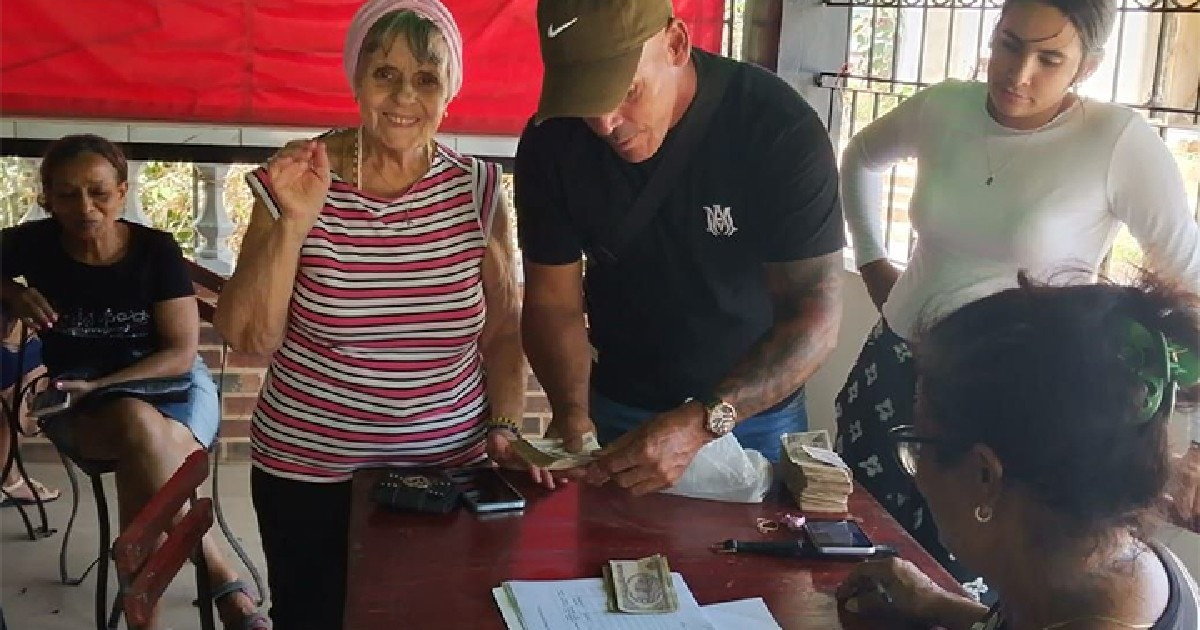
The official Cuban press celebrated this weekend a pilot plan by the Central Bank of Cuba (BCC) to pay pensions in shopping centers and at home in four municipalities of Havana, while the reality faced by the elderly across the country contradicts any reason for celebration.
The Cuban News Agency (ACN) referred this Sunday to testimonies from elderly individuals in various neighborhoods of Havana who "express gratitude" for the new payment facilities, presented as a social achievement of the regime. Citing reports from BCC and the Metropolitan Bank, ACN explained that the new payment methods have been implemented in the municipalities of La Lisa, Playa, Plaza de la Revolución, and Old Havana, so that seniors do not have to stand in the long lines at banks.
The experiment includes the "Extra Box" service in establishments of Mipymes (Micro, Small, and Medium Enterprises), Local Development Projects, and self-employed workers, designated as "non-banking agents" through contracts with BANMET and who charge commissions for the service. Banking authorities indicated that the plan "could be expanded to other territories, even outside of Havana," and announced the installation of solar panels in branches to mitigate power outages that force changes in service hours.
What the official statement does not mention is the scene that repeats every month across the island: elderly people standing in endless lines for hours and, in the most extreme cases, sleeping on the sidewalks in front of banks to secure their place for the next day.
A dramatic case was reported on April 14 in Camagüey: the independent journalist José L. Tan Estrada revealed that retirees were sleeping in the doorway of the Charity Bank —a branch of the Banco Popular de Ahorro, on Avenida Libertad— on sheets, cardboard, and worn blankets. The reduction in banking hours, compounded by power outages, forces them into this situation, and at times the police have had to intervene to organize the lines.
In Cárdenas, Matanzas, dozens of retirees gather under the sun or rain without any seats or cash available. In Santiago de Cuba, elderly individuals have been sleeping in streets near ATMs for many months. On Sunday, a video shared on Facebook showed shoving and scuffles in front of a branch of the Banco Metropolitano in Villa Panamericana, in East Havana, with someone shouting for police intervention.
The economic background explains the desperation. Following the partial increase approved in September 2025, the minimum pension was set at 3,056 Cuban pesos and the maximum at 4,000 pesos per month, equivalent to less than 10 dollars at the informal exchange rate. A retiree with 40 years of work received a pension of 3,727 pesos in April —less than eight dollars— after eight months of waiting.
A tray (cardboard) of eggs costs more than 3,000 pesos, and basic food requirements amount to at least 30,000 pesos monthly, eight times more than some full pensions. The purchasing power of the minimum pension has lost nearly 30% in the last year due to inflation and devaluation.
The figures from independent organizations depict the scale of neglect. Nearly all of the Cuban retirees have confirmed in studies by independent organizations that their pensions do not cover basic needs. 79% of those over 70 cannot have three meals a day, and 90.7% work informally after retirement, according to the Cuban Observatory of Human Rights.
Cuba records 1,774,310 retirees according to the National Office of Statistics and Information, but the Family Assistance System only covers 67,000 people with a budget of just $14,600 for 2026. Officials from the Ministry of Labor and Social Security admitted in March that the government does not have enough budget to support all vulnerable individuals.
On the other hand, the massive emigration of over a million people since 2021, mostly young individuals, has left the elderly without family support networks, while the state lacks the resources to fulfill that role.
By 2030, it is projected that individuals over 60 years old will make up 30% of the Cuban population, which will further aggravate a crisis that the regime is trying to conceal with pilot plans and gratitude headlines, while in Cárdenas a retiree died from injuries sustained in an assault while waiting in line to collect his pension.
Filed under: