
Related videos:
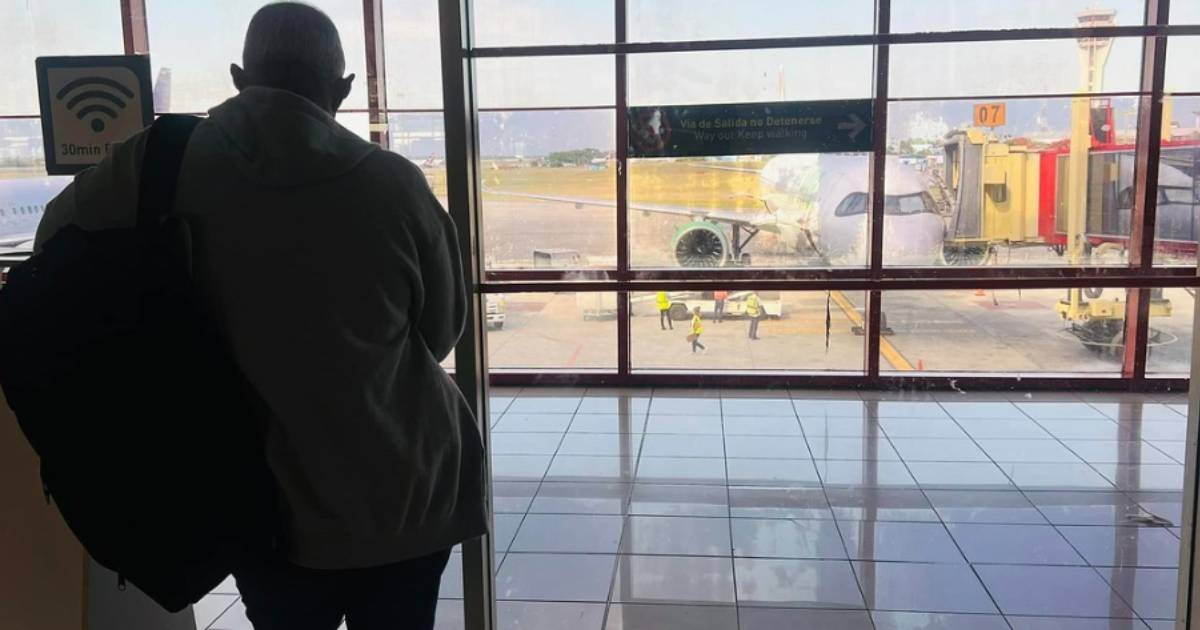
Leaving Cuba is no longer just a desperate decision, but an increasingly narrow, expensive path filled with obstacles. What for years served as a release valve for millions of Cubans is now turning into a labyrinth without guarantees.
A report from Bloomberg reveals that the island has lost more than 2.75 million people since 2020, but now that exodus is beginning to slow down, not because people want to stay, but simply because there are fewer and fewer options to leave.
The change is drastic. Countries that once operated as relatively accessible routes are closing their doors. Nicaragua eliminated the visa exemption for Cubans, Costa Rica closed its embassy in Havana, and Ecuador severed diplomatic relations. Meanwhile, airlines are reducing or canceling flights amidst the fuel crisis impacting the island.
Iberia announced this month that it will suspend its direct flights to Cuba, joining a trend that leaves fewer and fewer options for those looking to leave the island.
In this scenario, Latin America has become the new migration map. Suriname, Guyana, Brazil, Uruguay, and Mexico stand out as alternatives, each with its own challenges. Brazil, for example, reported an increase of nearly 90% in asylum applications last year, but in the first months of this year, a decline in the arrival of Cubans has already been noted.
The problem is not just finding a destination, but paying for the journey. Many migration packages cost over $1,000 per person in a country where the average salary is around $20 a month. “Those who don’t leave are the ones who don’t have the means,” summarized Ángel Fernández Hernández, a Cuban who has been unable to gather the money to leave with his family.
Others do try, at any cost. Yosbel Reyes, 49, recently flew to Guyana, leaving his teenage children behind. He borrowed money to cover the $1,500 for the trip and now faces job uncertainty in a country where he doesn't even speak the language. "One is seeking a way out, but when you get to these places, you realize that the situation isn’t what you expected," he confessed.
Routes are also becoming more expensive and complex. A young Cuban recounted that a year ago he paid around 1,000 dollars to get to Suriname; today, similar journeys exceed 1,500. Additionally, there is the challenge of making international payments from Cuba, which forces reliance on relatives abroad or intermediaries.
The pressure does not stem only from costs. Immigration policy has also changed. Under the Donald Trump administration, the United States tightened restrictions, drastically reducing the entries of Cubans: from 180,000 attempts in 2024 to just 8,000 last year, according to data cited by Bloomberg.
At the same time, the energy crisis on the island has paralyzed key services. The lack of fuel not only causes blackouts but also impacts transportation, slows down bureaucratic procedures, and limits people's ability to raise money or manage their exit.
Even those who manage to organize themselves face last-minute decisions. A couple from Havana decided to leave the country in just 24 hours after seeing the severity of the fuel crisis on social media. They set off for Miami with their children, but eventually ended up traveling to Spain out of fear of being deported.
From the U.S. side, authorities have taken a tougher stance regarding a possible mass arrival of Cuban migrants by sea. Military officials have warned that "We do not want to see a massive armada arriving", referring to an exodus through the Florida Straits similar to that of Mariel in 1980.
Meanwhile, the migration flow does not disappear but changes form. “It hasn’t stopped; people are seeking routes in Latin America,” explained a priest who works with Cuban migrants in Spain. However, he also warns that fewer and fewer are arriving.
The result is a harsher reality: emigrating remains a dream for many Cubans, but now it is a privilege that not everyone can afford. And for those who stay, it is not always a matter of choice.
Filed under: