
Related videos:
The Electric Union (UNE) forecasts a disruption of 1,100 MW during peak demand hours this Wednesday.
According to the report, at 6:00 am, the National Electric System (SEN) had already recorded 266 MW affected, with a demand of 2,136 MW and a supply of 1,980 MW. By noon, the UNE estimated cuts of 750 MW.
The only improvement expected for the nighttime peak is the commissioning of unit four of the Carlos Manuel de Céspedes thermal power plant, which has a capacity of 150 MW and is currently in the startup process.
However, an availability of only 2,130 MW is expected against a demand of 3,200 MW, resulting in a deficit of 1,070 MW.
Five thermoelectric units remain out of service today at the CTE Ernesto Guevara De La Serna, Diez de Octubre, Carlos Manuel de Céspedes, Antonio Maceo, and Felton.
In addition, three units are under maintenance at the Mariel, Renté, and Nuevitas CTEs, not including 381 MW of additional thermal limitations out of service.
On Tuesday, the situation became even more serious.
According to the official report, the maximum impact from the generation capacity deficit was 1,384 MW at 7:20 PM, exceeding what was planned due to the outage of Unit 4 at the CTE Cienfuegos and Unit 2 at the CTE Santa Cruz.
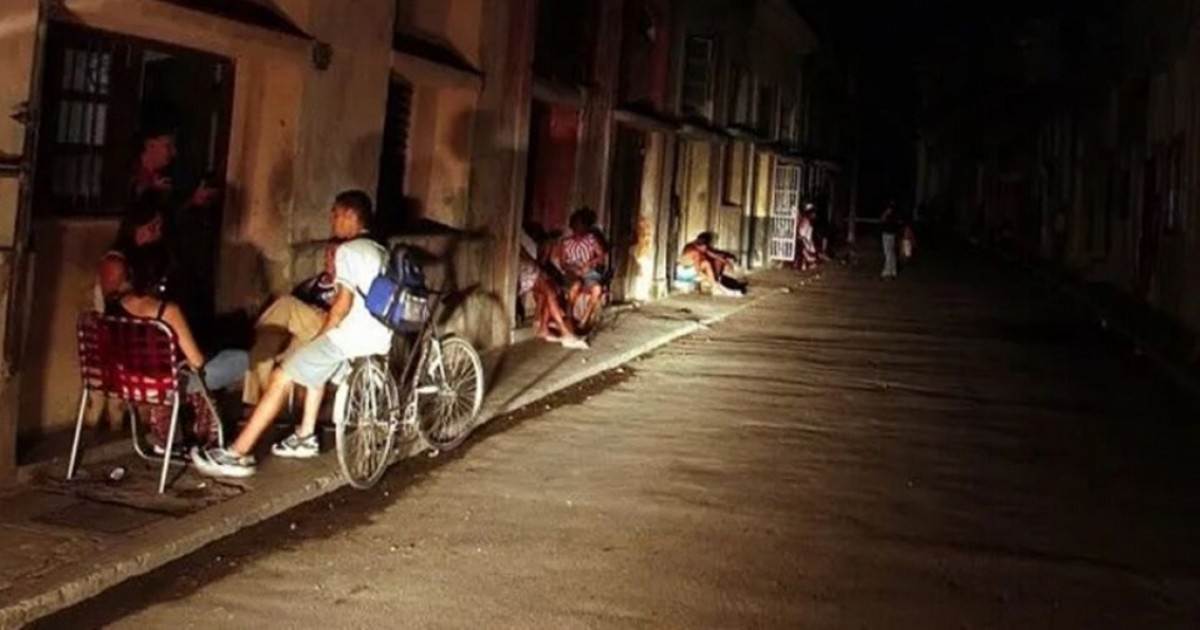
The service was affected for 24 hours: the system shut down at 4:12 AM, and power outages resumed at 5:07 AM, offering no respite to the population.
This part comes in the worst month of the year for the Cuban electrical system. On April 1, a maximum deficit of 2026 was recorded at 1,945 MW, and on April 16, 62% of the national territory was left without power simultaneously, leaving more than 200,000 Cubans without access to water.
The relative improvement of recent weeks was due to the arrival, on March 31, of 100,000 tons of crude oil donated by Russia on the tanker Anatoly Kolodkin at the port of Matanzas, which allowed the reactivation of some units starting April 19. However, the unforeseen breakdown of two units on Tuesday demonstrated the fragility of the system.
The United Nations (UN) has classified the situation as a humanitarian emergency: more than 96,000 surgeries have been postponed, one million people rely on tanker trucks for water supply, and nearly half a million children have shortened school days due to the energy crisis.
Filed under: