
Related videos:
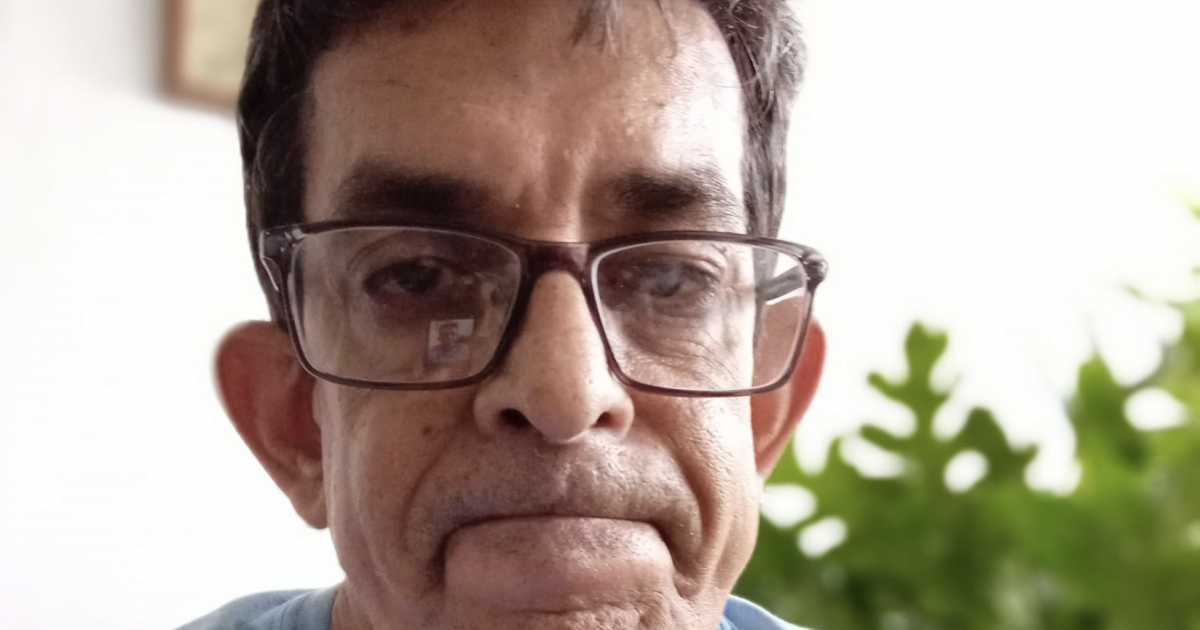
The comedian and activist Ulises Toirac posted a direct critique of the selectivity of Cuban justice on Facebook this Saturday, using the public statements of Sandro Castro, the grandson of Fidel Castro, as an example. He enjoys a freedom of expression that the regime systematically denies to ordinary citizens.
"Asere Sandro says anything, and for half of that, they imprison anyone," wrote Toirac in his post, which quickly sparked debate among Cubans both on and off the island.
The activist was explicit in clarifying that his criticism is not aimed at having Sandro Castro imprisoned, but rather at the inequality before the law: "I swear I’m not in a Cuban 'screw him too' mindset. No. I would never stoop to that level. What shouldn’t happen is anyone being incarcerated. Or are there levels to 'justice'?"
The immediate trigger is the interview that Sandro Castro gave to CNN in Spanish on March 30, where he made statements with significant political impact from his apartment in Havana.
In that interview, the dictator's grandson stated that "the majority of Cubans want capitalism, not communism," directly criticized Díaz-Canel by pointing out that "he is not doing a good job" and that "a long time ago, he should have done many things that have not been done well."
Sandro Castro also revealed that he was summoned for questioning by the Cuban State Security due to his satirical videos, but he was released without charges, only with a warning.
This impunity stands in stark contrast to the fate of citizens without illustrious surnames: according to Justicia 11J, at least 760 political prisoners remain incarcerated in Cuba, many of them sentenced for social media posts that are far less incendiary than the statements of Fidel's grandson.
Sandro Castro attempted to present himself on CNN as a "humble citizen" who suffers from blackouts just like the rest of the Cubans, an argument that generated widespread skepticism. Idalmis Menéndez, the former daughter-in-law of Fidel Castro, publicly refuted him on April 2: "You do have privileges, Sandro, because you were born in the heart of power."
Toirac's publication fits into a pattern of systematic denunciation that the activist has maintained for months.
In November 2025, he questioned the case of former Minister of Economy Alejandro Gil, stating that "justice only arrives when an impossible-to-hide hare jumps."
In February 2026, he denounced the denial of habeas corpus for young people detained in Holguín due to social media posts, calling it a "shame" and a violation of human rights "to their face."
Now, with Sandro Castro also announcing an upcoming live interview on Noticias Univisión —as he posted on his Instagram stories— the contrast pointed out by Toirac becomes even more evident: Fidel's grandson is expanding his international media platform while hundreds of Cubans without a surname remain imprisoned for much less.
According to Prisoners Defenders, Cuba holds at least 1,030 people imprisoned for political reasons, including 217 women and 86 minors.
Filed under: