
Related videos:
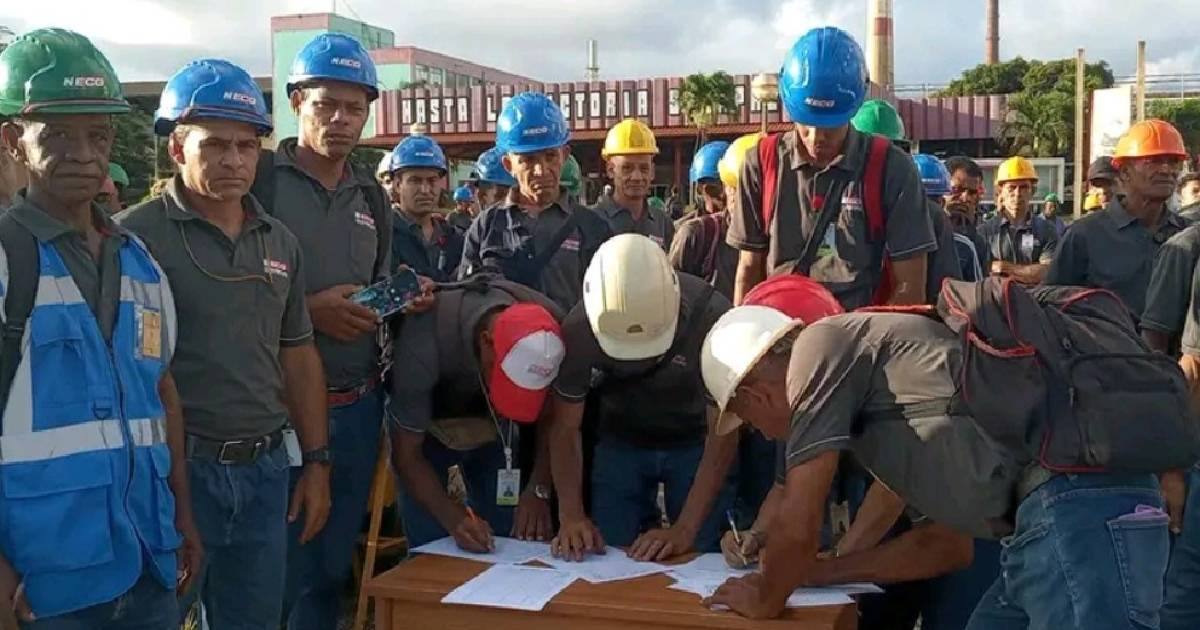
The Cuban writer Wendy Guerra Torres warned international media this Saturday about a campaign that, according to multiple testimonies gathered from within the island, seeks to coerce citizens into signing the so-called "books of popular will," documents in which they declare their support to "defend the achievements of the Revolution at any cost."
According to the cited reports, family members, neighbors, and friends in various provinces describe a systematic pressure to obtain those signatures, which would then be used by the authorities as evidence of popular support for the political system.
However, the testimonies agree that many citizens do not wish to sign, but end up doing so out of fear of possible reprisals.
Among the mentioned threats are job loss, the cancellation of scholarships or university placements, denial of exit permits from the country, and the withdrawal or non-renewal of licenses for small and medium-sized private enterprises.
These administrative and social pressures, according to the reports, create a context in which refusal to sign can have personal or economic consequences.
In light of the potential release of official results that present these firms as evidence of widespread support for socialism, the warning directed at the international press is to examine with caution any figures disseminated by state media.
According to Guerra's complaint, behind those numbers there would be citizens who signed under pressure, rather than a genuine expression of political support.
The campaign "My Signature for the Homeland" was announced on April 18 by Yuniasky Crespo Baquero, head of the Ideological Department of the Central Committee of the Communist Party (PCC), who presented it as "the greatest honor and the supreme duty of every Cuban."
The ruler Miguel Díaz-Canel inaugurated it on April 20 at the Ciénaga de Zapata Memorial Museum in Matanzas, stating that "the Cuban Revolution will never negotiate its principles." The official goal is to collect millions of signatures before May 1.
Although the regime presents it as a spontaneous initiative of civil society, the campaign is organized from the structures of the PCC through workplaces, universities, and mass organizations such as the Committees for the Defense of the Revolution.
Citizen rejection has been widespread. Residents of Block 4 in Cárdenas, Matanzas, collectively resisted signing despite direct pressure.
The activist José Daniel Ferrer, from the Patriotic Union of Cuba (Unpacu), publicly urged against signing, while Cubans have responded massively on social media demanding free elections and denouncing the structural crisis of the system.
In the comments on Guerra's post, Cubans expressed that same frustration. "Signing under duress is worthless, and they know it. It’s a way to remind the people that they hold the power and to mock those who do it because they have no other choice," wrote Guillermo Labrit.
Others pointed out the underlying contradiction. "And what achievements are there to defend? Hunger, unsanitary conditions, hospitals without supplies, schools without proper facilities," questioned Roman Luis.
For her part, Massiel Díaz noted that the process lacks international observers and described it as "oxygen for the last moments of a dying entity."
This is not the first time the regime has resorted to this maneuver. In September 2025, it executed an identical campaign to support then-president Nicolás Maduro, during which the Ministry of Education mobilized students and required signatures from children and teenagers under the threat of being labeled as "counter-revolutionaries." The organization Cubalex then reported violations of children's rights.
Independent analysts describe the current campaign as a smokescreen aimed at diverting attention from an economic crisis that includes a 23% contraction in GDP since 2019, extended blackouts, and shortages of food and medicine.
Guerra concluded his alert with a direct call to the press. "The international press needs to closely observe this process and understand the conditions under which millions of Cubans are being urged to sign these documents throughout the country. Only then can the true meaning of those figures be clearly conveyed," he emphasized.
Filed under: