
Related videos:
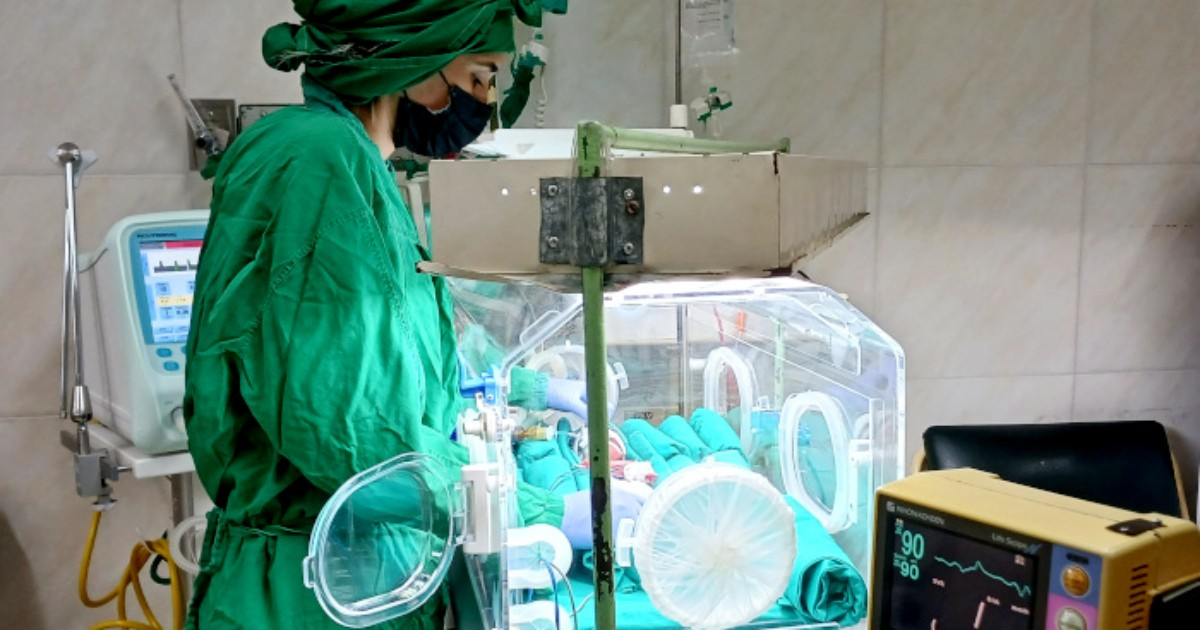
A new report from the Center for Economic and Policy Research (CEPR), based in the United States, establishes a direct causal relationship between the tightening of U.S. sanctions against Cuba since 2017 and the dramatic increase in infant mortality on the island, which rose from 4.0 per 1,000 live births in 2018 to 9.9 in 2025, an increase of 148%.
The study, conducted by Alexander Main, Joe Sammut, Mark Weisbrot, and Guillaume Long, estimates that if the 2018 rate had been maintained, approximately 1,800 fewer babies would have died since then.
This deterioration contrasts with the regional trend: until recently, Cuba had one of the lowest infant mortality rates in the Western Hemisphere, even lower than that of the United States, which in 2015 recorded 5.8 deaths per 1,000 live births compared to 4.3 in Cuba.
The report indicates that the tightening of the embargo during Trump's first administration, Biden's decision to maintain those policies, and the escalation of sanctions during Trump's second administration— including a fuel blockade— "is very likely the main cause of the current economic and humanitarian crisis in Cuba, widely regarded as the worst in the island's contemporary history."
Among the most harmful measures identified are the Restricted Entities List of Cuba (2017), the reduction of the threshold for U.S. content in exports from 25% to 10% in October 2019, restrictions on tourism and cruises, the re-inclusion of Cuba on the list of state sponsors of terrorism in January 2021, and successive restrictions on family remittances.
The economic impact is significant: tourism revenues fell by 59%, from $3.2 billion in 2017 to $1.3 billion in 2024; remittances decreased by 42%, from $4 billion in 2018 to $2.3 billion in 2024; and imports of goods were reduced by 30%.
CEPR researchers visited health facilities in Cuba in 2024 and confirmed that Cuban medical importers could no longer obtain basic supplies such as syringes, inhalers, or saline solution at affordable prices, nor equipment such as imaging systems and ultrasound machines.
The collapse of the Cuban healthcare system also has internal dimensions: between 2021 and 2022, more than 12,000 doctors, 7,414 nurses, and 3,000 dentists emigrated, with salaries averaging around 16 dollars per month.
Since January 2026, the de facto blockade on Venezuelan oil supply has worsened the situation. According to a report by NBC last March, 300 ambulances are out of service due to a lack of fuel or spare parts, with only 25 electric ambulances for the entire island, while blackouts disrupt the operation of incubators and ventilators for newborns.
The infant mortality rate in Cuba has steadily increased in recent years. Havana recorded a rate of 14 deaths per 1,000 live births in January 2026, the highest in the country in over two decades.
The debate over the relative responsibility of the embargo compared to the internal policies of the regime has gained momentum. A Cuban-American academic criticized a New York Times article for attributing the collapse almost exclusively to the fuel blockade, overlooking decades of structural deterioration caused by the dictatorship.
The Cuban Minister of Health admitted the collapse of the system in July 2025, and in February 2026 he acknowledged that only 30% of the basic medicine supply is covered.
The CEPR concludes that "it is highly probable that Cuba's infant mortality rate has significantly increased since December 2025," when it had already reached 9.9 per 1,000 live births, and warns that other key indicators such as life expectancy and maternal mortality have also deteriorated since the beginning of this year.
Filed under: