
Related videos:
The president of El Salvador, Nayib Bukele, responded to criticism from international media and human rights organizations regarding the mass trial of 486 alleged leaders of the MS-13 gang, directly labeling them as "terrorists" and comparing the process to the Nuremberg Trials.
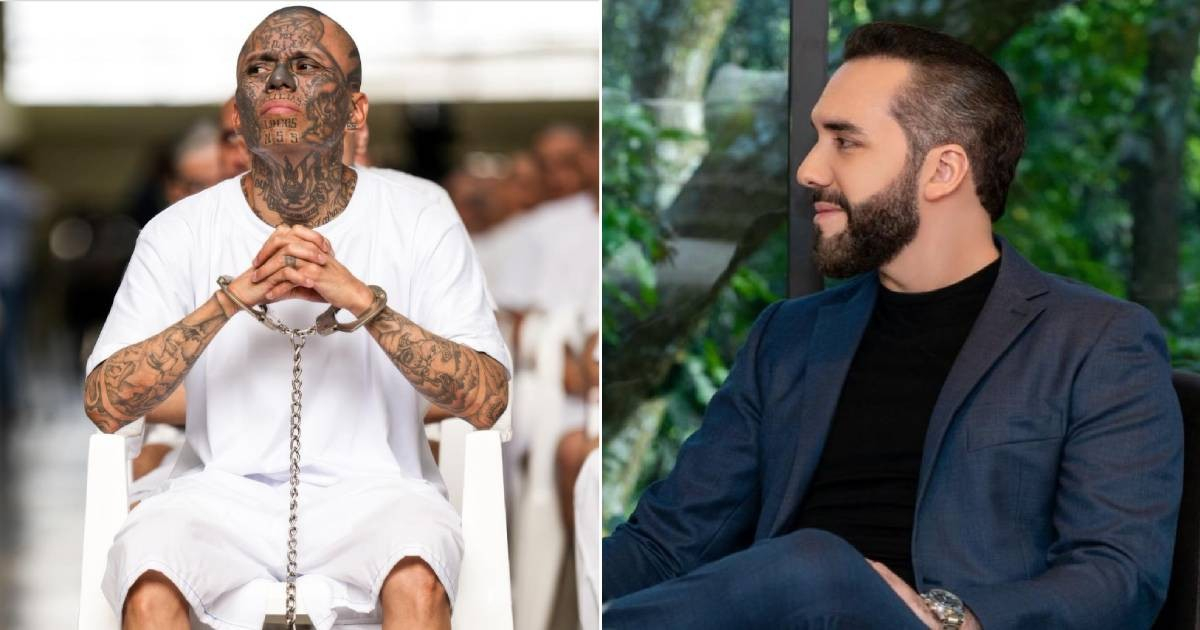
"These are the 'alleged gang members' that some international media are discussing. The same ones that certain NGOs refer to as 'civilians' and defend so vigorously," wrote Bukele last Thursday on his social media, accompanying the message with images of the accused.
The president firmly rejected the characterization of the defendants as civilians or presumed criminals: "They were not 'alleged gang members' to their victims. They were not 'civilians' to the communities that lived under their control for decades. They were not 'innocent' to the families who still mourn their loved ones, murdered or disappeared by these terrorists."
Bukele emphasized that the 486 accused are not minor criminals, but well-known gang leaders, "most of whom have already been convicted for crimes they personally committed, including murders, sexual assaults—often followed by murder—extortion, and kidnapping."
The trial, which began on April 20 and is considered the largest in the history of El Salvador, accuses the defendants of more than 47,000 crimes committed between 2012 and 2022, including over 29,000 proven murders, according to the Attorney General's Office.
Among the accusations is having ordered 86 crimes during the weekend of March 25 to 27, 2022, the massacre that triggered the declaration of a state of emergency.
Of the 486 defendants, 413 are appearing virtually from prisons —more than 250 from CECOT, the maximum security meg prison— and 73 are fugitives and are being tried in absentia.
To defend the legal principle in question, Bukele referred to a historical parallel: "The only 'novel' aspect is holding leaders accountable for the crimes committed by their organizations. But we did not invent this principle. It's called 'command responsibility,' and it was applied in Europe during the Nuremberg Trials."
The leader added, "If Europe was able to implement it, so can we. We are no less than they are, and we also have the right to live in peace."
The comparison sparked international controversy. The former director of Human Rights Watch, Kenneth Roth, described the trial as "unjust" for including hundreds of defendants in a collective process that, according to him, assumes collective guilt. The Inter-American Commission on Human Rights and Amnesty International have also criticized the proceedings for restrictions on access to defense and violations of due process.
The state of emergency, declared on March 27, 2022, and extended monthly by the Legislative Assembly, has been in effect for over four years and has resulted in more than 83,000 arrests related to gangs.
The results in terms of security are undeniable: the homicide rate fell from 18 per 100,000 inhabitants in 2021 to 1.9 in 2025, and Bukele celebrated more than 900 consecutive days without homicides in the country.
In November 2024, a major pretrial hearing had already sentenced 71 leaders of MS-13 to prison terms of up to 1,860 years each, setting a precedent for the current process.
Filed under: