
Related videos:
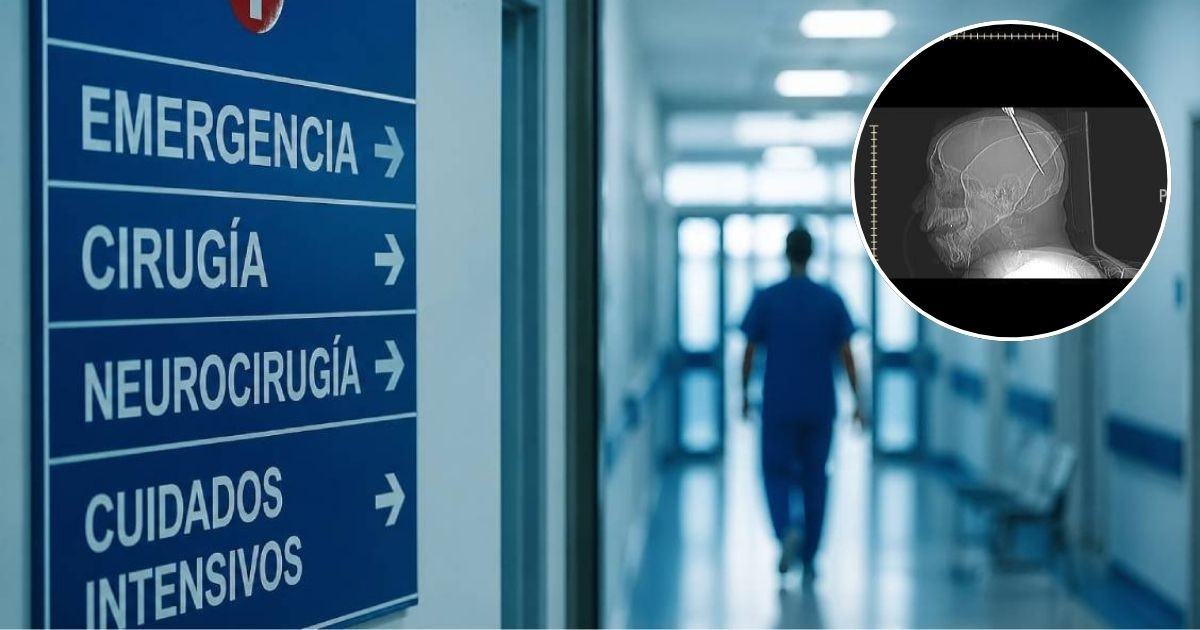
A 19-year-old Cuban man survived against all odds after arriving at a hospital in Georgetown, Guyana, with a knife deeply embedded in his skull, following an attack during a social gathering in the early hours of Sunday morning.
According to the official statement from the Georgetown Public Hospital (GPHC), which was accessed by the local media iNewsGuyana, the young man was urgently transferred to the emergency room after suffering a violent stabbing to the head. Upon arrival, he had the knife still embedded in his skull, which the hospital described as "a rare and extremely dangerous form of penetrating brain injury."
The immediate CT scans revealed that the blade had penetrated the skull, lacerated tissues in the language center of the brain, and caused active intracranial bleeding.
At around 4:00 in the morning, the on-call neurosurgery team urgently transferred him to the operating room.
The operation demanded extreme precision. Unlike conventional trauma cases, removing a knife embedded in the brain requires exposing the surrounding bone and brain tissues to extract the blade in a controlled manner, minimizing bleeding and preserving neurological function.
The procedure went smoothly.
After waking up from anesthesia, the patient regained consciousness and demonstrated a neurological recovery that the hospital itself described as "extraordinary." He exhibits right hemiparesis—weakness on the right side of the body—and difficulty articulating words, direct consequences of damage to the language center, but doctors expect both to improve over time.
The GPHC announced that the young man would be discharged from the hospital this Tuesday.
The case occurs in a context of rising violence against the Cuban community in Guyana, estimated at between 5,000 and 7,000 people, mostly concentrated in Georgetown and employed in the construction sector.
In 2025, at least four Cubans who died in the country were documented: Ariel Betancourt Ramírez was found dead in an apparent robbery in December, Pedro Alexander Frometa Slonchak was shot by a security guard in August, and another Cuban was found dead with stab wounds in April.
Many of these migrants arrived in Guyana fleeing the economic crisis in Cuba, and the country also serves as a transit point to Brazil, Uruguay, and Chile. The Cubans in Guyana have requested more opportunities and even access to citizenship given the uncertainty of their migratory situation.
From a medical standpoint, penetrating brain injuries from low-velocity objects like knives have a hospital mortality rate of between 11% and 23% in patients who arrive alive at the medical facility. This makes the recovery of this young man statistically favorable yet medically remarkable, given the level of penetration and the area affected.
Filed under: