
Related videos:
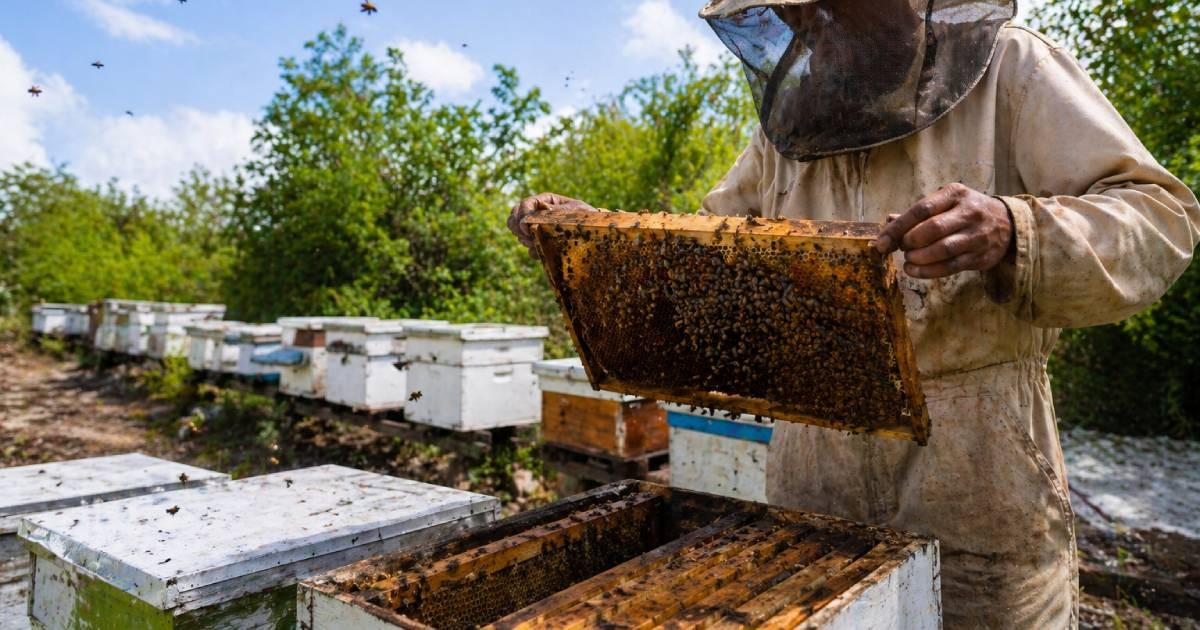
Yoandy Verea González, a beekeeper contracted by the Cuban Beekeeping Company (Apicuba) in the municipality of Perico, Matanzas province, posted a public complaint on his Facebook profile in which he accuses the state-owned company of accumulating a debt of thousands of dollars with him and other producers for the honey delivered from mid-2024 to July 2025.
Verea works alongside her father producing 55 honey tanks a year, as well as wax and propolis. She chose to publish on her personal profile because, as she explains, the official beekeepers' page in Cuba does not accept complaints "or justice as I call it."
The beekeeper describes a situation of complete abandonment by the state company: unpaid foreign currency debts, a halt in the supply of inputs—especially hive boxes—and a total absence of fuel since February of this year.
"The company has already completely breached the contract; they aren't selling us any supplies, especially hive boxes, which are crucial for their development to increase production. To make matters worse, since February, we haven't received a drop of fuel to operate properly," wrote Verea.
The producer recounts having exhausted all available institutional channels. He spoke with the provincial director of Apicuba, the national director, the agriculture department of the municipality of Perico, the municipal ANAP, and the provincial agriculture department. The response was always the same: "Don't worry, you will be paid."
Faced with the lack of a solution, Verea posed the question that summarizes the anger of the sector: "If the State collected that honey and exported it, where did the beekeepers' money go?"
The complaint is not an isolated case. The Cuban government exports 90% of the honey produced on the island to European markets—mainly Germany, France, and Spain—where it is priced between $3,000 and $5,500 per ton, while beekeepers receive only $650 per ton, and that payment is delayed by months or even years.
As of July 2025, the Cuban government has accumulated a debt of approximately 20 million dollars to beekeepers for the production of 2024, and many producers have also not received what is due for 2025.
The pattern is repeating throughout the agricultural sector. The government owes nearly 200 million pesos to farmers across multiple provinces, including livestock producers and dairy farmers. In Las Tunas, livestock producers are facing unpaid debts that are halting production, and in Sancti Spíritus, honey production collapsed in 2024 and 2025 due to similar reasons.
Filed under: