
Related videos:
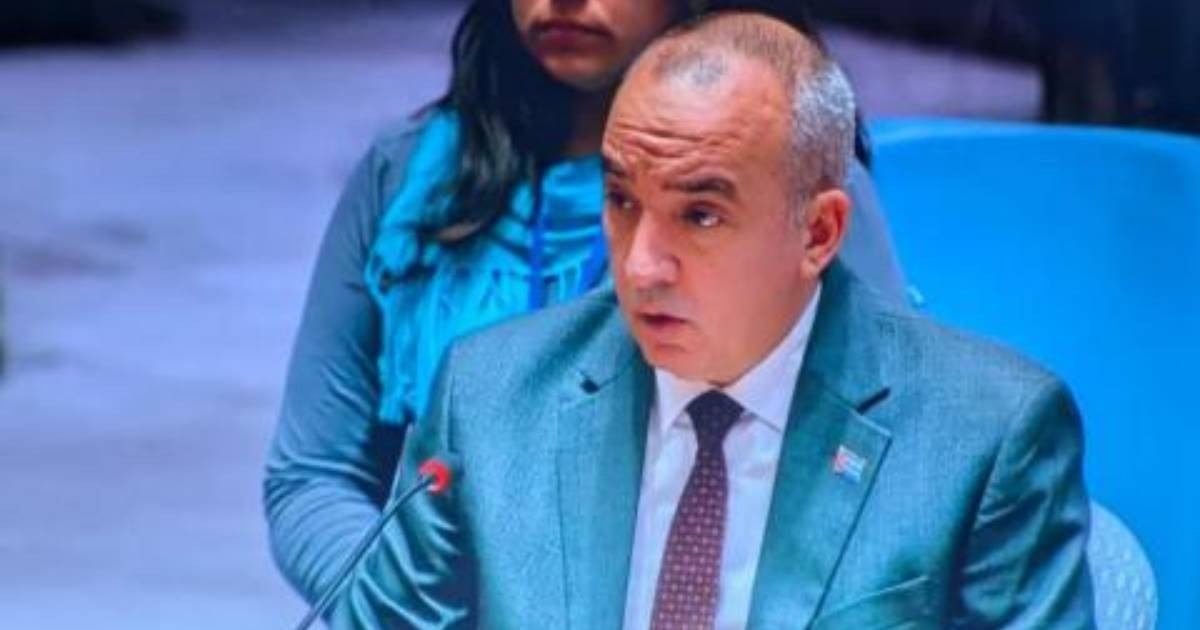
The Cuban ambassador to the United Nations, Ernesto Soberón Guzmán, appeared before the Security Council to denounce the maritime and energy pressure measures that Washington is applying against the island, marking the latest chapter in the Cuban regime's diplomatic offensive in international forums.
Soberón Guzmán warned about the impact of U.S. measures that restrict Cuban maritime trade, particularly those aimed at preventing the supply of fuel.
"These provisions, which are coercive and extraterritorial in nature, aim to intensify economic pressure on the country, affecting not only Cuba but also third states and companies," the diplomat stated.
The ambassador also condemned what he described as acts of piracy and terrorism against oil tankers and their crews in the Caribbean Sea, stating that they constitute violations of International Law and freedom of navigation.
The background of the Cuban complaint is the so-called Operation Southern Lance, launched by the Trump administration in December 2025, which established a maritime quarantine on sanctioned tankers transporting Venezuelan crude to the island.
The U.S. Coast Guard intercepted at least seven tankers linked to those shipments, including the Aquila II, the Veronica III, and the Bertha.
On January 29, 2026, Trump signed an executive order declaring a national emergency and authorizing tariffs on countries supplying oil to Cuba. Although a court ruling eliminated the tariffs on February 20, the national emergency and maritime controls remained in effect.
On March 12, 2026, the Office of Foreign Assets Control of the Department of the Treasury (OFAC) explicitly prohibited Cuba from receiving Russian oil, impacting at least two vessels in transit. The U.S. also intercepted three tankers in the Indian Ocean that attempted to evade the blockade.
The Secretary of State Marco Rubio denied the existence of a formal naval blockade and attributed the Cuban energy crisis to the regime's historical dependence on Soviet and Venezuelan external subsidies. Rubio pointed out that Cuba lacks oil due to its own structural decisions, not because of a blockade from Washington.
The Cuban Foreign Minister Bruno Rodríguez Parrilla accused Washington of issuing "contradictory statements" to create confusion and perpetuate the energy blockade, while Deputy Minister Carlos Fernández de Cossío labeled the threats of a naval blockade as an "act of war" against a peaceful nation. Rodríguez Parrilla questioned the U.S. government for denying its own actions before the international community.
The fuel shortage resulting from the blockade has worsened prolonged blackouts and the collapse of key sectors of the Cuban economy, consequences that the regime solely attributes to Washington and that are actually the accumulated result of 67 years of dictatorial rule.
Filed under: