
Related videos:
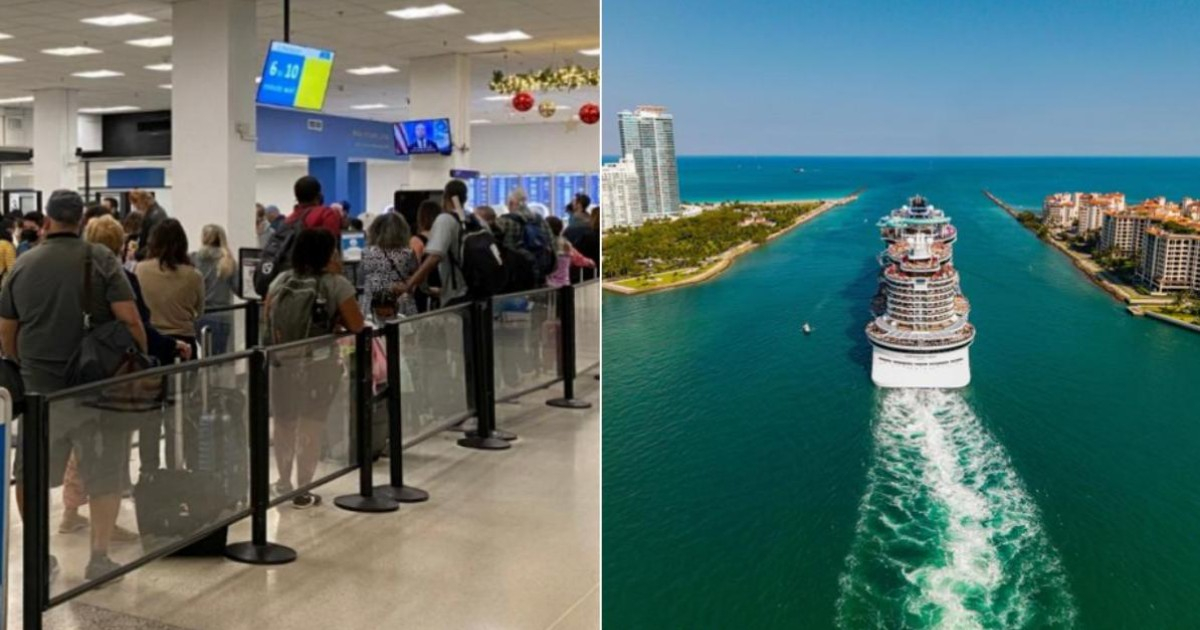
The Miami International Airport and PortMiami confirmed their expansion and modernization plans during the annual "State of the Port" event held this week, where authorities from Miami-Dade County and leaders from the maritime and aviation sectors discussed the growth, challenges, and opportunities of both infrastructures.
The central message was clear: both facilities want to grow, but they face limitations in space and budget that require creative solutions.
Ralph Cutié, executive director of Miami International Airport, revealed that the airport's annual operating budget has increased from $9 billion to $14 billion to finance global competitiveness projects.
"We have identified projects that we need to undertake so that the airport can compete with other airports around the world," Cutié said to Telemundo 51.
The modernization plan includes several megaprojects: the new Concourse K with six boarding gates (between 600 and 750 million dollars, scheduled to begin in the summer of 2026 and to be completed in 2029), the D60 extension of the North Terminal (1 billion, completion in 2030), and the renovation of the Central Terminal (800 million, completion in 2031).
Additionally, American Airlines will invest 1 billion dollars in 17 new international gates in Terminal D, starting in 2027 and completing in 2030.
The airport terminal, which handled nearly 56 million passengers in 2024 and aims to reach 77 million annually by 2040, faced severe criticism for its deteriorating infrastructure: in August 2025 it was ranked among the worst airports in the world due to the condition of its elevators, escalators, and hallways.
The first results of the modernization plan arrived in December, when the MIA inaugurated a new parking garage with 2,240 spaces, featuring seven levels and 50 electric charging stations, completed ahead of schedule and under budget.
In technological terms, the airport introduced this week the world's first holographic chatbot with artificial intelligence to assist travelers, and in December, it implemented biometric gates that verify identity in five seconds without physical documents.
Regarding the port, investments in infrastructure and technological modernization were announced, always focused on sustainability.
Hydi Webb, Executive Director of PortMiami, explained to Telemundo 51 the main geographical limitation of the facility: "We are going to design a larger port, but since we have no more space because it is an island, we can build upwards and make it environmentally sustainable."
PortMiami closed fiscal year 2025 with historic figures: 8.56 million cruise passengers, an absolute record with a year-over-year growth of 4.02%, and 1.115 million twenty-foot equivalent units of cargo, marking 11 consecutive years above one million.
The major shipping companies continue to bet on Miami: Royal Caribbean is advancing in the construction of Terminal G, which will have a capacity for 7,000 passengers and an investment of $345 million, with an opening scheduled for the end of 2027, while MSC Cruises opened its North American headquarters in January 2026 with an investment of $100 million.
Cutié also mentioned the possibility of constructing a new airport in Miami-Dade -with no defined location yet- and emphasized the importance of a potential express train line between the airport and the port, a project with an estimated cost between 600 and 800 million dollars included as a priority in the county's 2050 transportation plan, although he cautioned: "Metro Rail systems are quite expensive and we need to see if they make economic sense."
Dariel Fernández, tax collector of Miami-Dade, emphasized that "neither the airport nor the port uses a single cent from taxpayers; however, they generate jobs and economic growth for this county."
The mayor Daniella Levine Cava summarized the strategic importance of both infrastructures with a compelling figure: "14% of the state's economy is here in Miami-Dade, with the port and the airport."
Filed under: