
Related videos:
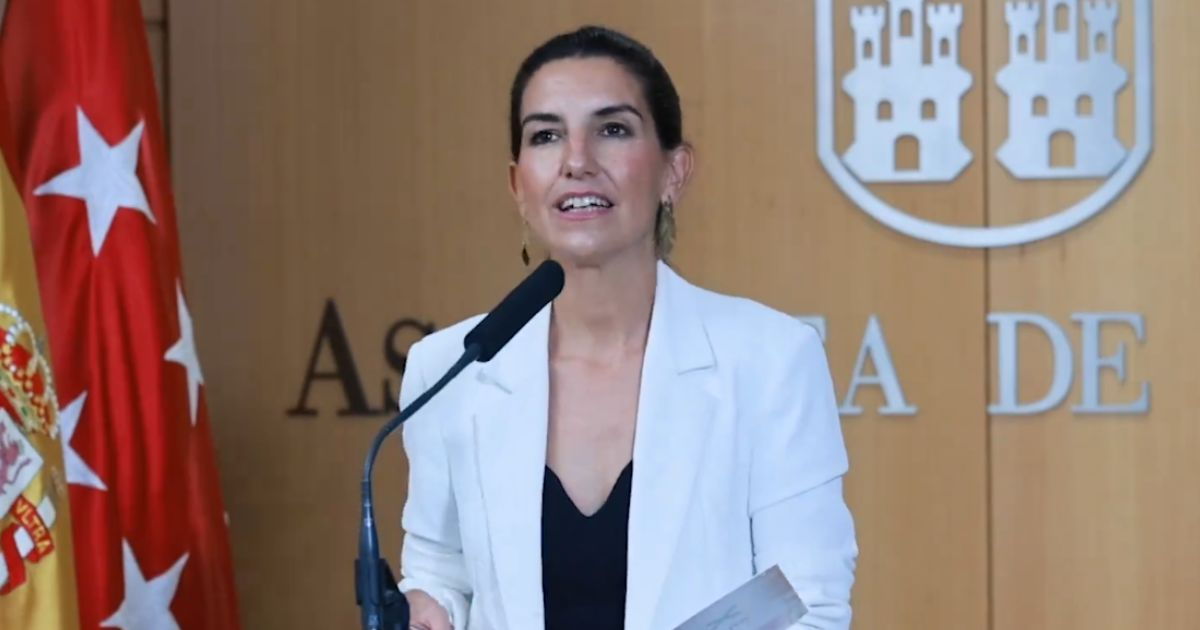
The Spanish expolitician Rocío Monasterio, of Cuban descent, published this Thursday on her X profile that ending the regime in Havana is urgent, describing it as a "moral obligation to end the suffering of the Cuban people and to show the world the failure of communism."
His message is a direct reaction to the statements made by U.S. Secretary of State, Marco Rubio, who warned last Tuesday on Fox News that the Trump administration would not tolerate U.S. adversaries operating with impunity in Cuba, 90 miles from the shores of the United States.
Monasterio went beyond the argument of security and framed the issue in moral and political terms: "It is also a matter of national security for many countries. Cuban intelligence has infiltrated intelligence agencies, governments, and it has undermined democracy and freedom for millions of people."
Rubio had pointed out that the regime in Havana has "rolled out the red carpet for America’s adversaries to operate within Cuban territory against our national interests with total impunity," and warned: "We will not allow a foreign army, nor an intelligence or security apparatus, to operate with impunity just 90 miles off the coast of the United States. That will not happen under President Trump."
Rubio's accusations are based on concrete data. The Center for Strategic and International Studies has identified at least 12 Chinese signal intelligence facilities in Cuba, located in sites such as Bejucal, El Salao, Calabazar, and El Wajay, with confirmed expansions in 2024 and 2025. Russia, for its part, maintains its largest intelligence base outside its territory on the island.
The Pentagon rates Cuba as one of the strongest intelligence adversaries in U.S. history, and the FBI warned in March 2026 that Cuba is one of the most persistent and effective espionage threats against that country.
The Republican congresswoman María Elvira Salazar supported Rubio's position with a strong statement: "There is no economic change in Cuba without political change."
China, on the other hand, rejected the accusations of the Secretary of State and defended its cooperation with Havana as "legitimate and transparent."
Monasterio, daughter of a Cuban father born in Cienfuegos in 1929, has a deep personal connection to the Cuban cause: her family lost sugar properties on the island following the Revolution of 1959.
She was named "Ambassador of the Cuban Exile in Spain" in 2023 and left active politics in October 2024 after being dismissed as the regional president of Vox by the national leadership of the party.
Rubio summarized the economic situation of the regime harshly: "Things can improve in Cuba with serious economic reforms, but not with the current people in charge." The Cuban GDP has fallen by 23% since 2019, with a projected additional contraction of 7.2% just in 2026.
Filed under: