
Related videos:
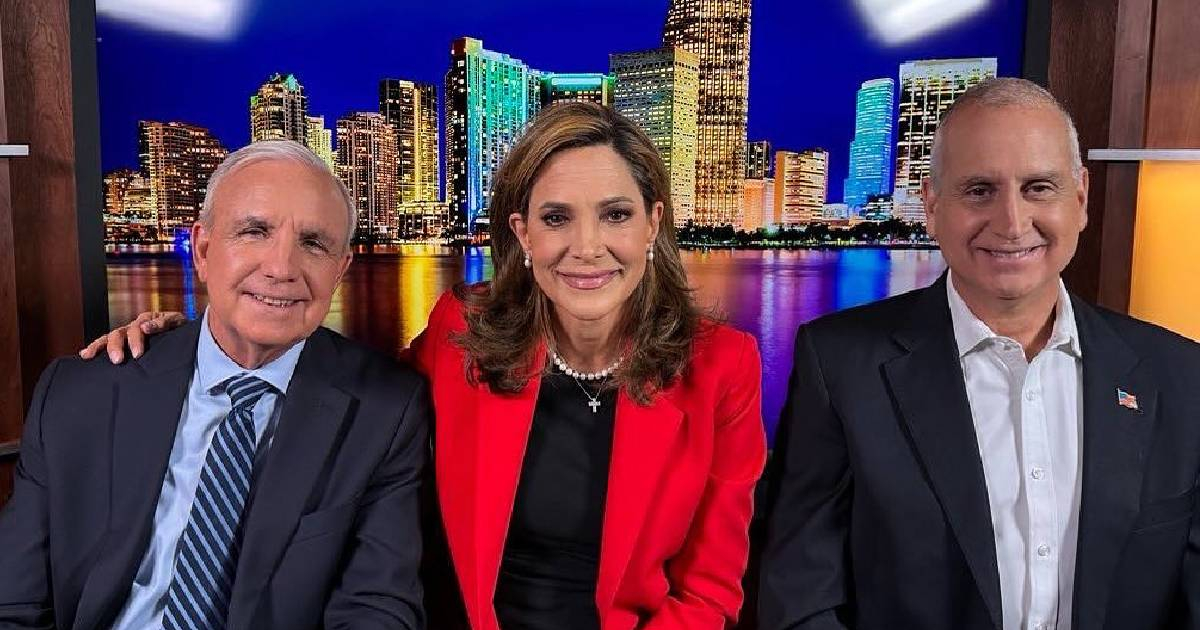
Three Republican congressmen supported the new executive order signed on Friday by President Donald Trump, which expands U.S. sanctions against Cuba and accuses the regime of aligning with Iran and Hezbollah.
The measure, published by the White House, includes sanctions against individuals linked to the regime as well as against financial institutions that conduct transactions with the island.
The representative Carlos A. Giménez was the first to react publicly, with a message on X under the hashtag #SOSCuba: “New sanctions and concrete measures signed today by Executive Order of President Donald Trump against the dictatorship in Cuba!” The regime must understand that if it continues to operate with bad faith, much harsher consequences will follow.
The representative María Elvira Salazar was more emphatic in her geopolitical assessment: “The era of looking the other way has ended”, she wrote, describing the alignment of the Cuban regime with Iran as “a national security reality just 90 miles from our shores” and not as “speculation.”
Salazar also praised Trump's maximum pressure strategy: "He understands exactly what we are dealing with and is willing to confront it. I commend him for acting to protect our national security and for standing with the Cuban people in their struggle for freedom."
On her part, Representative Nicole Malliotakis pointed out that "for decades, Cuba has harbored our fugitives, provided a safe haven for terrorists and adversaries, and oppressed and even murdered its own people", supporting the actions of Trump and Secretary of State Marco Rubio.
The new executive order is the latest in a series of pressure measures that began on January 29, 2026, when Trump signed the Executive Order 14380 which declared Cuba an "unusual and extraordinary threat" to national security and imposed tariffs on countries that supplied oil to the island.
Since then, the administration has imposed over 240 new sanctions and intercepted at least seven tankers bound for Cuba, creating a blockade that has cut between 80% and 90% of Cuba's oil imports.
In February 2026, the Supreme Court declared the additional tariffs under the International Emergency Economic Powers Act illegal, which led to a new order that eliminated them but maintained ship inspections.
The same Cuban-American congress members have been key players in urging the administration to tighten its policy toward Cuba, including a letter in which they asked Trump to consider the prosecution of Raúl Castro for the downing of the Brothers to the Rescue planes in 1996.
The new order adds the dimension of Cuba-Iran ties as an additional justification, in a context where the geopolitical significance of that relationship has increased for Washington.
The Cuban regime, for its part, has accused the United States of imposing a "collective punishment" on the island's population.
The Department of Justice has an active task force exploring federal charges against Cuban officials, supervised by the Southern District of Florida U.S. Attorney's Office, suggesting that pressure on Havana may escalate beyond economic measures.
Filed under: