
Related videos:
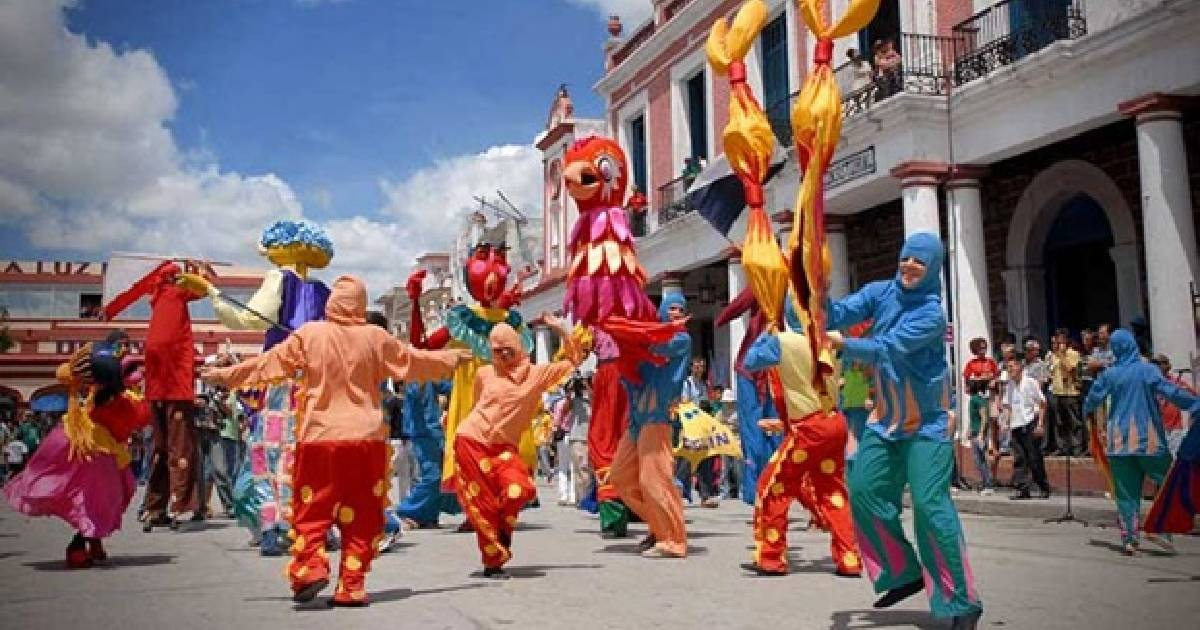
Holguín inaugurated this Sunday the 33rd edition of the Romerías de Mayo, the festival of artistic youth in Cuba, amidst an energy crisis that forces organizers to adjust the programming due to the fuel and electricity shortages that are paralyzing the country.
On the same opening day, Cuba recorded a power deficit of 1,440 MW that affected 46% of the national territory, according to data from the Unión Eléctrica.
The day before, on Saturday, May 2, the maximum impact had reached 1,551 MW, according to official reports, in what has become a devastating constant for the Cuban population.
Holguín is one of the most hard-hit provinces in the country, with power outages of up to 24 hours a day recorded since 2025, and in the last 18 months, the National Electroenergetic System experienced seven total disconnections.
The contrast was striking from the very beginning: the pre-pilgrimage parade on Saturday, which was traditionally held with horse-drawn carriages, had to adapt and took place with electric tricycles from Calixto García Park to the Heroes' Forest in Plaza de la Revolución.
After the parade, the people of Holguín and visitors enjoyed a concert by Norberto Leyva and his band at the Plaza de la Maqueta, according to the official site Cubadebate.
The organizers acknowledged the situation straightforwardly: "Given the difficult circumstances in the country, marked by a shortage of fuel and electricity, the festival of artistic youth will incorporate special dynamics into its programming while retaining the essence that distinguishes it," stated the official coverage of the event.
The festival, which runs until May 8th, is dedicated to the 40th anniversary of the Hermanos Saíz Association (AHS), an organization that brings together the young artistic vanguard of Cuba and takes its name from two poets who were murdered by Batista's dictatorship in 1957.
The agenda includes the thought congress "Memoria Nuestra," featuring lectures on Luis and Sergio Saíz Montes de Oca, as well as a presentation by journalist Katiuska Blanco on Fidel Castro's ideology, within the context of the year proclaimed by the regime as "Year of the Centenary of the Commander-in-Chief."
The space "Bloguerías" commemorates the half-century of the Cuban News Agency's correspondence in Holguín and discusses the risks and potential of artificial intelligence in communication in its panels.
Literature, cinema, visual arts, trova, dance, rap, and rock events are held in various locations throughout the northeastern city.
The energy crisis that serves as the backdrop for the festival is neither new nor temporary. Cuba needs between 90,000 and 110,000 barrels of oil daily but only produces about 40,000, and from December 2025 to April 2026 only received one oil tanker.
Just days before the start of the festival, more than 400 families in Mayarí, a municipality in the province of Holguín, had been without electricity for 29 days due to the theft of dielectric oil from a substation.
"Writers, artists, promoters, and culture lovers come together once again, drawn by the spirit of Romero, to raise their voices for Cuba, peace, and the unity of peoples through the beauty of a festival that aspires to have eternal life," the official press noted, a statement that contrasts sharply with the daily reality of a province that has been engulfed in darkness for months.
Filed under: