
Related videos:
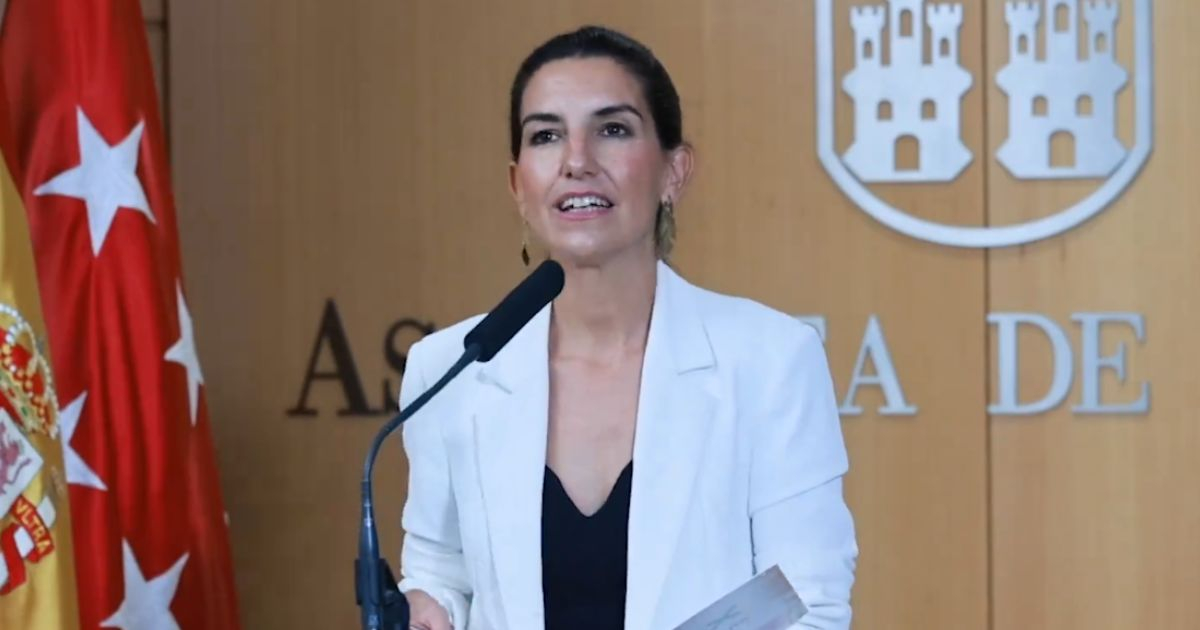
The Spanish expolitician Rocío Monasterio, who has Cuban roots, responded this Sunday to Colombian President Gustavo Petro with a direct message on X in which she calls for a humanitarian military action in Cuba and claims that "the Cuban people can’t take it anymore."
"Cubans want and need help to free ourselves from tyrants. It is not a military aggression; it is an urgent, necessary, and fundamental humanitarian military action if we are to defend human rights," wrote Monasterio.
The former leader of Vox in Madrid stated bluntly: "I couldn't care less that Petro, Sánchez, and their whole gang of communists disagree."
The message is a direct response to Petro's statements, who stated this Sunday that lifting the embargo would lead to political changes in Cuba and rejected any military action against the island.
Petro wrote: "Stop talking nonsense: there is hunger and poverty in Cuba that are alleviated by education and health because there has been a criminal blockade for decades."
The Colombian president also warned that "those who want to invade Cuba will only ignite political violence throughout Latin America," in what represents a sustained pattern of complicity with Havana.
The intersection between both figures occurs days after Donald Trump declared at the Forum Club of West Palm Beach that the United States "would take Cuba almost immediately" after concluding operations in Iran, describing the hypothetical deployment of the aircraft carrier USS Abraham Lincoln to 100 yards off the Cuban coast.
Monasterio is not unconnected to this cause. She is the daughter of a Cuban father born in Cienfuegos in 1929, her family lost sugar properties after the 1959 Revolution, and she was named "Ambassador of the Cuban Exile in Spain" in 2023.
Last Wednesday, I had already published that "ending the regime in Havana is a moral obligation", in response to the warnings from Secretary of State Marco Rubio regarding foreign intelligence operating in Cuba.
Meanwhile, the Cuban regime responded to Trump's threats with institutional defiance. Chancellor Bruno Rodríguez Parrilla stated that Cuba "will not be intimidated", and Miguel Díaz-Canel affirmed that "no aggressor will subdue the island".
The thesis of Petro —which attributes the Cuban crisis to the embargo and not to the dictatorship— contrasts with the reality of an island where GDP has fallen by 23% since 2019 and blackouts reach up to 25 hours a day, a direct consequence of 67 years of totalitarian model and not of the sanctions from Washington.
Since January 2026, the Trump administration has imposed more than 240 new sanctions against Cuba, intercepted at least seven oil tankers, and reduced Cuban energy imports by 80% to 90%, applying unprecedented pressure on the regime.
Filed under: