
Related videos:
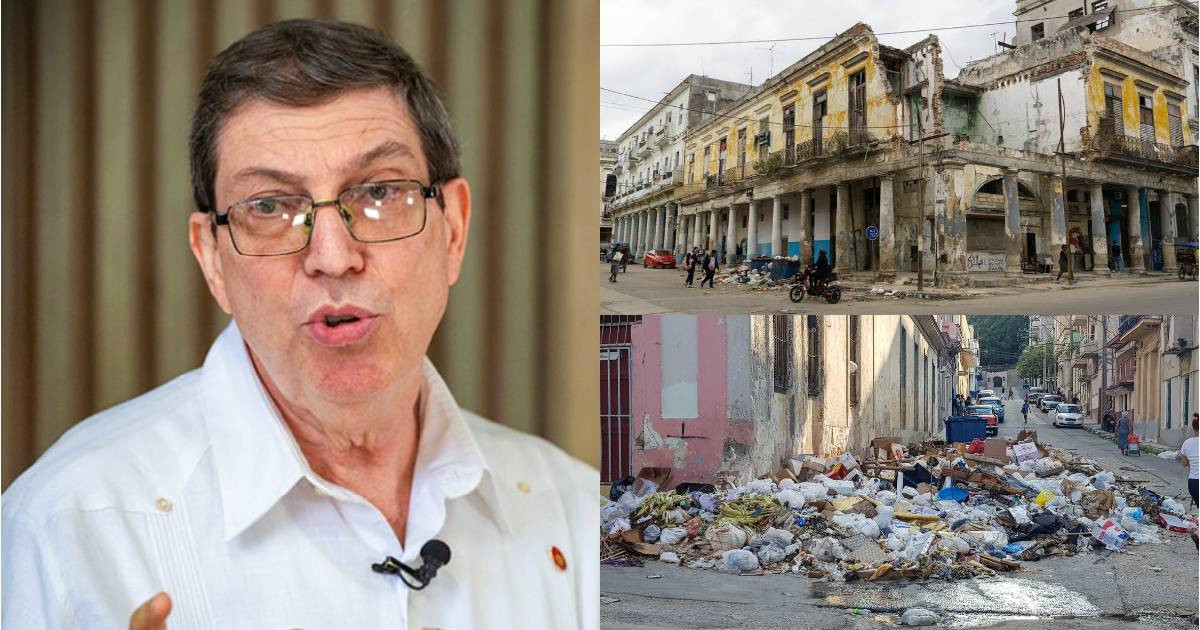
The Cuban Foreign Minister Bruno Rodríguez Parrilla stated this Saturday that “Cuba is a besieged state, Cuba is an attacked state, it is not an ineffective state,” amid new sanctions from the United States and threats of military escalation.
The statement took place during his intervention at the International Meeting of Solidarity with Cuba "For a World Without Blockade: Active Solidarity in the Centennial of Fidel," which was held today at the Palacio de Convenciones in Havana.
According to the head of Cuban diplomacy, the notion that Cuba is a failed state constitutes "one of the main narratives that imperialism has attempted to instill in people's minds."
In 2026 so far, President Donald Trump has labeled Cuba as a "failed state" or "failing nation" at least three times, including on February 3, when he signed Executive Order 14380, which reduced Cuban oil imports by between 80% and 90%.
On April 16, at the event commemorating the 65th anniversary of the Battle of Playa Girón, the leader Miguel Díaz-Canel had already insisted on his own version. "Cuba is not a failed state. Cuba is a besieged state," he said on that occasion.
Now it is Rodríguez who resumes the formula with a semantic variation, but the reality experienced by Cubans tells a different story, in which institutions often disregard the numerous citizen complaints about the poor functioning of services or the persistent obstacles imposed by the cumbersome and inefficient government bureaucracy.
Likewise, the argument that the embargo is the main cause of Cuba's ills is a constant theme in the regime's official discourse, especially after 1991, and is systematically used to evade responsibility for 67 years of failed economic management under the communist model.
Since the executive order took effect in January, Cuba operated for four consecutive months without importing a single drop of fuel, relying solely on domestic production, which covers only about 40% of its needs, as admitted by Díaz-Canel in an interview broadcast on April 21.
Power outages have reached 30 to even 40 consecutive hours in some communities, and the regime acknowledged a list of over 96,000 people waiting for surgery, including more than 11,000 children.
The Intelligence Unit of The Economist projects an economic contraction of 7.2% for Cuba in 2026, the most severe since the Special Period of the 1990s.
In October 2025, when Díaz-Canel denied for the first time that Cuba was a "failed state" during Hurricane Melissa, the public response on social media was overwhelming: "Cuba is not a failed state, it is a deceased country."
In January, a foreign journalist described Havana with trash piling up in the corners, buildings collapsing, and families cooking with firewood and charcoal.
In his speech, Rodríguez quoted Trump verbatim saying, "speaking of a place called Cuba, from which we will take control almost immediately," and described the energy blockade as "an act of war equivalent to a naval blockade, as defined in international law."
The Chancellor also confirmed that there are exchanges with Washington, but he was emphatic that "the political and economic order of Cuba is not part of that exchange, in no way does it form part of it."
The meeting brought together 766 delegates from 152 organizations across 36 countries and took place a day after Trump signed a new executive order for sanctions that blocks assets in the United States of individuals linked to the regime in sectors such as energy, defense, metals, finance, and security.
The only energy relief the island has received in months was a Russian shipment of 730,000 barrels of oil donated free of charge —barely enough for ten days of consumption— which Díaz-Canel himself described as "symbolic."
While the regime insists that Cuba is an "attacked" state and not "ineffective," Trump's escalating threats and the rapid deterioration of living conditions on the island place the Cuban people at the center of a tension that no official rhetoric can disguise.
Filed under: