
Related videos:
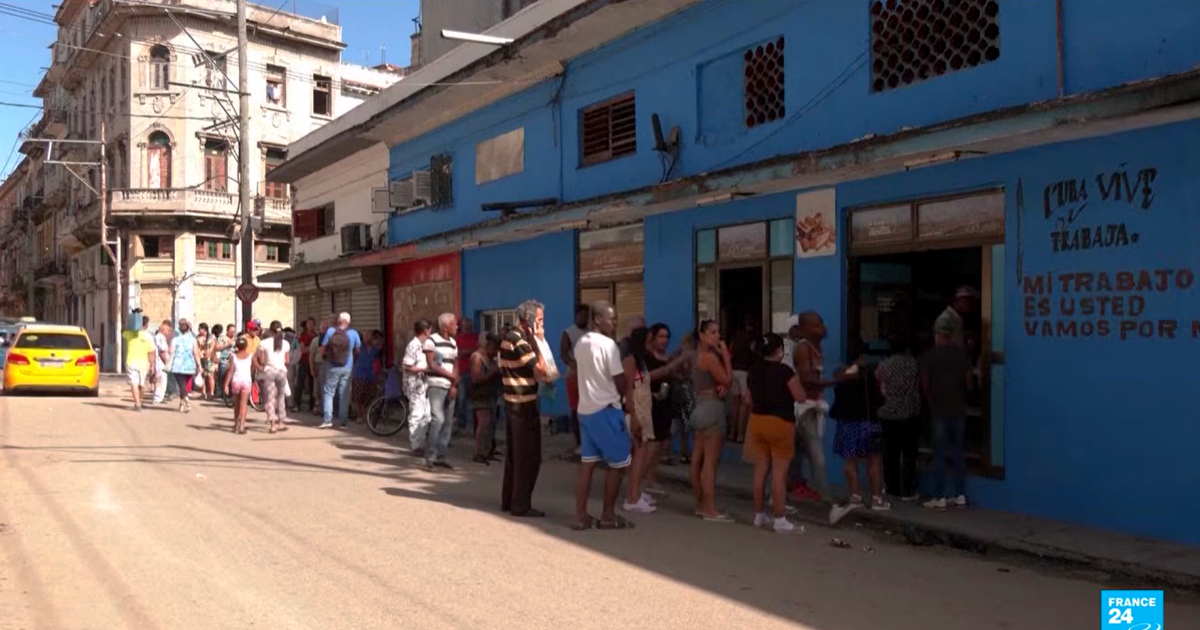
A recent report by FRANCE 24 about the situation in Cuba has sparked more skepticism than information among those who are familiar with the reality of the island.
The French media states that “the tightening of U.S. sanctions endangers the rationing system,” a statement that, rather than describing reality, appears to be lifted from the official discourse of the Cuban regime.
Because, let's say it bluntly: what exactly is being "jeopardized"? A system that today does not even guarantee the basics for survival? Is it a ration card that has not covered the monthly necessities for years and forces millions of Cubans to scavenge for food outside the state system?
Presenting rationing as some sort of safety net that is under threat is, at the very least, disconnected from reality.
For most Cubans, the ration book is not a solution, but rather a daily reminder of a model that does not work. Products arrive late, in ridiculous quantities, or simply do not arrive at all. To speak of its “deterioration” now, as if it were something recent, is to ignore decades of decline.
The report also emphasizes a familiar approach: attributing the crisis to the tightening of U.S. sanctions. While not denying the impact that certain external measures may have, reducing Cuba's economic collapse to that factor is a simplification that borders on misinformation.
The narrative that focuses the crisis solely on external factors also overlooks an increasingly evident phenomenon within the island: the de facto dollarization of the economy.
While state-run stores remain understocked, shops in foreign currency have proliferated —many of them under the control of military conglomerates like GAESA— where there are indeed foods and basic products, but at prices that are unaffordable for most Cubans.
These stores, well-stocked and operating in dollars, dismantle the argument of a supposed absolute "blockade" on the importation of goods, while deepening the inequality between those who receive remittances and those who depend solely on a salary in Cuban pesos.
The food shortages, constant blackouts, the decline in national production, and dependence on remittances did not start this year or last week. They are the accumulated result of years of poor management, of a centralized economic system incapable of generating wealth, and of political decisions that have stifled private initiative and productivity.
In fact, the report itself acknowledges that a large part of the population currently relies on money sent from abroad to be able to eat. This reality, in itself, dismantles the notion that the state system —including rationing— functions as a basic support for society.
It is particularly striking that international media continue to fall into these types of narrative frames, where the rationing system appears almost as a collateral victim, rather than being understood for what it truly is: a direct consequence of structural scarcity and the economic failure of the model imposed for more than six decades.
There was a time, decades ago, when the ration book represented a means of distribution amidst hardships. But that context has long since disappeared.
Today, insisting on that image is not only anachronistic but also profoundly unfair to a population experiencing a crisis that is much more complex than what some headlines suggest.
Because the real problem in Cuba is not that rationing is "in danger".
The problem is that it stopped being a solution years ago. Continuing to tell the story as if it still were does not help to understand—or resolve—the harsh reality that millions of Cubans face every day.
Filed under: