
Related videos:
The first secretary of the Communist Party in Granma, Yudelkis Ortiz Barceló, visited a small spiritualist center in Bayamo on Monday amid a climate of political tension that once again places Cuba at the center of the official discourse of "a besieged plaza."
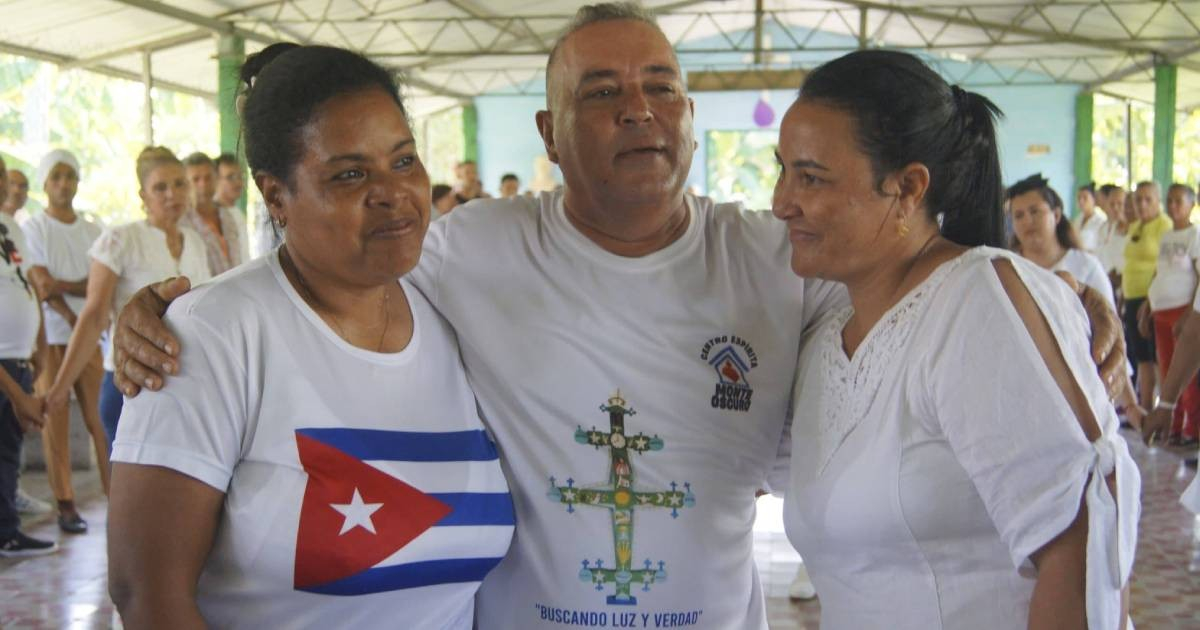
Accompanied by Governor Yanetsy Terry, the leader appeared at the Spiritist Center "Searching for Light and Truth" in the rural community of Monte Oscuro, a place deeply rooted in the popular traditions of eastern Cuba. From there, she delivered a political message aiming to express spiritual support for the regime in response to recent statements from Washington.
In her Facebook profile, Ortiz Barceló stated that practitioners of cordón espiritism joined the "call to the U.S. Government regarding the looming threat of war over Cuba," in an attempt to project national unity beyond religious beliefs.
The gesture occurs in a context of heightened rhetorical escalation. Last Friday, Donald Trump stated in Florida that the United States "will take Cuba almost immediately" and warned about the possible deployment of the USS Abraham Lincoln aircraft carrier near the island. One day later, Miguel Díaz-Canel responded to international delegates warning about the "imminence of a military aggression" and ensuring that every Cuban has a defensive position assigned to them.
Amid this exchange of statements, the scene in Monte Oscuro is revealing: political authorities turning to one of the country's oldest spiritual expressions to bolster a message of resistance.
Ortiz Barceló described the center as part of the cultural heritage of the Valley of Cauto, recalling that it was founded over a century ago by Salustiano Olivera Sánchez. “We were united by a desire for love and peace for our country and a rejection of war,” he wrote.
The former Minister of Culture, Abel Prieto, also joined the narrative. He shared images from the meeting and stated that “Cuban spiritists are united in defense of peace, sovereignty, and our socialism.”
It is not the first time that the government has turned to religious spaces to legitimize its political discourse. Already in 2025, Prieto had visited the Quisicuaba Project in Havana praising the “fidelity to the revolution” of its members.
However, the movement remains somewhat contradictory. For decades, the Marxist ideology of the Cuban state openly marginalized believers, even excluding them from political activism until the 1990s. Today, amid an economic crisis and under international pressure, those same spaces are being used as a symbol of popular support.
Ortiz Barceló herself has been at the center of other controversial interventions. After protests in Jiguaní due to blackouts and shortages, she stated that “the freedom to hate has never been so out of control”, and months later, she referred to the passage of a hurricane as an “opportunity” to demonstrate the relevance of the Revolution.
Now, in a context marked by stricter sanctions and an energy embargo that deteriorates daily life on the island, the government is once again turning to popular faith.
Cordón spiritism, with its songs, chain dances, and African and creole roots, has survived for generations as a spiritual refuge for humble communities. That it is now the stage for a political message does not go unnoticed by many Cubans, both inside and outside the country.
Filed under: