
Related videos:
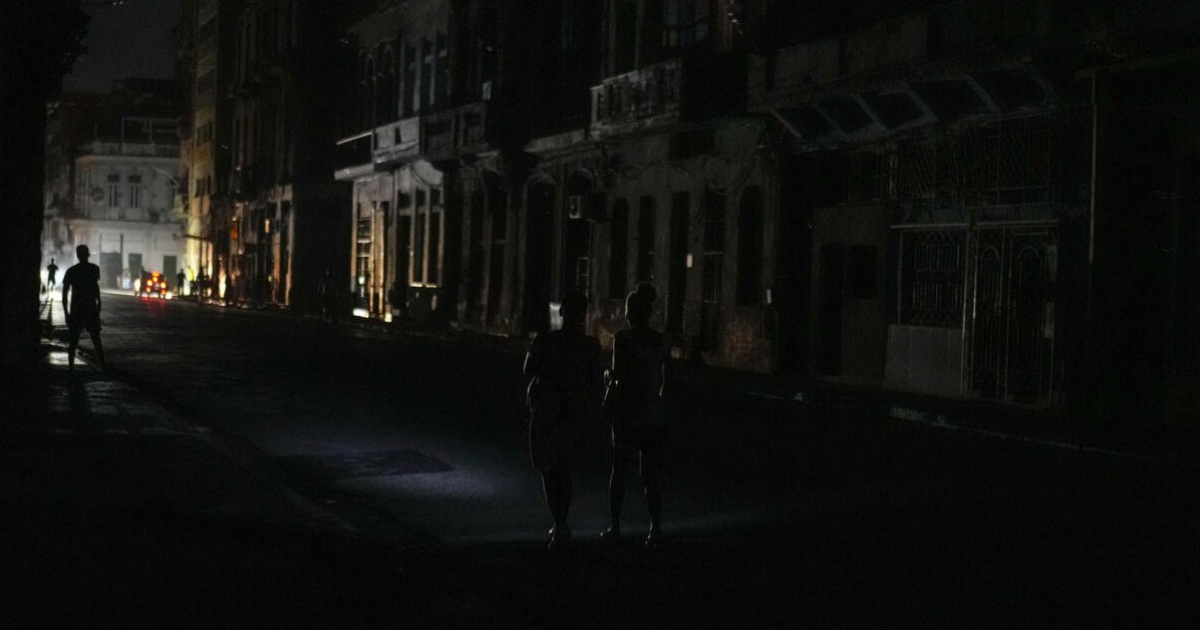
Cuba is facing a new surge of blackouts after the thermoelectric plant Antonio Guiteras went offline on Tuesday due to a boiler malfunction, and the Russian oil received in March has completely run out, according to the informative note from the Electric Union (UNE).
At 06:00 hours this Wednesday, the availability of the National Electric System was 1,390 MW against a demand of 2,772 MW, with 1,395 MW affected. For the night peak hours, the UNE forecasts a deficit of 1,720 MW and an impact of 1,750 MW.
On Tuesday, the service was interrupted for 24 hours. The highest recorded impact was 1,731 MW at 8:20 PM, according to the state entity itself.
The shutdown of the Guiteras occurred on Tuesday at 9:12 AM due to a new breakdown in its boiler (the umpteenth), with an expected downtime of four days and an immediate loss of 140 MW in a system that is already at its limit.
In addition to the Guiteras, the system is experiencing simultaneous outages in Unit 6 of the CTE Diez de Octubre, Unit 2 of the CTE Lidio Ramón Pérez, and Units 3 and 5 of the CTE Antonio Maceo, with an additional 254 MW out of service due to limitations in thermal generation.
The background of the crisis is the exhaustion of fuel. The only significant shipment received in more than four months was that of the Russian tanker Anatoli Kolodkin, which docked in Matanzas on March 31 with approximately 730,000 barrels of crude oil donated by Moscow.
Miguel Díaz-Canel himself acknowledged on May 2nd before international solidarity delegates that Cuba had been four consecutive months without receiving fuel from abroad. "This oil is running out these days, and we do not know when more fuel will arrive in Cuba," he admitted.
The Minister of Energy and Mines, Vicente de la O Levy, had warned on April 22 that Cuba only had fuel until the end of that month, and so it happened: on April 30 blackouts again exceeded 1,500 MW.
A second Russian ship, the Universal, carrying around 200,000 barrels of diesel, remains adrift with an unconfirmed destination in the Atlantic after altering its route towards Trinidad and Tobago at the end of April, partly due to the pressure of U.S. sanctions.
The situation worsened on May 1 when President Donald Trump signed a new executive order imposing expanded sectoral sanctions in energy, defense, mining, and financial services, effective immediately and without a grace period.
Cuba needs between 90,000 and 110,000 barrels of oil daily—equivalent to eight ships per month—to meet its energy needs, but its domestic production barely reaches around 40,000 barrels per day, according to data from the minister himself.
The CTE Antonio Guiteras, inaugurated in 1988 in Matanzas, has never received capital maintenance in its more than 36 years of operation and has gone offline at least seven times in 2026, being the main cause of the collapses in the national electric system.
Filed under: