
Related videos:
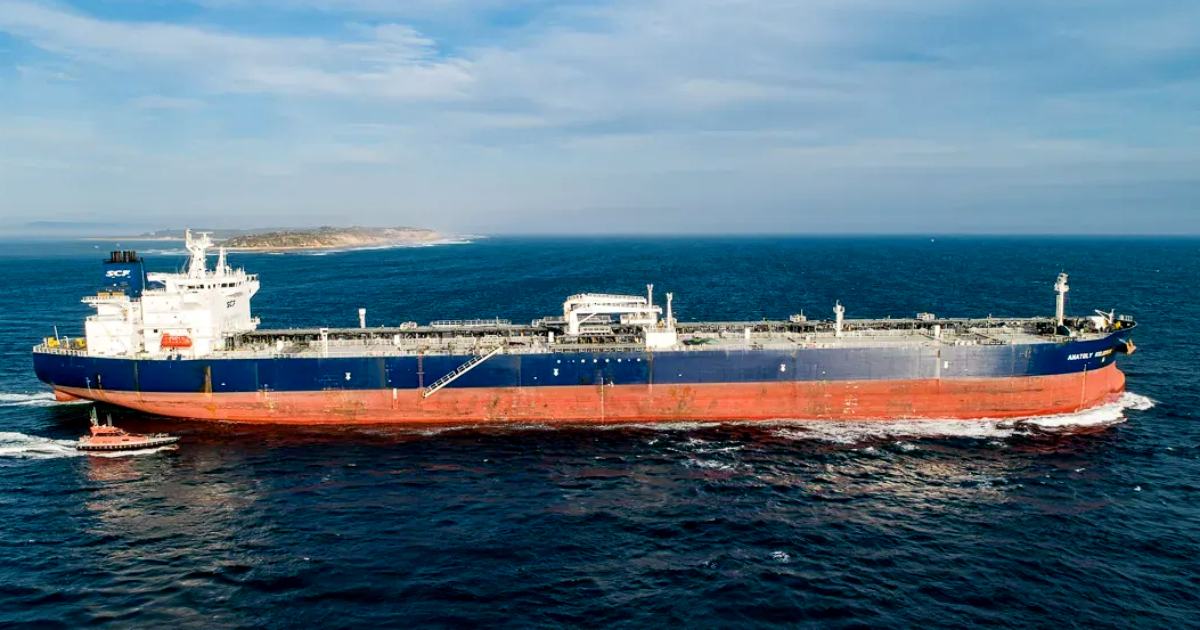
The Russian tanker ‘Anatoli Kolodkin’ arrived in Cuba on Monday with 100,000 tons of crude oil —equivalent to about 730,000 barrels— as confirmed by the Ministry of Transportation of Russia through the agency EFE.
This is the first shipment of oil to arrive on the island in nearly three months, amid the worst energy crisis the country has experienced in decades.
The vessel docked at the port of Matanzas, where it is currently awaiting unloading, after departing on March 9 from Primorsk, Russia.
During its journey, the tanker sailed with an initially declared fictitious destination and was escorted by the Russian Navy while crossing the English Channel. In recent days, it was located north of Haiti before completing its route to the Caribbean.
The 'Anatoli Kolodkin' belongs to Sovcomflot, a Russian state-owned company sanctioned by the United States since 2024, and the vessel itself is also sanctioned by the European Union and the United Kingdom.
Despite this, President Donald Trump authorized its entry and defended the decision as a humanitarian measure. “I prefer to let it in, whether it's from Russia or any other country, because people need heating, cooling, and other basic necessities,” he stated.
Trump was more straightforward in stating that he has "no problem" with Cuba receiving Russian oil, although he labeled the Havana regime as "bad and corrupt." The U.S. Coast Guard deployed at least two vessels to the north of the island but was instructed not to intercept the ship.
The arrival of the shipment comes after months of energy collapse. Since January 9, 2026, Cuba has stopped receiving stable supplies of crude oil: Venezuela suspended its shipments following the capture of Nicolás Maduro by U.S. forces, and Mexico halted those from Pemex—which accounted for 44% of Cuban imports in 2025—amid pressures from Washington.
The electrical deficit reached 2,000 megawatts daily in the first half of March, with blackouts exceeding 30 hours in some areas, affecting more than 60% of the country. The crisis worsened further after the disappearance in February of a Russian ship carrying about 200,000 barrels of diesel that never reached the island.
According to estimates cited by EFE, the newly arrived shipment would only suffice to meet several weeks of energy demand, highlighting the temporary nature of the relief.
Additionally, press reports indicate that Moscow may be sending a second tanker, the ‘Sea Horse’, with about 27,000 tons of fuel, suggesting an attempt to sustain short-term supply to the island.
This move occurs amid a context of contradictions in Washington's policy. At the end of January, Trump signed an executive order threatening to impose tariffs on countries supplying oil to Cuba. However, weeks later he temporarily authorized this shipment, amid the worsening energy crisis on the island.
Russia has classified the shipment as "humanitarian aid," while the UN continues to implement an emergency plan of $94.1 million to address the situation in Cuba.
Meanwhile, the regime's inability to guarantee electrical supply continues to paralyze a large part of the economy and exacerbates the living conditions of the population.
Filed under: