
Related videos:
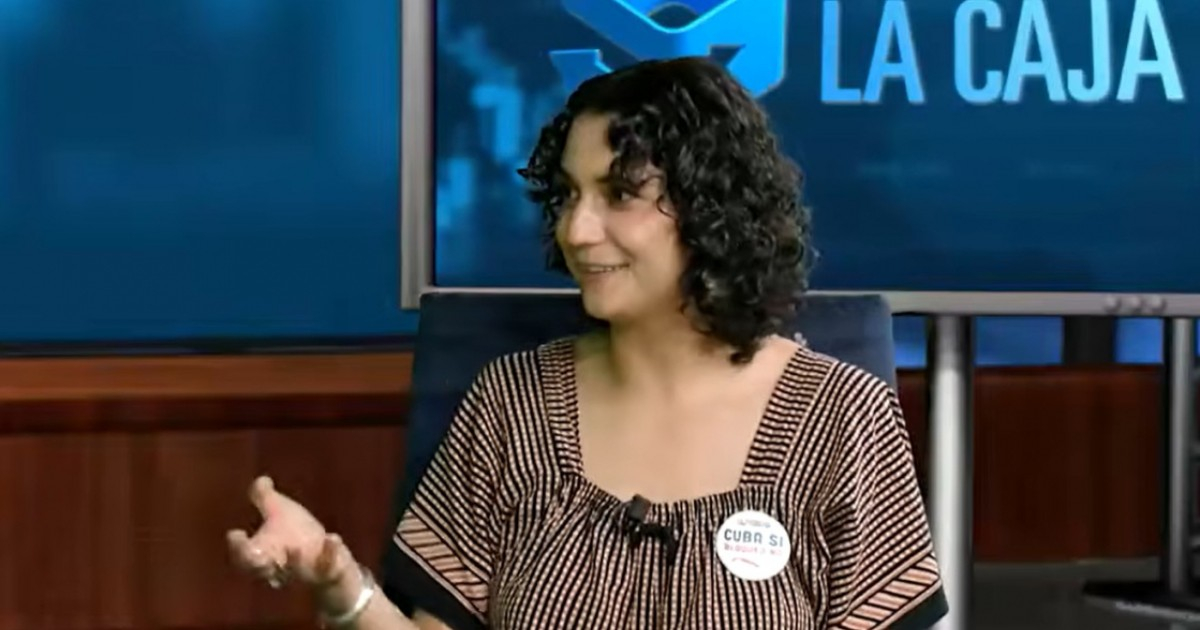
An activist from the United States who supports the Cuban regime stated on the Cuban television program "Cuadrando la Caja" that American youth are becoming "radicalized" and that there is a growing interest in the Island's economic model, which she presented as a successful example despite the sanctions.
Brenda López, co-founder of the "Hands Off Cuba" committee and resident of Oakland, California, made her statements in a broadcast aired in the context of May Day, hosted by spokesperson Marxlenin Pérez Valdés, a professor of Marxism at the University of Havana.
"People are becoming more radicalized; they are asking questions they weren't asking before," said the activist, who described how her organization is leveraging the protests against deportations to "make ideological connections."
"With the committee, more people are interested in Cuba knowing that they have a different economy (...) We try to make these connections so that people learn that there is another way to do things, and on top of that, there is a place like Cuba, where they have been doing it successfully, even though they have faced all these sanctions for so many years," López stated.
López, 30 years old, also argued that only 5% of the U.S. population is unionized, attributing this decline to Reagan-era policies, and compared the situation of homeless individuals in Los Angeles—specifically in the Skid Row area—with what he has witnessed in Cuba, asserting that the situation in the United States "is much more critical."
"Another thing that always surprises me is that I hear people say, 'Oh, in Cuba, the situation is critical; there are many people living on the streets,' but what I see where I live is far more critical than anything I have seen during my many... all the visits I have made to Cuba," he declared.
However, their statements completely overlook the humanitarian crisis facing the Island: prolonged power outages, chronic food shortages, salaries that do not meet basic needs, and a massive exodus that has led hundreds of thousands of Cubans to emigrate precisely to the United States in recent years.
The program "Cuadrando la Caja" has repeatedly been identified as a propaganda tool of the regime. In December 2025, the show caused an uproar by suggesting that Cubans "should not eat rice or potatoes" as they are not native foods, which sparked a wave of criticism.
This Wednesday, Pérez Valdés's statements about the international working class once again sparked reactions on Cuban social media, where users pointed out the contradiction of a regime official caring about workers worldwide while Cubans live in conditions of misery. "In any country in the world, workers earn more than in Cuba," they wrote.
The pro-Cuba activism in the United States that López represents is not a new phenomenon. It has historical roots in the Venceremos Brigade of the 60s and 70s, described as an influence operation by the Cuban intelligence that indoctrinated young American activists.
In March, the so-called Convoy Our America arrived in Havana with about 650 people from 33 countries, including figures such as Jeremy Corbyn and Pablo Iglesias, and was received by Díaz-Canel.
The journalist Yoani Sánchez, director of 14ymedio, then responded with a phrase that summarizes the contradiction that López embodies: "We are not a theme park. Go do ideological tourism somewhere else. Here we are suffering."
Filed under: