
Related videos:
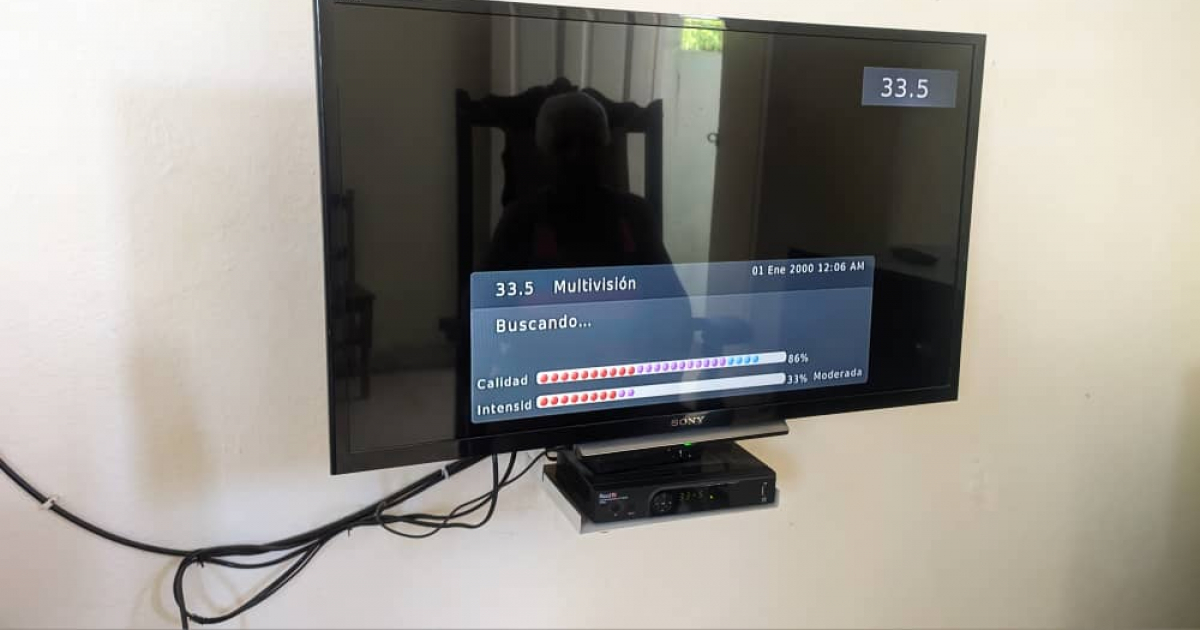
The Main Broadcasting Center of Radio and Television of Boniato, located in Santiago de Cuba, went off the air on the morning of this Thursday according to an official information note from TV Santiago that confirmed the total interruption of broadcasts at 9:00 am.
The reason stated by the authorities themselves is the "deficit in electricity generation and the fuel deficit in the province," according to the statement published on social media.
From Boniato, all major radio and television signals for the province are transmitted: Radio Rebelde, Radio Progreso, CMKC Radio Revolución, Mambí and Siboney on FM, in addition to Cubavisión in both analog and digital.
Its interruption leaves hundreds of thousands of Santiago residents without access to any state broadcasting signal.
TV Santiago acknowledged in its statement that "it continues to communicate with the public through official means and channels" and offered "apologies for any inconvenience these disruptions may cause."
The incident is not isolated. Pinar del Río experienced a similar situation in May 2025, when only seven out of 28 provincial transmission centers had backup power.
Matanzas, Baracoa-Guantánamo, and Holguín also experienced disruptions for the same reason between 2025 and January 2026.
The energy crisis causing these collapses is structural. Cuba produces barely 40,000 barrels of oil daily compared to a consumption exceeding 110,000, and electricity generation fell by 13.7% in 2025.
Between January and April 2026, Cuba received only one fuel ship —the Russian Anatoly Kolodkin with 730,000 barrels, docked in Matanzas on March 31— when it requires at least eight ships monthly to meet electricity demand. Miguel Díaz-Canel himself acknowledged that the country "went four months without receiving a drop of fuel."
The fuel from that single shipment was distributed starting on April 17 and was depleted by the end of that month. Power outages in eastern Cuba have worsened since then, with Santiago de Cuba experiencing outages of up to 24 hours a day during the last week of April.
The national electrical deficit reached 1,731 MW on May 5 at 8:20 PM, and the previous day, the availability was only 1,390 MW against a demand of 2,772 MW. The highest recorded in 2026 was 2,075 MW on March 6, when more than two-thirds of the country was without power.
In February 2026, a malfunction at the Holguín 220 kV substation left 100% of Granma, Santiago de Cuba, and Guantánamo without electricity, highlighting the extreme fragility of the electrical grid in the eastern part of the country.
A second Russian tanker, the Sea Horse Universal, changed course in the North Atlantic without confirmation of arrival, with a potential delay until late May, which suggests that the radio and television signal in Santiago de Cuba could remain interrupted for an indefinite period.
Filed under: