
Related videos:
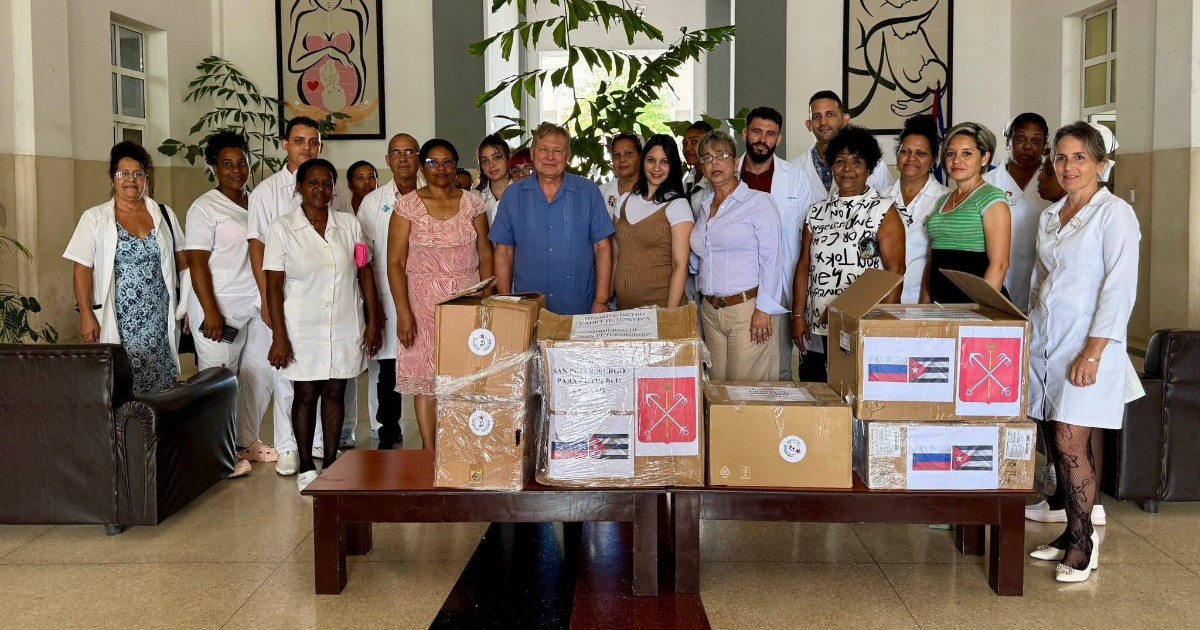
The José Ramón López Tabrane Maternity and Obstetrics Hospital in Matanzas received a shipment of medications prepared by the Government of St. Petersburg, in a ceremony led by the Russian ambassador to Cuba, Víctor Koronelli, as reported by the Giron Newspaper.
The donation was organized at the direction of the Russian governor Aleksandr Beglov and with the participation of citizens from Saint Petersburg, in what the authorities of both countries described as a gesture of solidarity with Cuba.
During the ceremony, the ambassador stated that it was "a great honor" to witness "the noble work of the doctors from Matanzas who, in the context of the intensified U.S. blockade that affects the country's health sector so much, continue to save the lives of Cuban mothers and their children."
Koronelli also read a letter of thanks from a resident of St. Petersburg who underwent surgery at the pediatric hospital in Matanzas in 2017.
This delivery is part of a pattern of Russian donations that has intensified in recent months. On April 26, the same ambassador presented to the Cuban Minister of Health a batch of 35 types of medications —including paracetamol, omeprazole, sodium heparin, ibuprofen, and infant formula— at a ceremony at the Russian Embassy in Havana.
On that occasion, Minister José Ángel Portal Miranda acknowledged that the aid was arriving at a time of "great need," the same official who in February admitted that the Cuban health system is "on the brink of collapse" and that its problems "will not be resolved" without external funding.
The cooperation between Saint Petersburg and Matanzas has recent precedents: in December 2025, the same hospital had already received medications and food for neonatal care from that Russian city, benefiting 29 newborns in the Neonatology unit. In March 2026, Beglov also announced the shipment of three equipped ambulances with ventilators and electrocardiograms to Havana, Matanzas, and Santiago de Cuba.
Despite these shipments, the structural crisis of the Cuban healthcare system shows no signs of alleviating. Only 30% of the basic medication list is available in state pharmacies, with 461 out of 651 essential drugs out of stock, according to data from April 2026. The shortage of medications in Cuba results from decades of poor state management, obsolescence of the pharmaceutical industry, and a massive brain drain of medical talent.
Filed under: