
Related videos:
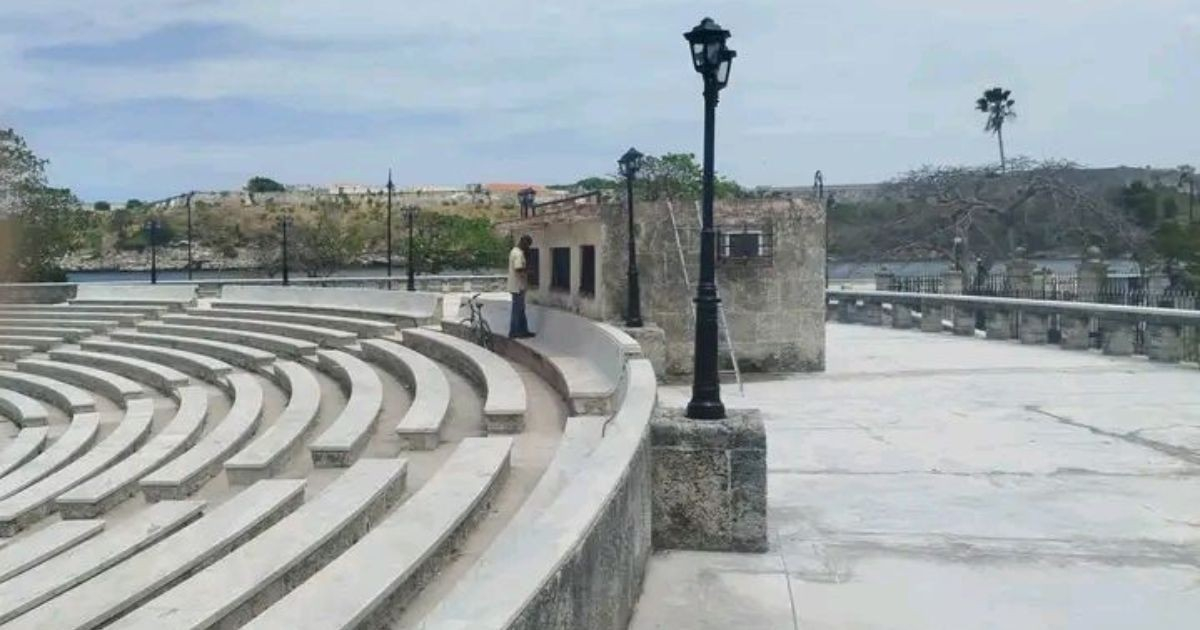
The restoration and rehabilitation work on the Ampitheater of the Historic Center of Havana is progressing in anticipation of the celebrations for the 90th anniversary of its founding, as reported by CMBF Radio Musical Nacional.
The jubilee will be commemorated with a scheduled event from May 16 to 20, a date that recalls the opening of the facility in 1936 on Avenida del Puerto, whose design was considered a milestone for that time and the surroundings of Old Havana, the source indicates.
The amphitheater was inaugurated on May 20, 1936, with a concert by the Municipal Band of Havana conducted by Maestro Guillermo Tomás, and was designed by Cuban architects Eugenio Batista González de Mendoza and Aquiles Maza, inspired by Greek and Roman theaters, with a capacity for approximately 1,700 people.
Among the artists who graced that stage in its early decades are Argentine poet Berta Síngerman, Russian soprano Mariana de Gonich, and the Havana Philharmonic Orchestra under the baton of maestro Amadeo Roldán, a composer and violinist born in Paris who conducted the orchestra until his death in 1939.
The commemorative program includes workshops, conferences, activities aimed at children in the community, and a special gala night, as detailed by CMBF.
On Tuesday, May 19, a workshop on cultural management, marketing, and artistic direction is scheduled from 10:00 a.m. to 1:00 p.m. at the Multi-purpose Room of the former Palacio del Segundo Cabo, in Plaza de Armas. This event is part of the international cooperation project "Promoting Culture as a Tool for Social Transformation," aimed at cultural managers, communicators, students, and anyone interested in community development.
While efforts are being made to restore this cultural icon, Old Havana and Central Havana are sinking into ruins with hundreds of collapses each year in the capital and a national housing deficit exceeding 800,000 units.
In 2025, at least six people died in Havana due to building collapses, including a seven-year-old girl in Old Havana and a mother and her son on Compostela Street, also in the historic center.
That same year, Cuba completed only 22% of its annual housing construction plan: 2,382 units out of the 10,795 planned, while the structural deterioration of Havana's buildings has reached alarming levels according to recent reports.
The transfer of financial support from the Office of the Historian of Havana to the military conglomerate GAESA in 2025 worsened the situation: specialists point out that the income from heritage tourism that was previously allocated to urban rehabilitation took different directions, limiting the economic autonomy of the institution that has historically upheld the restoration of Havana's heritage.
In February 2026, a young woman was found lifeless in a collapsed building on Sol Street in Old Havana, and a staircase in a multifamily building collapsed in the capital just days ago, in a city that, as the Cubans themselves point out, is slowly dying due to the inaction of a regime that prioritizes propaganda over the real needs of its people.
Filed under: