
Related videos:
Banco Metropolitano announced this Friday, via its Facebook profile, the official channels for its clients to submit complaints, suggestions, and requests, in accordance with Law 167 of the System for Addressing Complaints and Requests from Individuals. A piece of news that, in any other country, would go unnoticed. In Cuba, however, it raises an inevitable question: is there really the capacity to address everything that Cubans have to complain about?
According to the announcement, also reported by the Cuban News Agency, customers can visit their nearest branch or the Customer Service department at the central office, located at Cuba Street 225, corner of O'Reilly, in Old Havana. Available hours: Monday, Wednesday, and Thursday, from 9:00 a.m. to 1:00 p.m. Four hours, three days a week, to address the accumulated frustration of thousands of customers.
Electronic addresses have also been activated: atencionalapoblacion@banmet.cu and clientes@banmet.cu, the Wellbeing Platform accessible from bc.gob.cu/tramite-poblacion, and the Ticket application, which allows users to reserve appointments at no cost, with a notice of up to one week and a minimum of 24 hours in advance, but only at branches that "meet the requirements to apply this modality." A caveat that, in the Cuban context, amounts to saying: at those that are operational.
The bank emphasized that "the response to requests will be issued in writing, either in person or through available communication channels, in compliance with legal regulations." Law 167 sets deadlines of up to 30 calendar days for responses, with mandatory phases: receipt, classification, registration, verification, response, solution, and control. Thirty days to resolve something that, in many cases, should not have occurred in the first place.
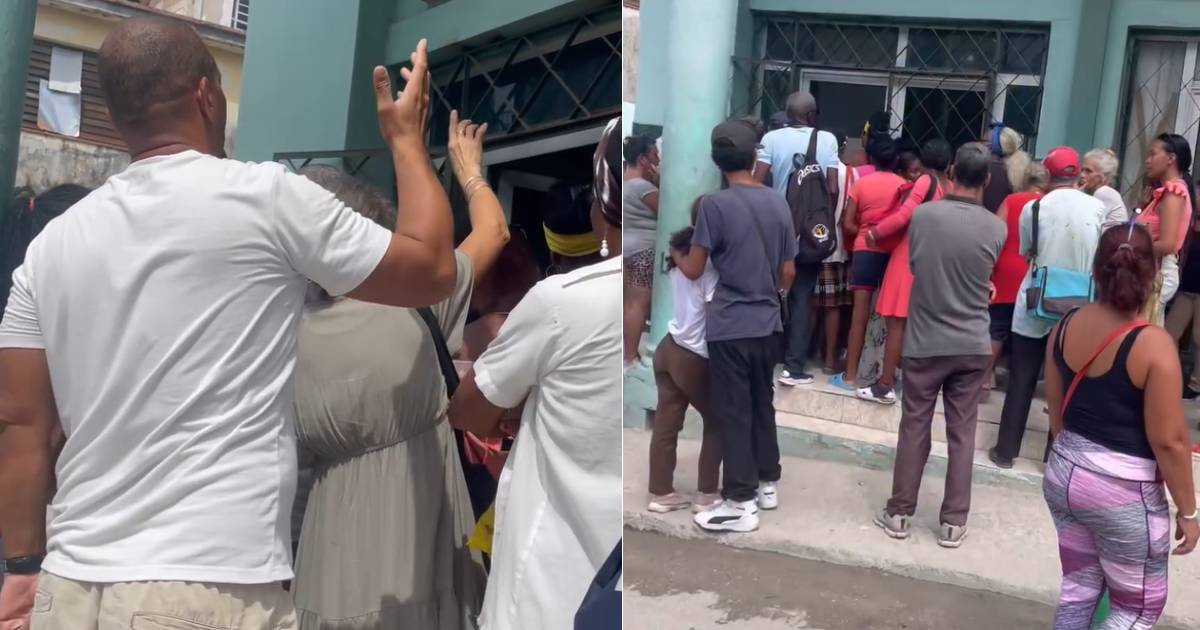
What the statement does not mention is that this same bank was operating only a small percentage of its branches in the capital during the blackouts at the beginning of the year, resorting to manual payments and photovoltaic systems. It also does not recall that in April 2023 at least 150 ATMs were out of service in Havana due to lack of spare parts, nor that in August 2023 the restrictions on cash withdrawals were justified as "logistical and security issues."
The list of grievances is long. In September 2024, the Banco Metropolitano refused to refund a deposit of three thousand dollars to a customer. In July 2025, REDSA announced a scheduled five-hour interruption of all electronic payment services, including ATMs, EnZona, point-of-sale terminals, and Transfermóvil. In March 2026, receiving retirement payments was described as a "calvary" by Cuban seniors; in April, Havana retirees thanked for the "miracle" of being able to receive their pensions.
This is not the first time the bank has published such instructions. The need to repeat them eloquently suggests that the problem is not that Cubans do not know how to complain, but rather that complaining has not been very effective. A banking system with unstable platforms, ATMs without cash, and shortened hours due to power outages can hardly boast of having robust citizen service channels.
Today’s announcement serves as a reminder that there is a formal mechanism for filing claims in Cuba. What remains unguaranteed is whether this mechanism will operate up to the expectations that have built up over years of inefficiency, scarcity, and a banking system that, like the rest of the Cuban economy, bears the burden of more than six decades of state management.
Filed under: