
Related videos:
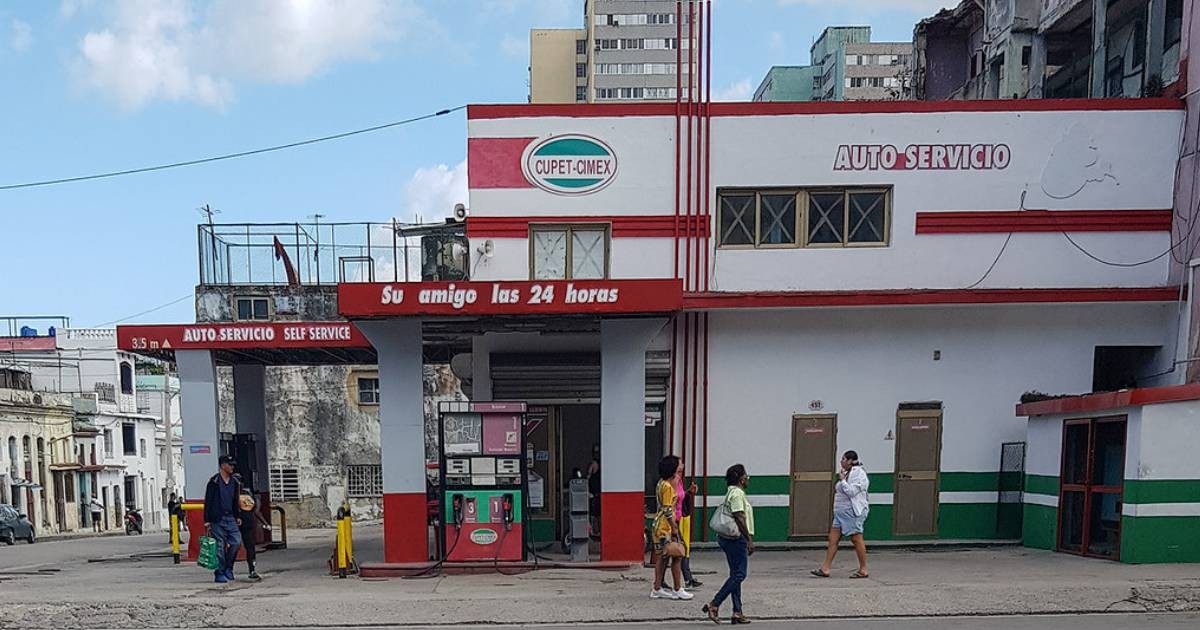
The state media Cubadebate announced this Tuesday that, starting on May 15, the prices of fuels sold in foreign currency in Cuba will no longer have a unique and fixed value, transitioning to a floating scheme that will reflect the "real costs of each operation," and attributed the measure directly to the U.S. embargo and the executive orders of President Donald Trump.
In its social media post, Cubadebate stated that "the intensification of the economic, commercial, financial, and energy blockade imposed by the United States government against the people of Cuba, exacerbated by the executive orders of January 29 and May 1, 2026, by President Donald Trump, has caused a drastic reduction in fuel supplies."
The regime acknowledged, through the Ministry of Finance and Prices, that the fixed price model "cannot be economically sustained under current conditions," an admission that stands in contrast to years of subsidies portrayed as achievements of socialism.
Under the new scheme, each authorized economic actor—state-owned enterprises and private SMEs—will set their own retail prices based on the supplier, freight costs, supply routes, insurance, and fluctuations in the international market. This means that in the same city, different prices may coexist at different gas stations.
The supply crisis has a structural background that the regime omits in its narrative: Cuba only produces between 40,000 and 45,000 barrels daily out of the approximately 100,000 it needs, relying 70% on external imports, mainly from Venezuela and Mexico.
Executive Order 14380, dated January 29, 2026, imposed secondary tariffs on any country or entity supplying oil to Cuba, resulting in the interception of at least seven tankers en route to the island, while Mexico temporarily suspended shipments from Pemex that same month.
As a partial measure, Washington authorized fuel exports exclusively to the private Cuban sector—not to the government or state entities—and since February 2026, about 30,000 barrels have been sent in ISO tanks to the port of Mariel, worth over 11 million dollars between January and March.
However, that fuel comes at costs exceeding 2.50 dollars per liter after CUPET's fees, and its use is restricted to business self-consumption, which limits its impact on the overall supply for the population.
In the informal market, gasoline reached between 4,000 and 6,000 Cuban pesos per liter in April 2026, equivalent to between seven and 11 dollars at the informal exchange rate, a figure that illustrates the extent of the shortages faced by the population.
Cubadebate also pointed out that "in recent months, the blockade has intensified, through threats and coercion, to prevent ships from docking or suppliers from selling," in what the regime describes as an "international scenario worsened by wars and geopolitical tensions."
The citizens' reaction on social media was one of skepticism and open criticism of the government: "What are we missing to declare ourselves capitalists?" asked one user, while another described the situation as "wild capitalism mixed with feudalism," questioning the coherence of a system that continues to present itself as socialist while freeing the prices of a basic good.
Filed under: