
Related videos:
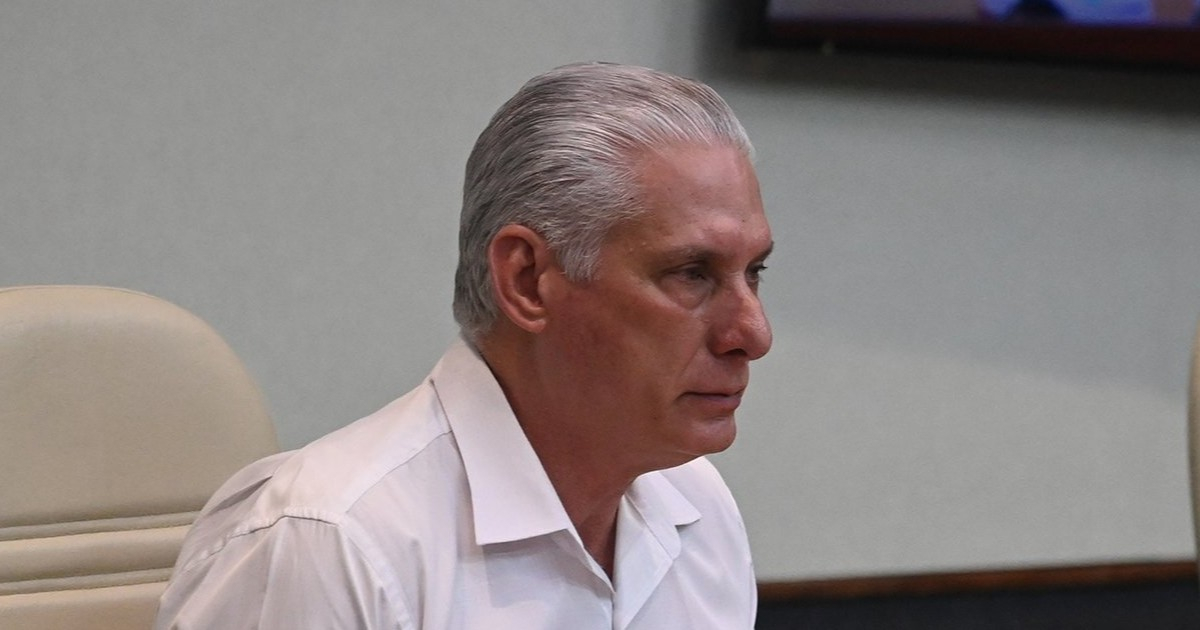
Miguel Díaz-Canel published an extensive message on Facebook this Wednesday, in which he solely blames the U.S. sanctions for the severe electrical crisis affecting Cuba, and signals a willingness for diplomatic engagement with the phrase "always ready for dialogue on equal terms."
The message comes at the worst energy moment of the year: the Electric Union projects for this Wednesday a deficit of over 2,000 MW during peak nighttime hours, the highest recorded in 2026, with 1,100 MW not generated directly due to lack of fuel.
Díaz-Canel attributed the worsening situation to what he referred to as "the genocidal energy blockade that the U.S. imposes on our country, threatening irrational tariffs on any nation that provides us with fuel."
The ruler recalled that Cuba needs at least eight fuel ships per month, but in April only one arrived, which allowed for a temporary improvement in electric service and a brief reduction in blackouts.
To justify his narrative, Díaz-Canel argued that "what the spokespeople of the U.S. regime try to show the world as a direct consequence of poor management by the Cuban government is actually the result of a twisted plan aimed at exacerbating the shortages and hardships faced by the people."
He went further by describing Washington's strategy as "a twisted design aimed primarily at the suffering of the entire people, to take them as hostages and turn them against the Government."
The message omits any reference to the internal structural causes of the crisis: a thermal power infrastructure that is 40 to 50 years old, decades of chronic underinvestment, and an accumulated decline in GDP of 23% since 2019—factors that independent analysts identify as decisive.
The text arrives after President Donald Trump posted on his social media that Cuba "is asking for help" and that "we are going to talk", and after he responded to a journalist at the White House, labeling the Island as a "failed nation" that "is only going in one direction: down."
This Wednesday, Trump departed for China for a state visit with Xi Jinping, adding a geopolitical dimension to the exchange: on May 5, Beijing had asked Washington to lift the sanctions against Cuba.
The diplomatic context is one of total stagnation. On April 10, a U.S. delegation traveled to Havana on the first official U.S. flight since 2016. Washington issued an ultimatum demanding the release of political prisoners such as Luis Manuel Otero Alcántara and Maykel Osorbo, which expired on April 24 without a positive response.
In response to that ultimatum, Díaz-Canel was unequivocal: "political prisoners are not on the negotiating table" and "surrender is not an option."
On May 7, Secretary of State Marco Rubio announced direct sanctions against GAESA and 12 officials of the regime, providing a deadline until June 5 for foreign companies to sever ties with sanctioned Cuban entities.
Now, with the energy crisis at its peak and Trump sending ambiguous signals on the way to Beijing, Díaz-Canel once again extends a hand without yielding on any of the conditions that Washington demands: "We will continue to resist and create, increasingly convinced that we must leap on our own efforts over the enormous difficulties, united as a nation, and resolute in facing the toughest challenges."
Filed under: