
Related videos:
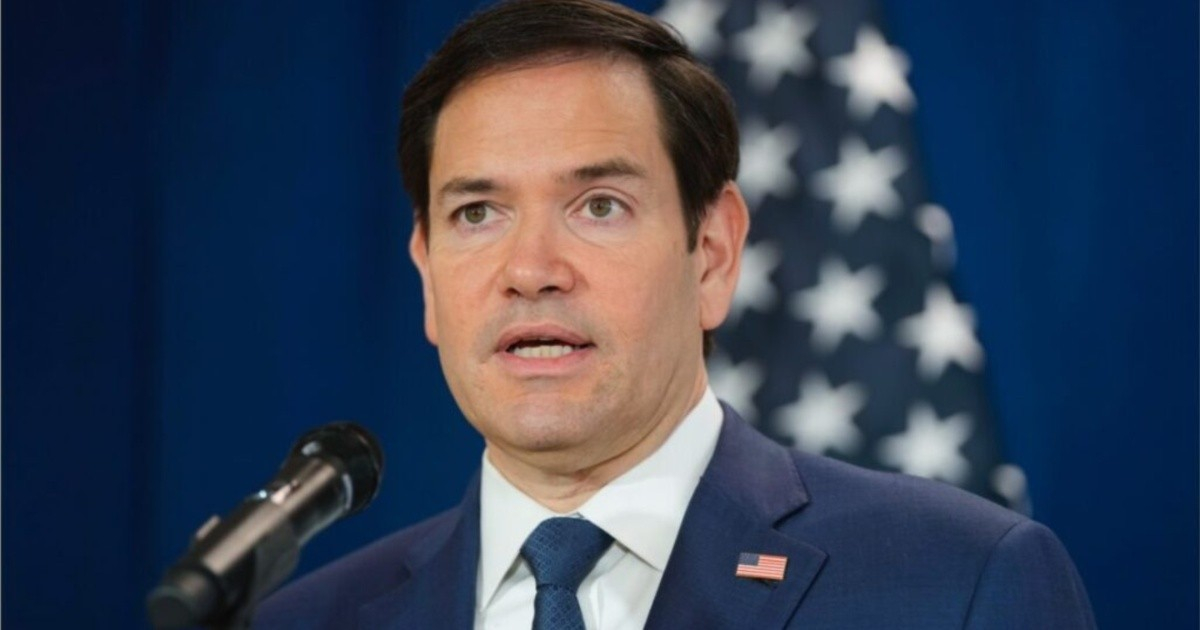
The U.S. Secretary of State, Marco Rubio, stated that Cuba should not be a poor country, emphasizing the enormous economic potential of the Island in an exclusive interview with Sean Hannity from Fox News, recorded aboard Air Force One while en route to China.
Rubio identified three pillars of Cuba's potential: significant mineral deposits—including some of the best rare earth minerals in the world—extraordinary opportunities for tourism, and extremely fertile farmland.
"Cuba should not be a poor country. Its people should not be suffering from hunger. Its people should be prosperous," stated the Secretary of State.
To illustrate his point, he indicated that the island's economic failure is exclusively political, not human or geographical: "Cubans leave Cuba, go to other countries, and become successful. The only place in the world where Cubans seem unable to thrive and succeed is in Cuba."
The official also emphasized that, with a true opening, Cuba would have "a large community of Cuban-American expatriates who would return to invest," in addition to global interest from foreign investors.
However, he was adamant about the main obstacle: "The economic trajectory of Cuba cannot be changed as long as the people currently in charge remain in power. That is what needs to change, because these individuals have proven themselves to be incapable."
The secretary pointed directly to GAESA—the business conglomerate of the Cuban Armed Forces that controls between 40% and 70% of the Island's formal economy—as the mechanism of plundering by the regime
"The wealth in Cuba is controlled by a company owned by military generals who keep all the money. This is a country where people literally eat garbage from the streets, yet that company accumulates 16 billion dollars," he detailed.
The statements come a week after Rubio announced direct sanctions against GAESA and its CEO, Brigadier General Ania Guillermina Lastres Morera, describing the conglomerate as "the heart of the kleptocratic communist system of Cuba."
Foreign companies linked to GAESA have until June 5 to sever ties, at risk of secondary sanctions enabled by Executive Order 14404 signed by Trump on May 1.
The economic context of the Island exacerbates the contrast pointed out by Rubio. CEPAL projects a contraction of the Cuban GDP by 6.5% for 2026, the worst in Latin America, while economist Pedro Monreal warns that the drop could reach 15%, matching the worst year of the Special Period.
The Cuban economy has experienced a decline of approximately 23% since 2019.
Tourism, one of the major potentials highlighted by the Republican politician, has plummeted from 4.7 million visitors in 2018 to 1.81 million in 2025, with an additional decline of 52% in the first quarter of 2026.
"You cannot fix its economy without changing its system of government," Rubio concluded, who on April 27 had already warned that Cuba only has two possible destinies: "total collapse" or "substantial and serious economic reforms," and insisted that neither is viable under the current regime.
Filed under: