
Related videos:
The Cuban Foreign Ministry released an official warning on X this Sunday under the hashtag #LaPatriaSeDefiende: "If Cuba is attacked, it will exercise its right to legitimate defense," in direct response to a report from the Axios portal which revealed that the regime had allegedly acquired over 300 military attack drones from Russia and Iran since 2023.
The message from the Foreign Ministry cited a previous statement from the Deputy Minister of Foreign Affairs, Carlos Fernández de Cossío, who stated that "the anti-Cuban effort aimed at justifying without any excuse a military aggression against Cuba is intensifying by the hour, with increasingly implausible accusations," and added: "The U.S. is the aggressor country. Cuba is the attacked country, upheld by the principle of legitimate defense."
In a parallel post on Facebook, Fernández de Cossío expanded on his stance: "Like any country, Cuba has the right to defend itself against external aggression. This is called legitimate defense, and it is supported by International Law and the UN Charter. Those in the U.S. who seek the submission and, in fact, the destruction of the Cuban nation through military aggression and war do not waste a moment fabricating pretexts, creating and spreading falsehoods."
What stands out the most in the deputy minister's statements is what he did not say: the official never denied the existence of the alleged drones or the supposed plans of the regime, instead limiting himself to repeating the usual rhetoric of blaming Washington.
According to intelligence sources cited by Axios, Cuba has reportedly acquired more than 300 military drones stored in strategic locations throughout the island, and has begun discussing plans to use them against the Guantanamo naval base, U.S. military ships, and possibly Key West, Florida.
U.S. officials have also estimated that up to 5,000 Cuban soldiers have fought for Russia in Ukraine, with Moscow paying the regime about 25,000 dollars for each deployed soldier, and that some have shared knowledge on drone warfare with military commanders in Havana.
A senior U.S. official summarized the underlying concern: "When we think about such technologies being so close, and a range of dangerous actors from terrorist groups to drug cartels, Iranians, and Russians, it's alarming. It's a growing threat."
The episode takes place days after the CIA director, John Ratcliffe, visited Havana last Thursday, marking the first visit by a director of that agency in over a decade, during which he directly warned regime officials against any acts of hostility and urged them to dismantle the totalitarian system as a condition for lifting the sanctions.
At the same time, the Justice Department is preparing a federal criminal charge against Raúl Castro for ordering the downing of two aircraft belonging to Brothers to the Rescue on February 24, 1996, which resulted in the deaths of four people.
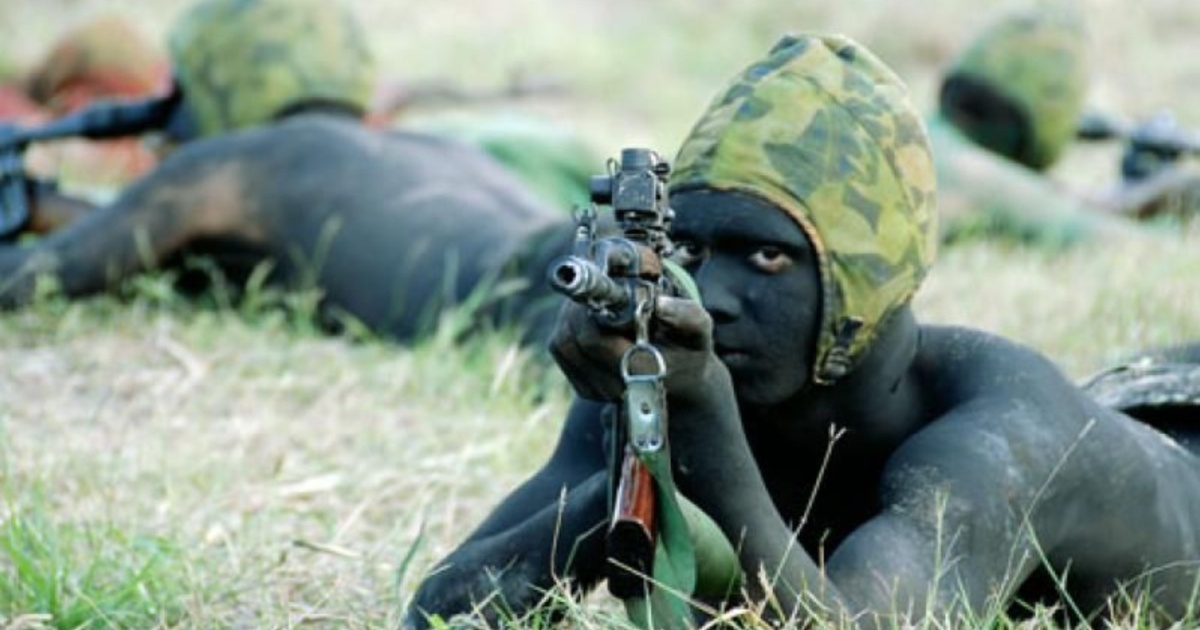
The rhetorical escalation of the regime fits within a sustained trend since the beginning of the year. The Cuban government declared 2026 as the "Year of Preparation for Defense," with civilian military exercises every Saturday, which include AK-47 rifles, drones, and anti-tank mines, while the Cuban population faces prolonged blackouts, food shortages, and an unprecedented economic crisis.
While the regime waves the flag of legitimate defense, U.S. officials themselves clarified that they do not see Cuba as an imminent threat nor believe that the regime is actively planning to attack U.S. interests, although they warned: "It's not a reality we're comfortable with."
Filed under: