
Related videos:
The Cuban regime's prosecutor requested sentences of up to 13 years in prison for three women members of the Patriotic Union of Cuba (UNPACU) who participated in a peaceful protest against blackouts on November 15, 2024, in the town of Palmarito de Cauto, in the municipality of Mella, Santiago de Cuba province.
According to information published by Martí Noticias, the accused are Mileidis Maceo Quiñones, Edilkis León Giraudis, and Oneida Quiñones. The prosecution is seeking 13 years of imprisonment for Mileidis, eight years for Edilkis, and five years for Oneida, under the alleged charges of public disorder and damage.
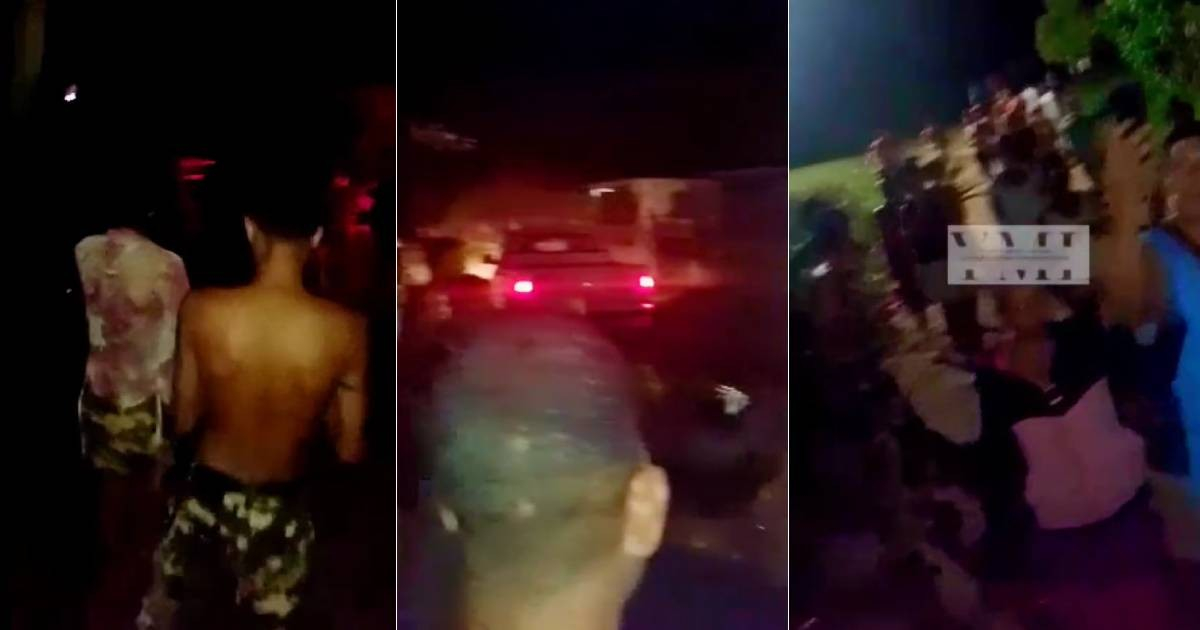
The demonstration that led to the legal actions occurred when dozens of residents took to the streets, banging pots and pans to demand the restoration of electricity service after several hours of blackout.
The protest was suppressed by the National Revolutionary Police (PNR) and the Rapid Response Brigades, who resorted to verbal aggression. In response, some participants threw stones, with one of them hitting a police patrol.
Elba León Giraudis, sister of Edilkis, confirmed to Martí Noticias that the prosecutor's request arrived about a month and a half ago, but no date has been set for the oral trial yet.
Mileidis Maceo and Edilkis León have been confined in the women's prison of the province since December 4, 2024, when they were transferred from the detention center of the Mella Police Unit, where they had spent 19 days. Oneida Quiñones, who suffers from a physical disability, is under house arrest.
The Public Prosecutor's Office of the municipality of Mella rejected the requests for a change of precautionary measure submitted by the defense attorneys on two consecutive occasions. The aim was for the women to await their trial at home.
One individual involved, the young Rafael Borrero Torres, was released from all charges, presumably for being a minor at the time of the events.
Elba León described the fiscal requests as excessive and abusive.
The case fits into a documented pattern of criminalizing protests. In Encrucijada, Villa Clara province, six citizens who protested on November 7, 2024 against blackouts received sentences of up to eight years in prison. In Bayamo, 15 protesters from March 2024 received sentences ranging from three to nine years for similar actions.
Human rights organizations have documented how Miguel Díaz-Canel's regime uses its legal framework to criminalize citizens who protest against the precarious living conditions and the constant blackouts suffered by the island.
Filed under: