
Related videos:
A resident of the province of Camagüey described this Saturday the ordeal they experienced in order to obtain a classic card in just one morning, during which they visited five different institutions without achieving their goal at any of them.
"The never-ending story," wrote the person, who wished to remain anonymous, while sharing their experience in the Facebook group Shein Camagüey 2024-2025.
He reported that he visited the Merci shopping center, the shopping center on Cuba Street, the casino service, the Banco Financiero Internacional (BFI), and the La Borla bank, without results.
At the BFI, there was no electricity. In the tassel bank, there were cards, but the manager explained that they couldn't be issued "because the girl in charge of that was doing other tasks."
Before reaching that conclusion, the employee rejected the $10 bill that the citizen had to make payment, claiming there was a small stain. The person left, exchanged the bill with a cousin, and returned to the bank. By then, the employee had already informed the doorman that "there were no Classics."
When she asked from which countries the card could be recharged, the bank employee replied "grudgingly" that she did not know that information and referred her to Fincimex.
"How is it possible that working in a bank at this point I don't have that information?" he questioned.
"It turns out that the one with electricity doesn't have cards, and the one with cards doesn't have electricity," he summarized at the end of his story.
The post accumulated dozens of comments in just a few hours. Multiple users related to the experience. Täniã Llanes wrote that to get her own classic card, "she spent an entire week going back and forth, traveling around Camagüey every day," with the system down, no electricity, and no availability of cards where there was power.
Diego Antonio De La Torre Castro described the situation as "an odyssey, an endless bureaucracy," and pointed out that in 99% of cases, the citizen "does not find a solution" and additionally faces "indifference, apathy, lack of professionalism, and mistreatment."
Regor Maceo summed it up in one sentence: "When nothing belongs to anyone, no one cares about anything."
Anelys Costilla pointed out another irregularity. "They never explain why they refuse to accept a bill with a small flaw, as if it weren't money just the same, and as if payments were made here in that currency with brand new bills."
The rejection of banknotes with minor physical defects is a common practice in Cuba, lacking any official guidelines, and it stands in contrast to the fact that the country does not issue or print dollars.
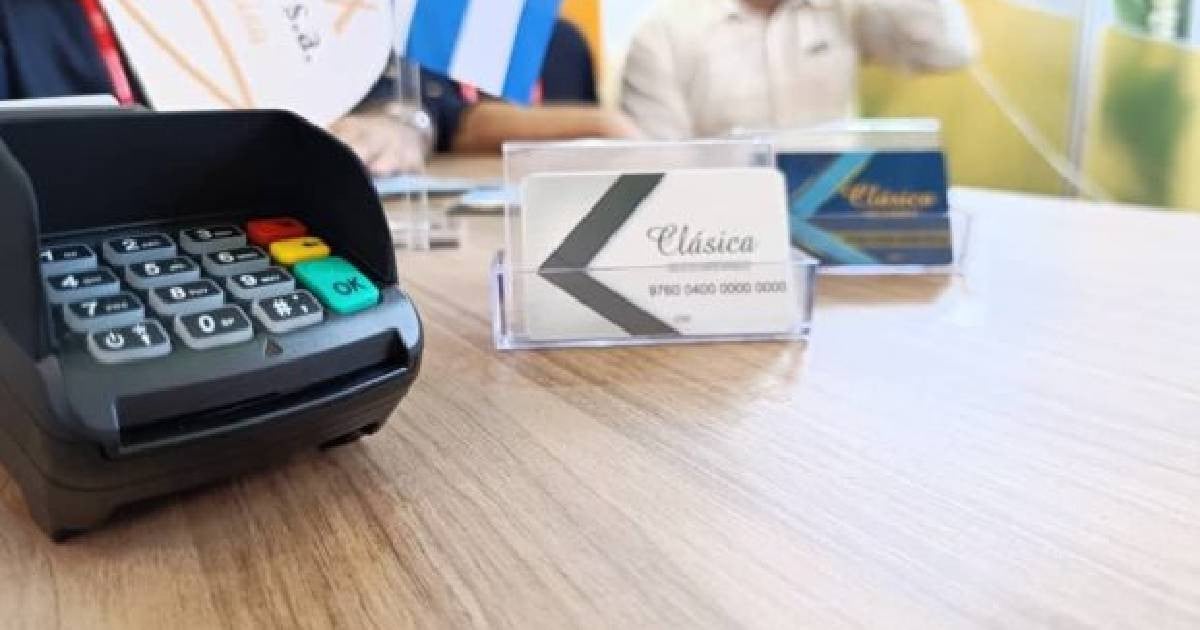
The classic card, issued by Fincimex/Cimex under the control of the Business Administration Group S.A. (Gaesa), the military conglomerate of the Cuban military elite, is a prepaid card that can only be recharged in dollars and costs four dollars.
It has become one of the few mechanisms to access goods in foreign currency within Cuba, which explains the high demand despite its limitations.
This episode is set against the backdrop of a banking crisis that is intensifying in Camagüey. In April, elderly individuals were sleeping at the entrance of the Banco de la Caridad to secure a turn for pension withdrawals, and in February, entire municipalities reported four days without banking service due to a lack of electricity.
The Popular Savings Bank acknowledged in April that it cannot provide cash dollars due to "low availability of freely convertible currencies," and on May 8, the Metropolitan Bank announced official channels for filing complaints, with deadlines of up to 30 calendar days for a response.
Filed under: